
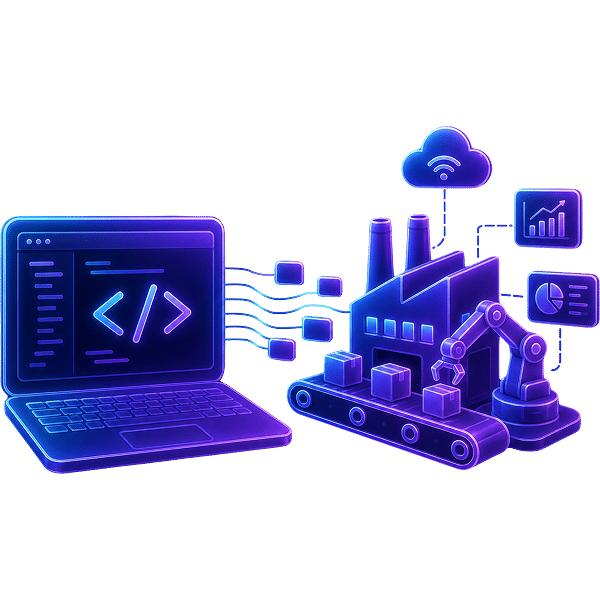



Manufacturers whose core system is aging out of support
A plant runs a system built 12 to 15 years ago, the vendor is gone or the original developer left, it runs on an unsupported operating system, and one contractor understands how it works.
Our legacy software modernization work rebuilds these systems in stages rather than with a single cutover, starting with the parts that pose the greatest risk. The plant keeps running on the current system while each replaced component goes live behind it, and the process ends with documented code that your own team can maintain.

IT experts are ready to build manufacturing software solutions for you
Where packaged manufacturing software stops, and manual work begins
Packaged platforms cover what most manufacturers share; everything specific to your operation ends up in spreadsheets, re-keyed reports, and email threads. MES adoption is near universal, yet only 23% of manufacturers report full integration across ERP, PLM, quality, and operational technology. Custom manufacturing software development closes that gap rather than replacing what already works.
| Situation | Problem | Solution |
| Production numbers reach a spreadsheet hours late, or not at all. | Supervisors decide on yesterday’s output instead of today’s. | Real-time production visibility: Floor managers see output as it happens, not in next morning’s report. |
| Your ERP holds the plan, and the floor has no reliable link to it. | Planning and execution drift apart, and schedules break within the week. | ERP and shop floor in sync: One connected system, so schedules survive contact with the floor. |
| Supplier delays reach you only after production has felt them. | One shifted variable collapses the schedule with no warning. | Supply chain signals you can act on: Inventory, supplier status, and material requirements connect, so shortages appear before the line stops. |
| Nothing tracks machine health or catches degradation early. | Maintenance happens after a breakdown, never before one. | Fewer unplanned stoppages: Connected equipment reports degradation early, so maintenance runs on your schedule. |
| Dashboards exist, but the numbers behind them are stale or contradictory. | Nobody acts on data they do not trust. | Analytics people rely on: One connected source instead of six, so the dashboard matches the floor. |
| Manual inspection catches defects downstream, sometimes at the customer. | Every batch becomes a manual exercise, and manual checks stop scaling past a certain volume. | Faster, more reliable quality control: Automated gates catch deviations mid-process, not after the batch has run. |
| Packaged systems have been customized repeatedly to cover steps they never supported. | Every vendor upgrade breaks those customizations, and the rework compounds. | Code you own, upgrades that hold: Process logic runs in a system built for it, so releases no longer break your operation. |
| Audit evidence exists, but across different systems and formats. | Every surveillance audit turns into weeks of reconstruction for the quality team. | Audit files that assemble themselves: The system captures inspection results, batch records, and sign-offs during production, in the structure that an auditor expects. |
 Manufacturing
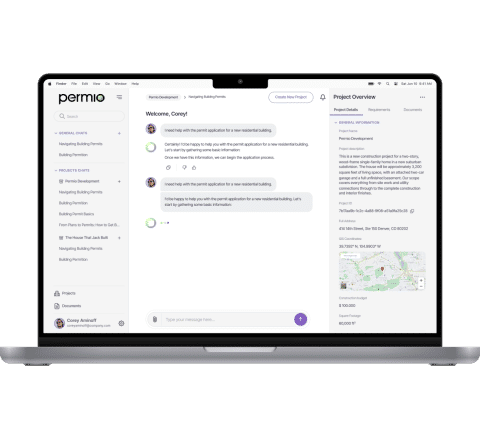
Permio: AI-powered permit workflows for Service First Permits
Permio is an AI-powered permitting platform built for Service First Permits to automate workflows and accelerate approvals across 240+ jurisdictions. Geniusee worked closely with SFP to design, engineer, and validate a system that modernizes the entire permitting lifecycle.
Case details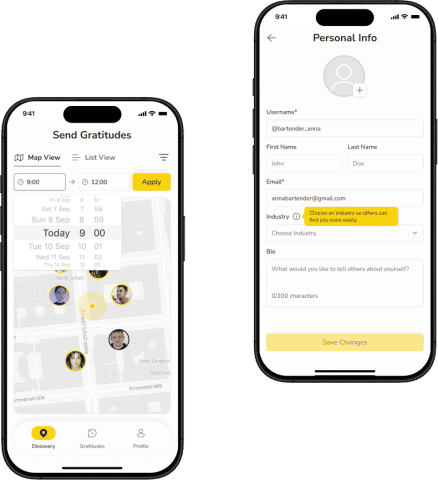
BeEpic: Digital tipping and appreciation app
BeEpic is a mobile app that reimagines tipping and appreciation for everyday services, where the giver and receiver may never meet in person. Geniusee helped the startup design and develop an MVP with accurate geolocation logic, asynchronous gratitude matching, and a scalable technical foundation for future enterprise integrations.
Case details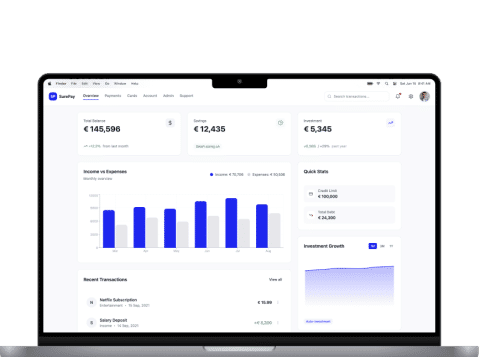
How we secured a business-critical Atlassian platform with near-zero downtime by migrating VMware to AWS
We migrated a multi‑node Atlassian platform from a single VMware host to a resilient AWS architecture in a way that was almost invisible to end users. The client eliminated a single point of failure, strengthened their security posture, and gained a clear roadmap for further cloud modernization. Instead of relying on one aging server, they now run in AWS in the eu‑central‑1 region, with an environment ready for future load and security stability.
Case details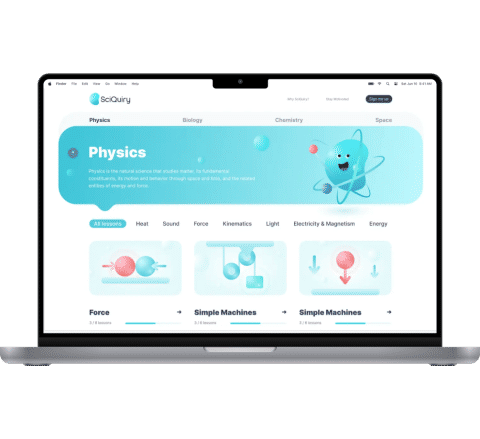
SciQuiry: AI-powered eLearning platform
SciQuiry is an AI-powered, question-based learning platform that helps middle and high school students study more effectively through personalized STEM pathways, interactive challenges, and engaging animations. Our collaboration focuses on redesigning the system and customizing every UI/UX element to deliver an intuitive, motivating, and gamified learning experience for kids.
Case detailsCustom systems pay for themselves in specific, measurable ways. These are the outcomes manufacturers most often target.






Each of these runs as a standalone project or as one layer of a larger platform. Most engagements start with two or three and grow from there.

Certified AWS Partner delivering secure, scalable cloud-native solutions.

ISO-compliant processes ensuring quality, security, and reliability.

Trusted integration partner for financial data connectivity and open banking.
Team of ISTQB-certified QA engineers for world-class software testing.

Consistently rated ★5.0 by clients for reliability and delivery excellence.

Accredited partnership supporting advanced testing and continuous QA automation.
AI in manufacturing software earns its place where it changes a decision or removes manual work, not where it decorates a dashboard. It also runs on connected data, which means most of this follows the integration work rather than preceding it. We build four kinds of AI capability into production systems.

Custom manufacturing software development at Geniusee runs through six stages, from mapping how a plant works in practice to supporting the system once it is live. Each stage closes with something you can review: a document, a demo, or working software in your environment.

Discovery and manufacturing requirements planning
We map how your plant runs in practice, not how the process documentation says it runs, then define what the software has to do at each stage of production.
This step usually includes:
☑️ Workflow mapping across planning, production, quality, and dispatch
☑️ A system audit of your ERP, MES, IoT devices, and supply chain tools, including the points where they fail to connect
☑️ A data review covering what gets captured today and what is missing
☑️ Requirements tied to your shift patterns, work order logic, and quality gates
☑️ Scope, budget, and delivery timeline for the first release
Architecture and tech stack selection
Architecture decisions are cheap to make early and expensive to reverse later, so they get settled before development starts. The stack follows what your environment needs rather than a house default.
This step usually includes:
☑️ Data models and integration patterns for production, planning, and equipment data
☑️ An infrastructure approach across cloud, on-premise, or hybrid, based on plant connectivity
☑️ Real-time streaming design where IoT input arrives at high volume
☑️ Edge computing for sites where factory floor connectivity is unreliable
☑️ A modular structure your internal team can maintain after handover
Agile development in short, reviewable cycles
We work in two-week sprints and put working software in your environment within 6 to 8 weeks. Requirements shift once people see software running against real production data, and this cadence absorbs those changes without breaking the budget.
Each cycle covers:
☑️ A demo and a plain-language status update at the end of every sprint
☑️ A first working release in your environment within 6 to 8 weeks
☑️ Priorities reviewed against what the plant needs next
☑️ Sign-off from the people who will use the system on shift
Integration with existing manufacturing systems
Connecting new software to your ERP, MES, IoT devices, and supply chain tools is where most manufacturing software projects accumulate hidden risk, so integration runs alongside the build rather than waiting for it.
The work here covers:
☑️ Custom connectors and middleware for ERP, MES, and warehouse systems
☑️ Industrial protocol integration through OPC UA, MQTT, and equipment APIs
☑️ Database-level connectors for legacy systems with no modern API
☑️ API design and contract testing between every connected system
QA across real manufacturing scenarios
Generic QA does not catch manufacturing-specific failures. An ISTQB-certified QA team stays involved from the first sprint rather than joining before release.
Testing covers:
☑️ High-volume concurrent data ingestion under production load
☑️ Network interruptions mid-shift, including recovery behavior
☑️ Edge cases in production planning and scheduling logic
☑️ Permission models spanning operator, supervisor, and engineering roles
☑️ Regression runs against each integrated system after every release
Deployment, training, and ongoing maintenance services
Go-live is a managed event, not a handover email. Adoption gets the same attention as the code, because if operators find the system slower than paper, they stop entering accurate data within weeks.
This stage usually includes:
☑️ A phased rollout, in most cases one line or one site first
☑️ Operator training and interface design built for floor use rather than desk use
☑️ Post-release iterations based on how the system behaves in production
☑️ Performance monitoring and new feature delivery as production needs change






Manufacturing projects range from a bounded system integration to a multi-year platform build, so the delivery model should follow the scope and the amount of ownership your internal team wants to keep.




What’s the actual difference between custom manufacturing software and an off-the-shelf platform?
Off-the-shelf software is designed to work across a wide range of manufacturing companies, which means it is optimized for none of them. You get fixed modules, a fixed data model, and fixed workflow logic. Custom manufacturing software solutions are built around your process: your equipment, your production schedules, your quality control requirements, your ERP system. In practice, the choice is rarely one or the other.
Most manufacturers keep packaged software for standard functions like finance and procurement, then build custom systems for shop-floor workflows and integrations, where fit determines the outcome. That combination removes the ongoing costs of workarounds, manual corrections, and per-seat licensing for modules nobody opens, and, for complex operations, it typically shows a clearer ROI within 18 to 24 months.
How long does it take to develop custom software for manufacturing?
A focused MVP covering core MES or ERP integration functionality typically takes 3 to 5 months from discovery to first deployment. A full platform with AI analytics, IoT integration, supply chain management, and mobile capabilities takes 9 to 18 months to implement, depending on scope and integration complexity. We structure delivery in agile sprints, so you are running working software in your environment within the first 6 to 8 weeks. We will provide a clearer timeline estimate after an initial scoping session that covers your systems and priorities.
Can you integrate with our existing ERP and legacy manufacturing systems?
Yes, and this is usually where the real complexity turns up. We have built integrations with SAP, Oracle, Microsoft Dynamics, Infor, and a range of industry-specific ERP platforms. We also integrate with legacy manufacturing systems that lack modern APIs through database-level connectors, OPC UA protocols for industrial equipment, MQTT for IoT devices, and custom middleware layers where needed. We treat integration as a core engineering problem from day one, not a phase that gets scoped later. The goal is always a system that behaves as a coherent whole.
We treat integration as a core engineering problem from day one, not a phase that gets scoped later. The goal is always a system built to behave as a coherent whole.
How is AI used in custom manufacturing software?
AI adds value in four main areas: predictive maintenance models that schedule service before equipment fails, computer vision that inspects output faster and more consistently than manual sampling, forecasting models that support production planning and inventory decisions, and AI agents that route approvals and compliance checks across systems without manual handoffs. In each area, the AI layer reads from the same connected production data as the rest of the platform, so its output reflects your operation rather than industry averages.
What does custom manufacturing software development cost?
The scope varies too much for fixed pricing to be useful here. An MVP with production tracking, basic ERP integration, and a real-time dashboard typically costs between $60,000 and $120,000. A mid-complexity platform with supply chain management, IoT integration, analytics, and workflow automation runs $150,000 to $400,000. Advanced builds, including full AI, predictive maintenance, multi-plant visibility, and custom ERP development, are scoped individually. Try our AI Estimator or talk with our team to get an approximate figure for your case.
What should we look for in a manufacturing software development company?
Look for proven integration experience with ERP, MES, and industrial protocols, delivery in regulated environments, and one team covering IoT, data, cloud, and QA, because handoffs between vendors are where these projects fail. Ask how the partner tests against production-specific scenarios and what happens after go-live. A partner that treats deployment as the start of a support relationship, not the end of a contract, protects the investment far better than one that hands over code and leaves.
Do you offer maintenance services and ongoing development after launch?
Yes, and we would argue that this matters as much as the initial build. Manufacturing software that gets launched and then abandoned is a common failure pattern. Business processes evolve, product demand shifts, new equipment comes onto the floor, and regulations change. We offer structured maintenance services and ongoing development retainers so your software stays current, stable, and in daily use. Most of our manufacturing clients continue working with us for 2 to 4 years after the initial release.
How do you approach data security and compliance in manufacturing software?
Security and compliance are embedded in the development process, not added at the end. We are ISO 27001 certified and build systems with role-based access control, encrypted data at rest and in transit, full audit logging, and support for relevant regulatory frameworks, including FDA 21 CFR Part 11 for pharmaceutical manufacturers and IATF 16949 for automotive quality systems. For manufacturers in regulated industries, we design software to be validation-ready from architecture through deployment, which reduces the time and cost of regulatory submissions.