
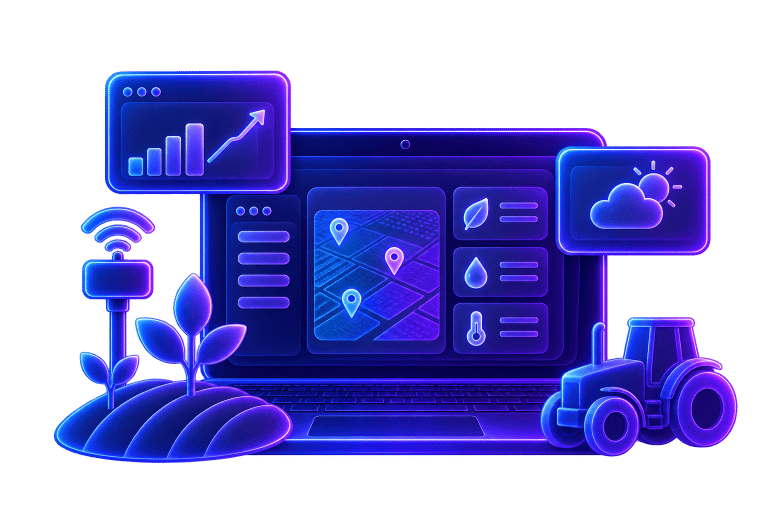
Two selected projects demonstrate the range of farming solutions Geniusee has delivered, from sensor-to-cloud connectivity in the United States to a farmer CRM for the agricultural sector in Asian markets.





The scope of agriculture software development varies by operation. Growers, cooperatives, and agtech vendors each face different requirements and priorities.









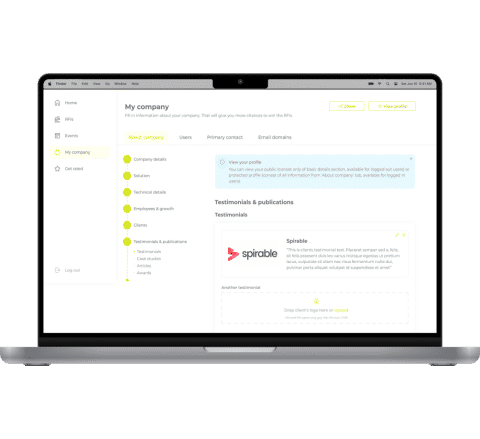

Validify – Retail vendor management platform
See how Geniusee built Validify’s scalable vendor management platform with advanced UX, data architecture, and automated RFI workflows.
Case details
 AgroTech
Ricult: Digital financial solutions for farmers
Mindful management is essential when it comes to keeping track of harvests, storing important data, and communicating with suppliers. Ricult provides an easy way to handle all these tasks, allowing farmers to focus on strategically growing their businesses. In collaboration with the partner, Geniusee aimed to transform the way farmers and related agricultural enterprises operate. With an intuitive online application, users can monitor fields via interactive maps, scope out upcoming weather forecasts, and analyze the markets they serve. Ricult is explicitly designed for the needs of agriculture to help farmers work more innovatively and ultimately improve their productivity.
Case details
Celery: Open-source library for Fortune 500 company
Celery is an Open-Source distributed system that offers simplicity, flexibility, and reliability for efficiently processing enormous volumes of messages. It equips operations with the essential tools to effectively maintain such a system. Designed with a focus on real-time processing, Celery serves as a task queue while also providing support for task scheduling. Celery operates under the BSD License, ensuring open collaboration and widespread accessibility.
Case details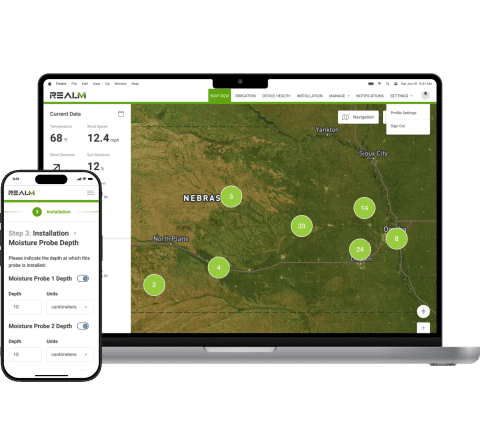
RealmFive – IoT AgriTech platform for smarter farming operations
RealmFive partnered with Geniusee to build a native iOS and Android app capable of aggregating data from multiple IoT devices, ensuring fast processing, reliable cloud delivery, and an intuitive user experience. Together, we delivered a robust, high-performing platform that helped RealmFive scale rapidly, secure new funding, and win industry awards.
Case details
Low-latency cryptocurrency analysis platform
Learn how Geniusee built a real-time crypto trading dashboard integrating 40+ exchanges with low-latency streaming and secure AWS infrastructure.
Case details
Flexible virtual lighting console for UA Light
UA Light partnered with Geniusee to build a reliable, scalable, and configurable Virtual Console capable of supporting demanding live environments. Our team delivered a powerful software engine that offers multi-protocol support, stable DMX generation, cross-platform drivers, and a modern visualization approach.
Case detailsIn the agricultural industry, costly mistakes often start with data that arrives too late, is incomplete, or comes in a format the next system cannot read.
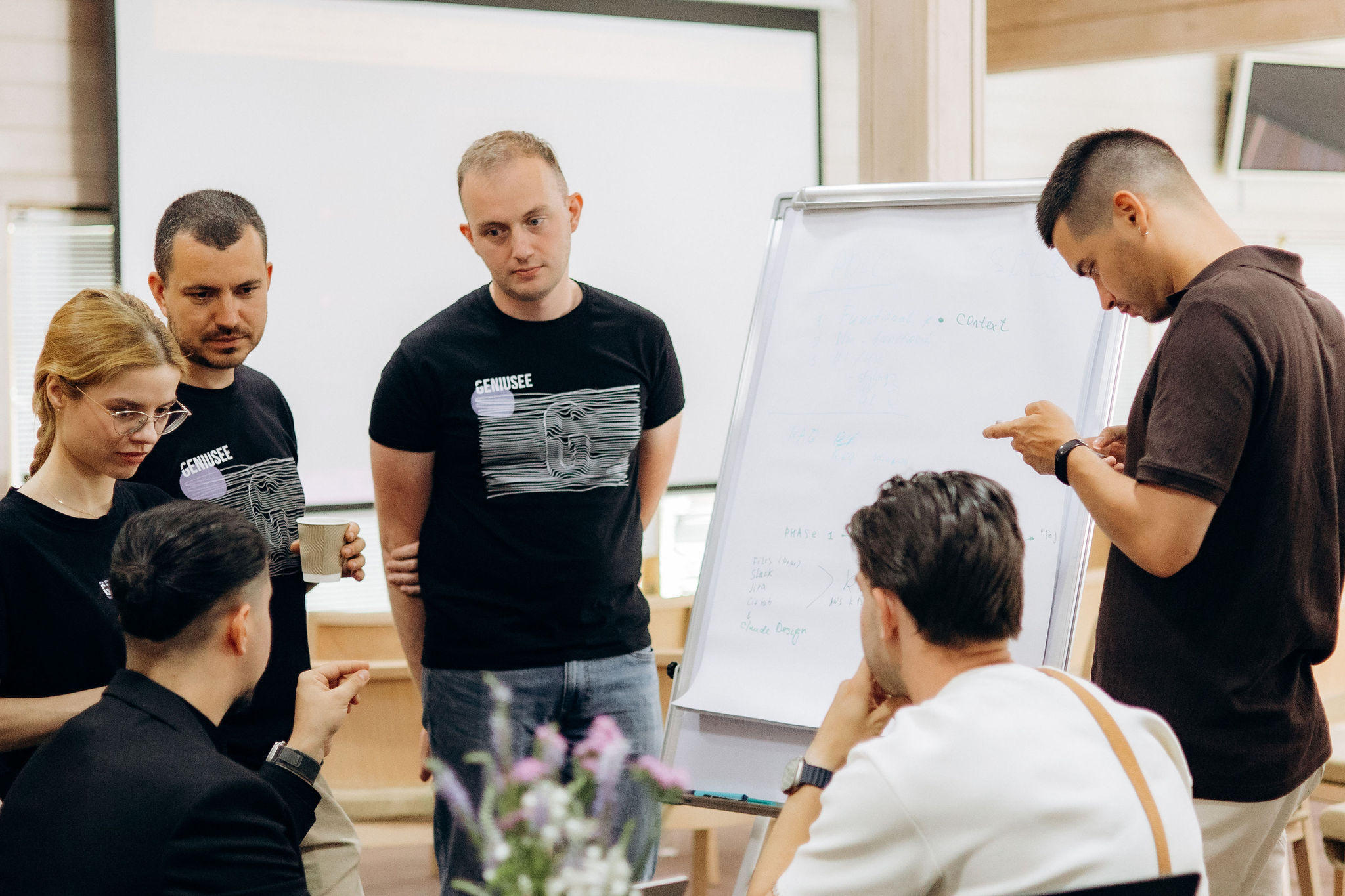


IT experts are ready to start building agritech process management software for you

Gains in agricultural productivity from precision agriculture come from decisions made earlier and closer to the field, not from another dashboard.


Each custom agriculture software development engagement can cover the full technology stack behind the digital solution: field devices, cloud data pipelines, web and mobile applications, and third-party integrations.
Every step in the agricultural software development process is planned around seasons: pilots run during real fieldwork, and major releases ship in the off-season.
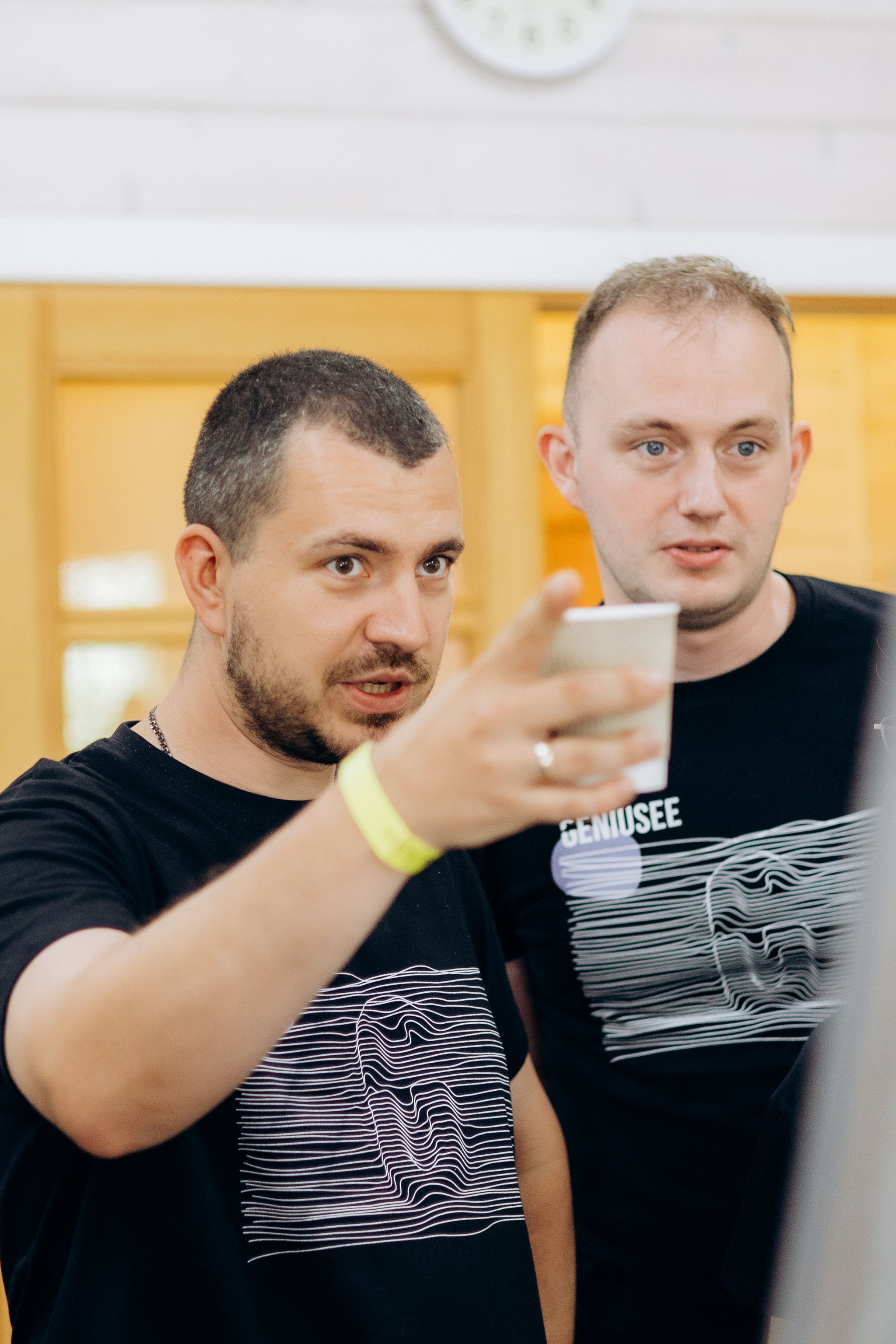
Discovery and scope
A discovery phase maps user roles, data sources, on-site connectivity, existing equipment, and reporting formats, and then defines the first release scope.
Architecture and design
Data models, offline sync rules, cloud setup, and field-ready screens are decided before development, with UX tested on the devices crews carry.
AI-native development
With AI-native development, engineers approve each task, and AI agents implement several at once, thereby reducing delivery time, costs, and rework.
Testing, field validation, and launch
Agent-run regression and pilot-farm QA cover dropped connections, GPS drift, and seasonal load before a crop-calendar rollout, with monitoring from day one.
Support services and off-season releases
Post-release support and monitoring of sync failures and device errors run through the season, while releases for regulations and equipment are planned between seasons.
Delivery risk in software development for agriculture focuses on field devices, connectivity, and seasonal timing, so all 3 are handled by a single in-house team.









What does an agriculture software development company do?
It covers the agriculture software solutions a farming operation or agtech product runs on: farm management software, crop management software, livestock management software, smart agriculture software for IoT devices, analytics, and mobile apps for crews. Geniusee also handles integration with accounting software and ERP software, cloud infrastructure, QA, and support services after launch.
How long does agricultural software development take?
A farm management or field data MVP usually takes 12 to 20 weeks, while a platform with IoT ingestion, AI analytics, and supply chain integrations runs 6 to 12 months. A pilot planned for planting season needs discovery to finish two to three months earlier.
Can farming software work offline in the field?
Yes, when the app is designed offline-first. Forms, maps, and GPS points are stored on the device and synced when coverage returns, with conflict rules for records edited on two devices. Geniusee designs field apps this way by default because barns, back fields, and cabs regularly lose signal.
Can agriculture software integrate with the equipment and software we already use?
It usually can, through three routes: machinery data formats such as ISOXML and OEM portals; standard APIs for weather, imagery, and market data; and connectors to accounting, ERP, supply chain management, and leading agricultural software platforms. The integration scope is confirmed during discovery, as OEM data access depends on vendor agreements.
What is the best agriculture software for a farm operation, custom or off-the-shelf?
Off-the-shelf farm management software platforms fit standard record-keeping and accounting needs at a lower entry cost. Custom software solutions make sense when workflows, crops, or equipment do not match a vendor’s template, or when the software itself is the product. Many operations develop custom agriculture software for field data, IoT, and analytics on top of a SaaS baseline.
How much do custom agriculture software development services cost?
Cost depends on the number of modules, connected devices, integrations, and whether AI models are included, as in any custom software development project. Hardware integration and offline sync add the most engineering time. After discovery, Geniusee provides a fixed estimate for the first release with the team, timeline, and architecture.