


When the in-house development team lacks cloud depth
Your engineers know the product well, but have not worked with serverless, containers, or other managed cloud technologies at scale.
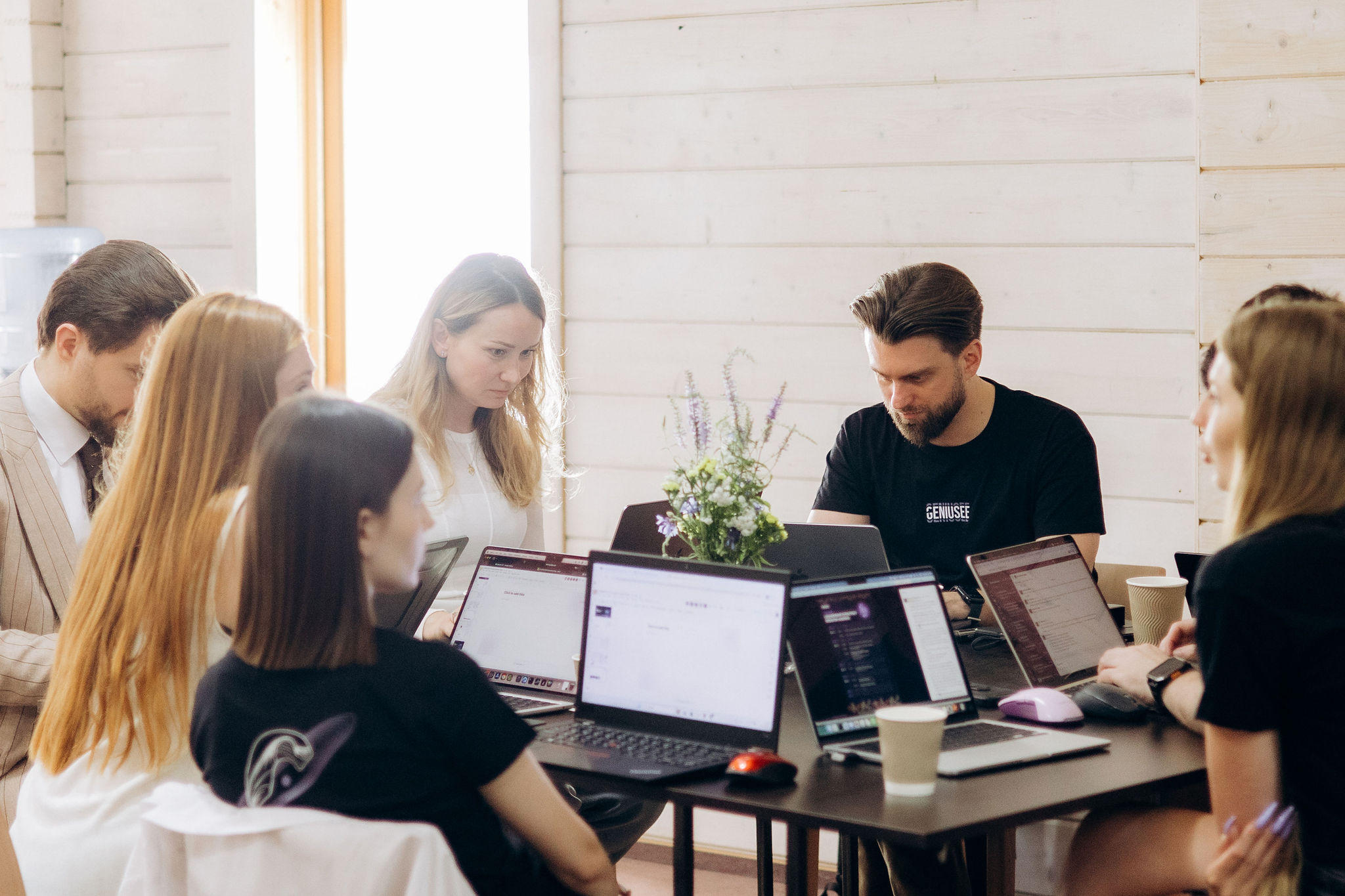
Product knowledge and cloud engineering are different skill sets. Bringing in a development team with production experience on AWS shortens the learning curve and avoids the architecture decisions that look fine in a prototype and fail under load.
Our CTO discusses the engineering decisions behind every cloud application
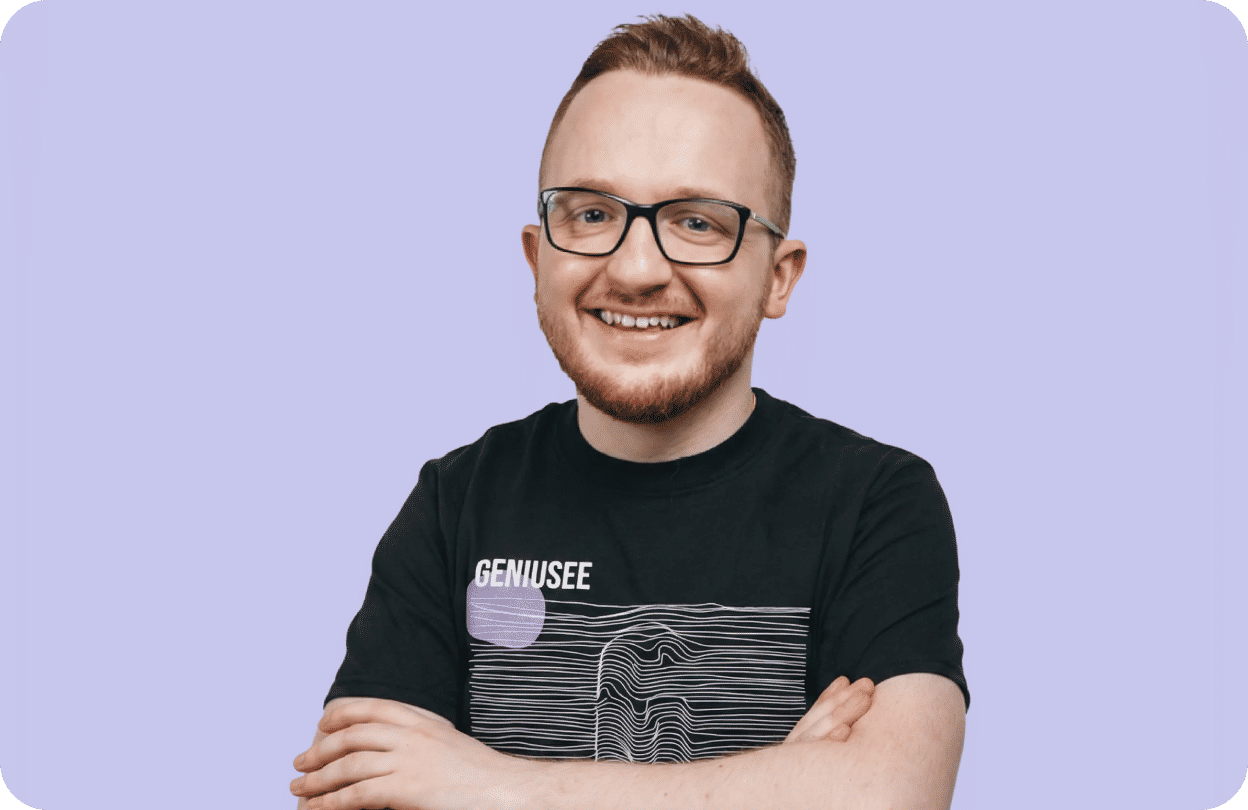
“The real engineering decisions are which cloud platform and services fit each workload, and how they should be configured.
Just as important is how scalability, security, reliability, and cost are built into the architecture from the earliest stages of your project.”
Nazar Hazdun
CTO at Geniusee




Security built into the platform from the first deployment
Controls that pass audit reviews without a remediation project: identity, encryption, logging, and network rules are defined as code and apply to every environment, which is what compliance reviewers and enterprise procurement teams expect to see documented.
IT experts are ready to start building cloud apps for you

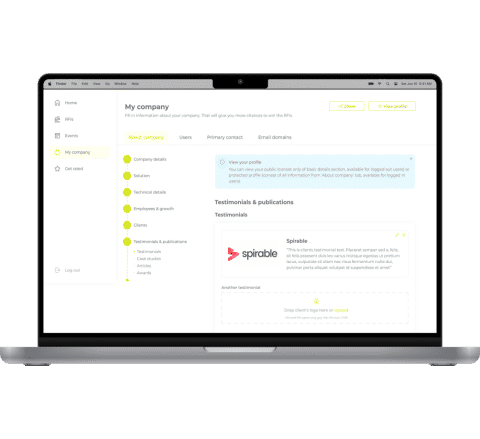

Validify – Retail vendor management platform
See how Geniusee built Validify’s scalable vendor management platform with advanced UX, data architecture, and automated RFI workflows.
Case details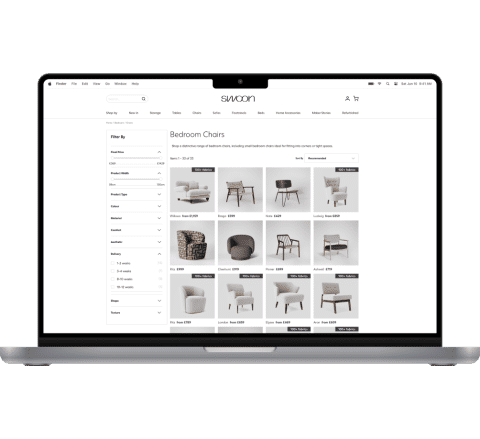
Swoon: Cloud-native backend for a furniture brand
Swoon partnered with Geniusee to modernize its backend and support a fast-growing e-commerce operation. The new serverless architecture cuts infrastructure costs, automates key workflows, and integrates payments, freight, and shipping systems into a single, reliable backbone for the brand.
Case details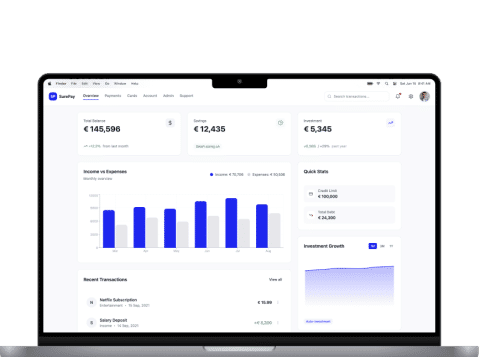
How we secured a business-critical Atlassian platform with near-zero downtime by migrating VMware to AWS
We migrated a multi‑node Atlassian platform from a single VMware host to a resilient AWS architecture in a way that was almost invisible to end users. The client eliminated a single point of failure, strengthened their security posture, and gained a clear roadmap for further cloud modernization. Instead of relying on one aging server, they now run in AWS in the eu‑central‑1 region, with an environment ready for future load and security stability.
Case details
Celery: Open-source library for Fortune 500 company
Celery is an Open-Source distributed system that offers simplicity, flexibility, and reliability for efficiently processing enormous volumes of messages. It equips operations with the essential tools to effectively maintain such a system. Designed with a focus on real-time processing, Celery serves as a task queue while also providing support for task scheduling. Celery operates under the BSD License, ensuring open collaboration and widespread accessibility.
Case details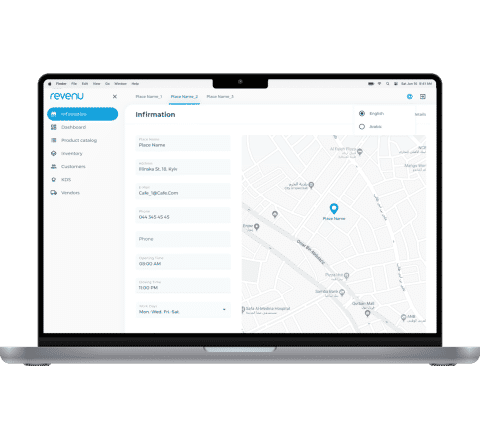
Revenu: All-in-one POS and restaurant management system
When Revenu approached Geniusee, they had a clear vision: to transform the restaurant experience through a unified POS and management system. Together, we set out to create a solution that simplifies restaurant operations, boosts staff efficiency, and enhances customer satisfaction.
Case details
Low-latency cryptocurrency analysis platform
Learn how Geniusee built a real-time crypto trading dashboard integrating 40+ exchanges with low-latency streaming and secure AWS infrastructure.
Case details




Customer portals, marketplaces, and e-commerce backends
Portals and marketplaces combine authentication, payments, search, and third-party integration under traffic that spikes unpredictably. A serverless or containerized cloud-based backend absorbs those spikes without paying for idle capacity the rest of the time.
Certified AWS Partner delivering secure, scalable cloud-native solutions.

ISO-compliant processes ensuring quality, security, and reliability.

Trusted integration partner for financial data connectivity and open banking.
Team of ISTQB-certified QA engineers for world-class software testing.

Consistently rated ★5.0 by clients for reliability and delivery excellence.

Accredited partnership supporting advanced testing and continuous QA automation.
Geniusee covers architecture, build, modernization, DevOps, integration, security, and support, from a single component to complete cloud application development solutions on cloud platforms like AWS.

Discovery and requirements
The engagement starts with the business logic, expected load, integration points, compliance requirements, and the team that will operate the application afterward. Those inputs shape every subsequent architectural decision, and documenting them first avoids the redesigns that arise when a constraint is discovered mid-build.
Architecture and proof of concept
Before full development, the team defines the target architecture and tests the riskiest assumptions in a working proof of concept: the scaling approach, the data model, and the integration with the hardest external system. A few weeks here can save months later.
Iterative delivery
The development process runs in two-week sprints with working software at the end of each one. Infrastructure is provisioned as code alongside the application, so environments stay consistent from the first sprint through production, and the CI/CD pipeline is in place before the first feature ships. Scope changes go through formal change control. One EdTech client reported its roadmap delivered with almost no deviation from the approved deadlines.
Launch and hardening
Load testing, security review, and disaster recovery verification happen before go-live. Monitoring, alerting, and runbooks are handed over with the application so the operating team has visibility from day one.
Support and optimization
After launch, usage data replaces assumptions. Right-sizing, cost review, and performance tuning continue as the real traffic profile becomes clear, and new feature work follows the same pipeline that delivered the initial release.
Compute and containers
Data, storage, and messaging


API and identity
Infrastructure and delivery

Other cloud platforms
Languages and frameworks

- Trading, banking, and payment platforms with high-availability cloud architecture
- Multi-account AWS environments with PCI DSS and SOC 2 controls designed in
- Real-time transaction processing on event-driven services
- Investor and client portals with secure data architecture
- Learning platforms that scale for enrollment peaks and concurrent sessions
- Video delivery through Amazon S3 and CloudFront for global learner audiences
- LMS modernization from monolithic or WordPress-based systems
- Student data protection aligned with FERPA and GDPR
- Serverless e-commerce backends built for seasonal traffic spikes
- POS, inventory, and order management platforms with payment and logistics integration
- Customer analytics and recommendation pipelines on managed data services
- Mobile commerce apps backed by cloud APIs
- Property management and CRM platforms with multi-tenant architecture
- IoT-connected building and workplace management products
- Document-heavy workflows with secure cloud storage and e-signature integration
- Rental and listing platforms with real-time search and notifications
- Cloud applications integrated with ERP and MES systems
- Sensor data ingestion and predictive maintenance dashboards
- Supplier and quality management portals replacing document-based workflows
- Hybrid deployments keeping plant floor systems on site







What are cloud application development services?
Cloud application development covers the design, build, deployment, and support of software engineered for a cloud platform. That includes AWS-native architecture (Lambda, ECS, RDS), automated DevOps pipelines, third-party integrations, and security controls defined alongside the code. Scaling, resilience, and cost behavior are set by the architecture from the start.
What types of cloud can an application be built for?
An application can run on public cloud (AWS, Google Cloud, Microsoft Azure), on private cloud infrastructure, in a hybrid setup that keeps some components on premises, or across several providers in a multi-cloud architecture. Most Geniusee projects target AWS, with hybrid designs where latency, regulation, or existing systems require it. Data residency, existing relationships with a cloud services provider, and the managed services the application needs settle the choice during discovery.
What determines cloud app development costs?
Scope, architectural complexity, and integration effort drive engineering costs, while the chosen cloud services and expected traffic drive operating costs. A serverless product with a few integrations costs less to build and run than a multi-region platform with real-time data pipelines. Discovery produces both estimates: development effort by phase, and a projected monthly cloud bill at launch and at planned growth targets.
Do you work with Google Cloud and Azure, or only AWS?
AWS is where Geniusee holds its partner credentials and deepest delivery record, and where most new builds land. The team also works with Google Cloud and Azure environments and has migrated Azure workloads into AWS, so platform decisions are made with a working knowledge of what each option offers.
How do you handle cloud security during development?
Security is part of the architecture from the first sprint. Identity and access run on AWS IAM and Amazon Cognito, encryption at rest uses AWS KMS keys on every data store, logging is centralized, and network boundaries are written as code for every environment. Security scanning runs in the CI/CD pipeline, and the controls are documented in a form that SOC 2, ISO 27001, or PCI DSS reviewers can work with.
Can you modernize an existing application instead of rebuilding it?
Yes. Most modernization work is phased: the most constrained components are split out and moved to managed cloud services first, with the rest following in waves while the existing system remains in production. A full rewrite is recommended only when the codebase cannot support incremental change, and that recommendation rests on evidence from the assessment.
How long does a cloud application project take?
A proof of concept typically takes two to six weeks. A first production release for a new cloud application usually lands within three to six months, depending on integration count and compliance requirements. Modernization programs run longer because cutover happens in phases. The timeline is set during discovery, and progress is tracked against sprint deliverables.
Do you support the application after launch?
Yes. Support ranges from periodic architecture reviews and cost optimization to full operational ownership covering monitoring, incident response, patching, and feature delivery. The handover after launch includes runbooks, monitoring dashboards, and infrastructure code, enabling the client’s own team to operate the environment regardless of the chosen support model.
Who owns the AWS account, the code, and the infrastructure definitions?
You do. The application runs in your AWS account, and the source code, Terraform and CloudFormation definitions, pipelines, and documentation are delivered to you under the contract terms. Geniusee works inside your environment with the access you grant, so nothing needs to be migrated out when the engagement ends.
What do you need from our side?
A product owner who can set priorities and attend sprint reviews, and a technical contact who can grant AWS access and answer security questions. For modernization work, access to the current system and its documentation shortens discovery. Everything else, including architecture, delivery, and documentation, comes from the Geniusee team.