
Strong Android app development shows up in stable performance across devices, reliable hardware access, maintainable code, and predictable releases.









Custom Android development usually starts with a business need rather than a technology preference. These are the situations we see most often:

IT experts are ready to start crafting Android apps for you
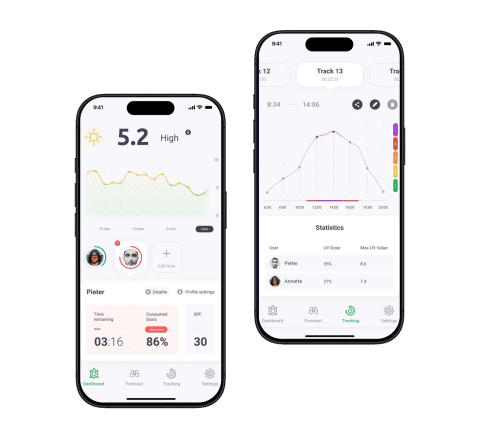
Ajuma – IoT + HealthTech mobile app development
Ajuma approached Geniusee with a vision: to help families protect themselves from harmful UV exposure through a smart wearable device paired with a mobile app. Their UV-Bodyguard sensor continuously measures real-time ultraviolet radiation and warns users before overexposure occurs.
Case details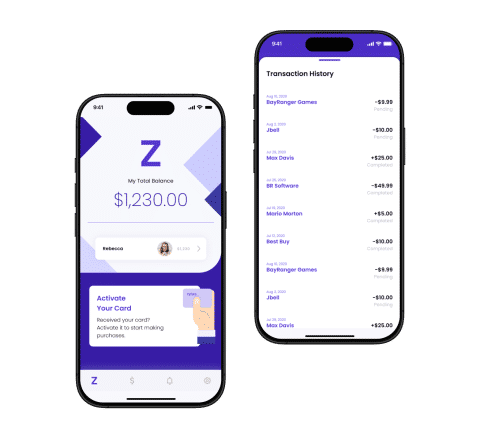

Zytara: Gamified digital banking app
Zytara is a digital banking app built specifically for Gen Z, combining financial education with a gamified, customizable user experience. Our team developed a secure, blockchain-enabled platform that lets parents manage and monitor their children’s spending and saving, while giving young users a more engaging way to interact with money. We introduced game-inspired card skins, personalized modes, and a built-in shop featuring branded merchandise from e-sports, gaming, and music partners. One of the most unique aspects of the project was enabling users to manage digital assets and complete full NFT lifecycles directly within the app.
Case details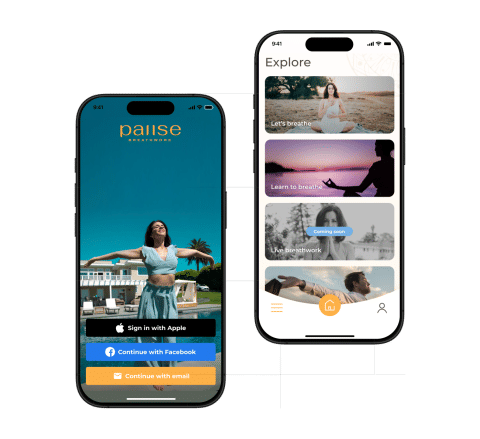
Pause Breathwork – Meditation App that reduces stress and builds healthy habits
Pause partnered with Geniusee to design and develop a cross-platform app with real-time video, push notifications, community features, and personalized daily routines.
Case details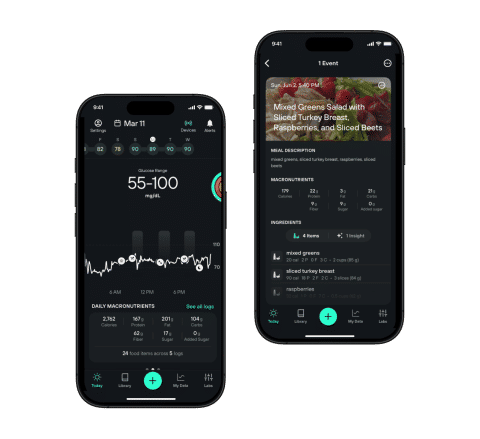
Levels Health: a mobile app for tracking metabolic health
The global rise in chronic diseases like diabetes has fueled the demand for personalized health management tools. Levels Health, an A16z-backed startup, identified a gap in the market for a user-centric app that leverages CGM data to empower individuals to optimize their metabolic health. Levels partnered with Geniusee to create a mobile app that would be their core user engagement platform.
Case details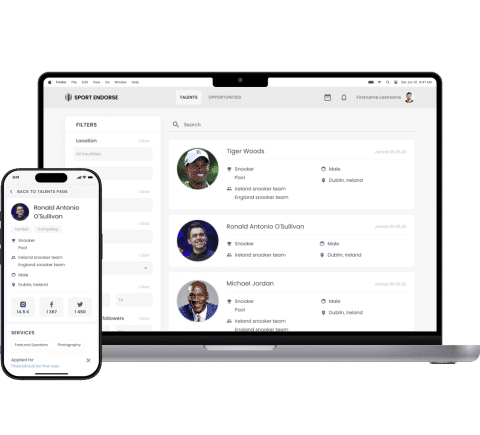
Sport Endorse: Sports collaborative marketing platform
Explore the cutting-edge MarTech platform connecting brands to 7,000+ athletes across 280+ sports in 85 countries for seamless sponsorships and campaigns. Geniusee built a scalable web/mobile solution with intuitive UX, serverless AWS, and secure payments. We launched the platform in just 4 months.
Case details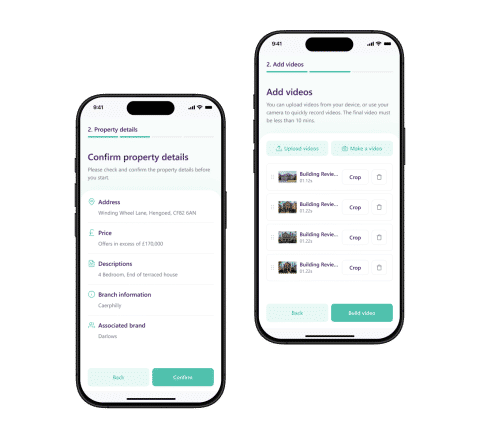
 Real estate
Spicerhaart: How Genuisee helped accelerate branded property tour videos
Spicerhaart Group Ltd is one of the UK's largest independent estate agency networks, operating 7 well‑known brands across residential sales, lettings, and financial services. Geniusee delivered a mobile video solution that simplifies property marketing: agents can capture, enhance, and publish fully branded property tours in minutes, with seamless CRM integration and automated brand consistency.
Case details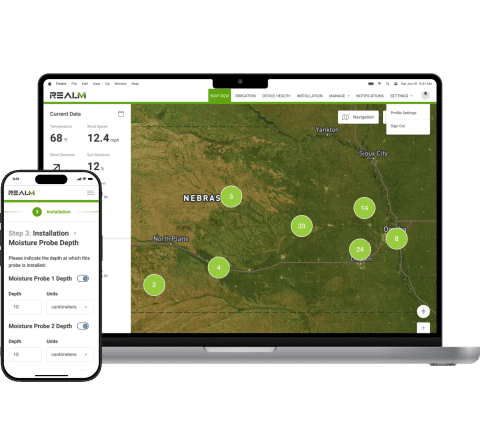
RealmFive – IoT AgriTech platform for smarter farming operations
RealmFive partnered with Geniusee to build a native iOS and Android app capable of aggregating data from multiple IoT devices, ensuring fast processing, reliable cloud delivery, and an intuitive user experience. Together, we delivered a robust, high-performing platform that helped RealmFive scale rapidly, secure new funding, and win industry awards.
Case details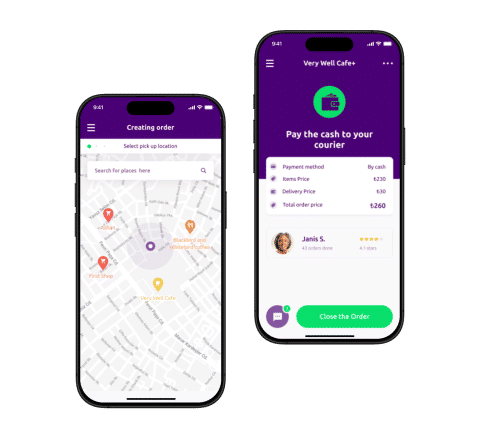
Tamam – Scalable on-demand delivery app for the Turkish market
Tamam partnered with Geniusee to build a full-cycle digital product – from discovery to UX/UI, mobile app development, admin dashboard, and microservice infrastructure. Together, we created a robust MVP that evolved into a scalable platform with over 50,000 downloads and a 4.5-star rating.
Case details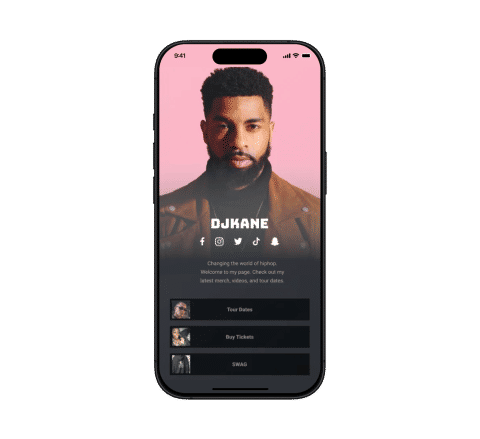
Drum: Mobile app engaging followers with one click
Drum is a mobile platform that helps creators, influencers, and brands turn a single bio link into a personalized landing page, storefront, and analytics hub. Geniusee partnered with Drum to deliver and scale cross-platform applications, modernize the tech stack, and support rapid product evolution in the creator economy.
Case details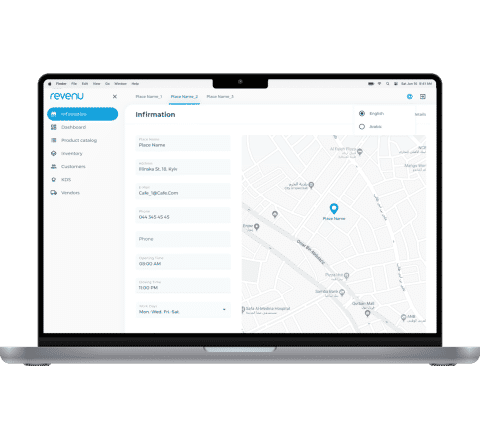
Revenu: All-in-one POS and restaurant management system
When Revenu approached Geniusee, they had a clear vision: to transform the restaurant experience through a unified POS and management system. Together, we set out to create a solution that simplifies restaurant operations, boosts staff efficiency, and enhances customer satisfaction.
Case details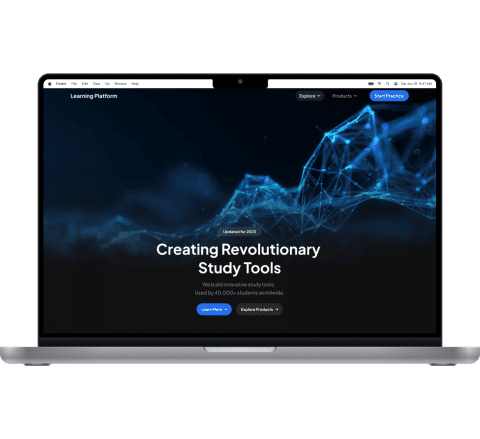
Interactive e-learning platform for medical school applicants
We partnered with a confidential client in the medical education space to create a modern e-learning platform with structured lessons, practice tests, student analytics, and personalized AI assistance. The solution was built from the ground up across web and mobile, ensuring seamless content delivery and scalable performance. The client addressed Geniusee to modernize their platform by combining real-time IoT data, AI analytics, and an intuitive user experience. As a result, we delivered a scalable, secure, and analytics-driven ecosystem that helps enterprises make informed workspace decisions.
Case details

Certified AWS Partner delivering secure, scalable cloud-native solutions.

ISO-compliant processes ensuring quality, security, and reliability.

Trusted integration partner for financial data connectivity and open banking.

Team of ISTQB-certified QA engineers for world-class software testing.

Consistently rated ★5.0 by clients for reliability and delivery excellence.

Accredited partnership supporting advanced testing and continuous QA automation.
More screens or generated code will not fix problems in architecture, device compatibility, integrations, or release processes. These situations usually require deeper Android engineering expertise:

Geniusee provides end-to-end Android app development, from the first discovery workshop to Google Play release and maintenance, as part of our broader mobile app development services, and each Android mobile app development service below maps to a situation you may recognize from above:






Android now offers real choices for where intelligence runs, and each has business consequences we work through before writing code:


Every Android development project at Geniusee follows six stages, from discovery and development to Google Play release and ongoing support:
Discovery and scope
🟣 Define goals, target users, integrations, and tech constraints
🟣 Assess platform, regulatory, and integration feasibility
🟣 Build a prioritized MVP or release backlog with effort estimates
Architecture and app design
🟣 Choose native, Kotlin Multiplatform, or cross-platform
🟣 Define architecture, APIs, data, sync, and security
🟣 Design Android UX in Figma using Material guidelines
Development in short iterations
🟣 Run two-week Android, backend, and QA sprints
🟣 AI-native software development with automated checks
🟣 Share working builds for stakeholder feedback
Quality, security, and device validation
🟣 Run automated unit, integration, and UI tests
🟣 Test across virtual and physical Android devices
🟣 Add security reviews and penetration testing where needed
Google Play release
🟣 Meet target API, Data Safety, and Play policy requirements
🟣 Configure signing and Google Play release tracks
🟣 Use staged rollout and Android vitals monitoring
Support and growth
🟣 Monitor crashes, ANRs, and performance
🟣 Deliver security and Android compatibility updates
🟣 Continue feature development through established CI/CD

Our expertise in mobile application development spans the industries where Android reaches the most customers and frontline employees:
- Mobile banking and wallet apps with biometric login, Android Keystore, and Play Integrity protection
- Payment and lending apps integrated with open banking and core banking APIs
- Android parity for iOS-first financial products, including accessibility requirements
- AI features for spending insights and in-app assistants with human oversight
- Learning apps with offline lessons, media delivery, and low-end device support
- Student, tutor, and administrator apps with shared business logic
- AI tutors and adaptive learning with learner privacy and age-appropriate safeguards
- Accessibility aligned with WCAG 2.2 and the European Accessibility Act
- Shopping and loyalty apps connected to inventory, checkout, and omnichannel APIs
- In-store associate apps with scanning, fitting-room, and stock workflows
- Android expansion of iOS-only retail products with defined feature parity
- Personalization and recommendation features with measurable conversion goals
- Field agent apps for property capture, video, and CRM integration
- Property search apps with geolocation, maps, media, and offline behavior
- Tenant and property management apps with document workflows
- AI assistants for lead qualification and listing content with approval flows
- Inspection, audit, and work instruction apps that work offline on the shop floor
- Technician and maintenance apps connected to ERP, MES, and equipment data
- Barcode, QR, and IoT sensor integration with conflict-safe synchronization
- Camera-based defect detection and predictive maintenance alerts on the device




How much does Android app development cost?
The cost of Android app development depends on the number of user roles and workflows, backend readiness, integrations, payments, hardware or offline requirements, AI features, and compliance scope, rather than on screen count alone. After discovery, we provide a fixed estimate for a defined scope, and for larger products, we deliver in stages so you can budget release by release.
How long does it take to develop an app for Android?
A focused MVP typically takes 3 to 4 months from discovery to Google Play release; a full-featured product takes 6 months or more; and a modernization or iOS-to-Android expansion takes weeks to a few months, depending on the size of the existing app. We confirm the timeline after the discovery phase, once integrations and constraints are known.
Should we build a native Android app or a cross-platform app?
Framework choice follows the product, not the other way around, and we record the reasoning behind the recommendation. The usual fits:
- Native Android with Kotlin and Jetpack Compose: apps that depend on deep Android APIs, hardware, real-time data, or Android-first UX, where platform control matters more than sharing code with iOS
- Kotlin Multiplatform: teams maintaining Android and iOS apps with duplicated logic who want to share the domain and data layers while keeping native user interfaces on both platforms
- Flutter or React Native: products where a consistent UI across Android and iOS and a single product team matter more than platform depth, provided native modules cover the device capabilities you need
- Existing Java or XML code: an installed app with proven business value is modernized incrementally, screen by screen, and replaced only when the evidence supports a rebuild
Can you take over an Android app built by another team or vendor?
Yes. We begin with an audit of the code, dependencies, environments, credentials, and release setup, stabilize what is at risk, and then agree on a roadmap, so you regain predictable ownership before new features start.
Can you turn our AI-built or no-code prototype into a production Android app?
In most cases, yes. We assess the generated foundation first, keep the product logic that is viable, replace only the risky parts, such as authentication, data handling, and platform configuration, and add tests and release engineering, so the speed you gained in prototyping is preserved rather than thrown away.
Can you build an Android app from our existing iOS product?
Yes. We define feature parity, reuse the validated product logic, adapt the experience to Android conventions and Google Play rules, and can accelerate the migration with our AI-assisted porting agent while engineers keep control of the architecture.
How do you ensure your app works across Android devices and versions?
We test on virtual devices during continuous integration and on a physical device matrix, based on your audience’s actual Android versions and manufacturers, before each significant release. We also monitor crash and ANR rates in production against Google’s Android vitals thresholds.
Who owns the code and the Google Play account?
You do. Repositories, signing keys, and the Play developer account remain under your control from the first day, with documentation and handover built into the process so you are never dependent on a single vendor.
How do I choose the best Android app development company from among so many?
Most Android app development companies list the same technologies, so instead look for skilled Android developers who have shipped native Kotlin apps with real device, security, and scale requirements; a team that covers backend, cloud, and AI alongside the app; documented quality and security processes; and clear code ownership terms. Ask to see production results, not portfolio screenshots.