


Your fintech or SaaS platform needs better compliance and analytics workflows
If teams still review transactions, documents, KYC cases, or reports manually, AI can take over much of the first-pass work. For regulated products, the AI integration should also include role-based access, audit trails, data protection, secure architecture, and QA.
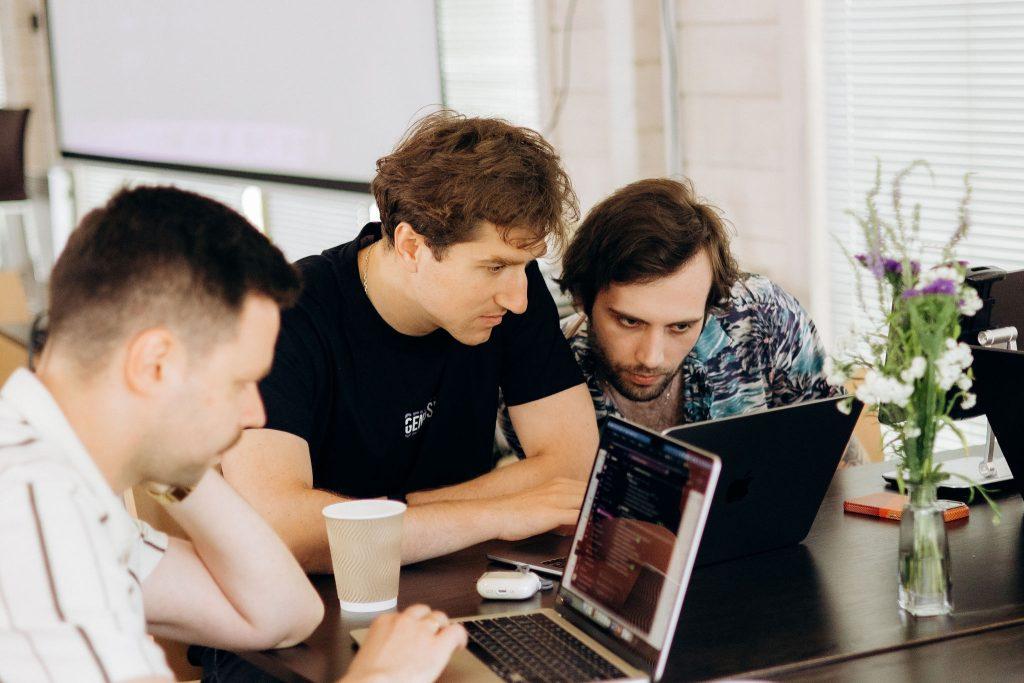








With 200+ delivered projects, AWS and Databricks partnerships, ISO certifications, and deep QA expertise, our AI integration company helps companies develop their systems from vague automation ideas into business-ready, custom agentic AI systems that are secure, scalable, and architected to withstand real-world operating conditions.


Stronger customer-facing product experience
AI can improve portals, custom SaaS applications, fintech apps, and internal dashboards with natural-language search, smart replies, reports, recommendations, and task automation. Geniusee integrates these generative AI features into real product workflows with security controls for business and customer data.
 Materials science
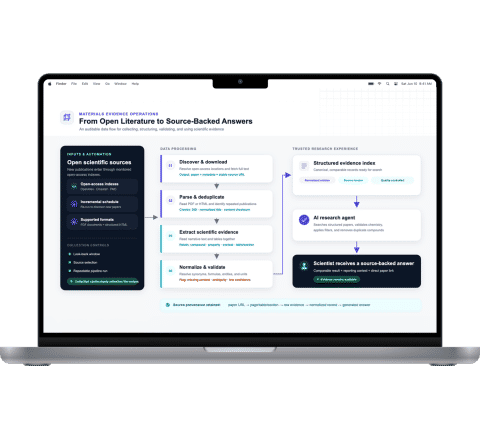
How Geniusee helped Planck Technologies process 10,000 scientific papers with an AI data pipeline
Planck Technologies develops AI-powered technology for materials discovery, helping researchers evaluate porous materials for industrial applications. They addressed Geniusee to build a scientific data pipeline that collects research publications, extracts and normalizes materials data, preserves source provenance, and supports AI-assisted scientific research.
Case details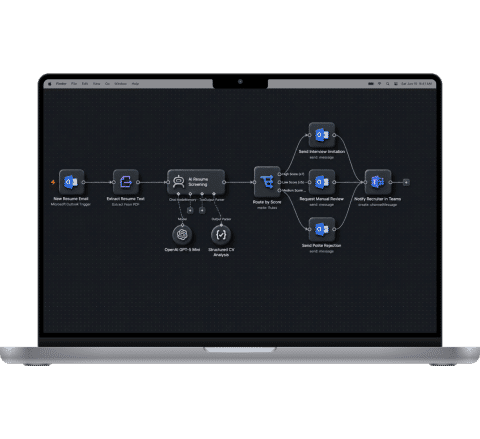
How Geniusee saved recruiters up to 25 hours in 2 weeks with AI agent
Geniusee partnered with an NDA-protected technology services company to automate one of the most time-consuming parts of its recruitment funnel: first-stage candidate screening. The resulting AI screening workflow evaluates inbound profiles against vacancy requirements, advances or disqualifies candidates, prepares personalized feedback, and gives recruiters a structured record of every decision. The resulting AI screening workflow evaluates inbound profiles against vacancy requirements, advances or disqualifies candidates, prepares personalized feedback, and gives recruiters a structured record of every decision.
Case details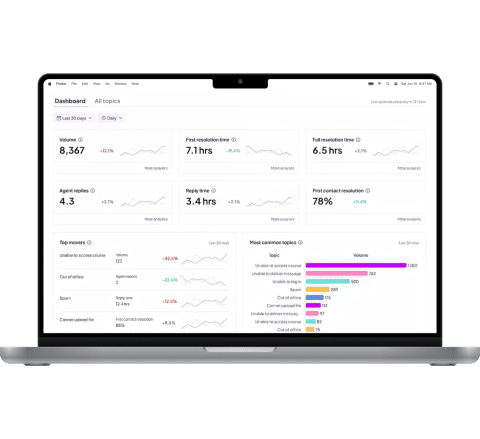
 Martech
Forethought: Enterprise AI agents for customer support
Forethought partnered with Geniusee to extend and integrate its AI-powered support platforms (Assist and Discover) into complex enterprise environments. We helped enhance real-time agent assistance, streamline multi-system connectivity, and deliver a unified support experience across channels. The result is a scalable AI agent ecosystem that accelerates resolution times, boosts team productivity, and powers more consistent customer experiences.
Case details
From fragmented travel requests to an AI-powered concierge platform
Geniusee partnered with a small travel company to develop an AI-powered concierge platform that integrates travel assistance and service management into a single digital environment. The MVP combines an AI-powered chatbot for travelers with an administrative platform for managing its content, users, data, and operations.
Case details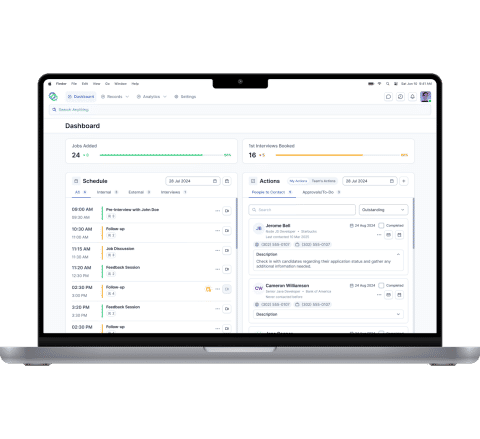
 Recruitment
How Geniusee helped Forsyth Barnes speed up hiring by up to 90% with Imagine AI
Geniusee developed Imagine AI, a scalable recruitment platform for Forsyth Barnes. The system centralizes workflows, embeds AI for candidate matching and CV tailoring, and integrates compliance and reporting tools. This solution facilitates recruiters' work and ensures full visibility across the hiring cycle.
Case details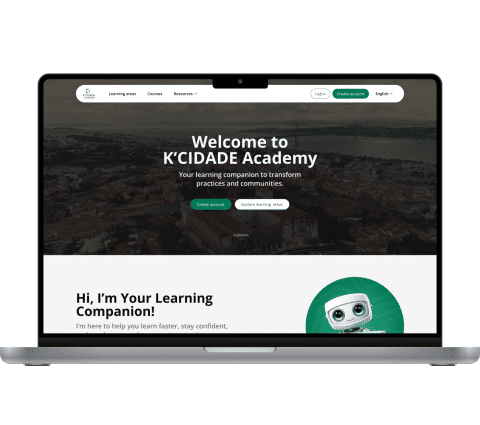
K’CIDADE Academy: How we built an AI-powered learning platform for AKF Portugal
K'CIDADE Academy is AKF Portugal's professional learning platform for civil society organizations, educators, and community leaders. Built on adaptive learning pathways, an AI virtual tutor, and a gamified progress system, it delivers personalized training to professionals working across social inclusion, education, and community development.
Case details
What makes Geniusee’s AI integration specialists efficient partners

“AI works best when it fits the business systems people already use. Since 2017, Geniusee has built software products, cloud infrastructure, and DevOps environments for companies pursuing business growth.Backed by our AWS Advanced Tier Service Partner status, we design enterprise-grade AI for real business workflows. This means making AI integration across products, operations, and infrastructure practical, secure, and production-ready.”
Taras Tymoshchuk
CEO, Founder





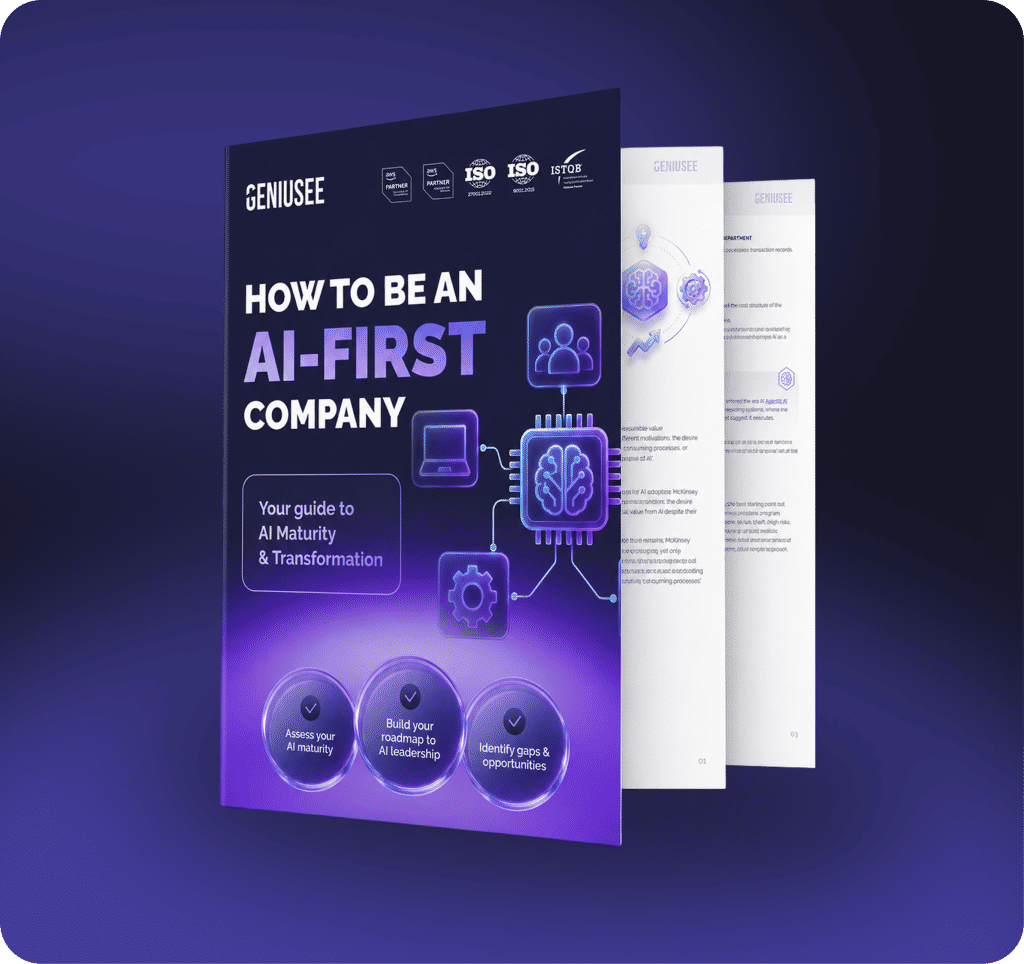
Check if your AI idea is worth building
Download the whitepaper to evaluate AI use cases, set value gates, validate PoCs, and scale only the workflows that prove measurable value. Includes readiness score, use case framework, PoC validation steps, governance, and scaling roadmap, based on Geniusee’s internal AI transformation, where one workflow saved up to 120 hr/month.
AI integration solutions depend on strong data engineering, including data lakes, warehouses, and pipelines that support digital finance, predictive analytics, personalized workflows, retail automation, and smart property management.
Fintech
- Digital banking platforms for personal finance, account management, and customer self-service
- Lending and credit platforms for application intake, borrower profiles, and risk review workflows
- Payment and eWallet apps for transactions, user accounts, merchant tools, and operational dashboards
- WealthTech and investment software for portfolio views, client reporting, and advisor productivity
Manufacturing
- MES and ERP integrations for connected planning, production, and shop-floor operations
- AI-powered analytics for OEE, yield, downtime, demand forecasting, and production planning
- IoT-enabled systems for equipment monitoring, predictive maintenance, and real-time alerts
- AI agents and quality workflows for inspections, approvals, compliance checks, and supplier coordination
Edtech
- Learning management platforms for schools, universities, corporate training, and online course providers
- Student portals for enrollment, learning records, schedules, communication, and self-service access
- Assessment and certification platforms for exams, testing flows, grading operations, and progress tracking
- Corporate training systems for employee onboarding, compliance learning, internal academies, and skills development
Retail
- eCommerce platforms for product discovery, checkout journeys, customer accounts, and order management
- Marketplace software for vendor management, listings, buyer journeys, moderation, and seller operations
- Retail management systems for store operations, stock visibility, pricing workflows, and sales performance
- Customer loyalty platforms for rewards, segmentation, personalized offers, and omnichannel engagement
Real estate
- Property listing platforms for search, inquiries, broker workflows, and listing management
- Real estate customer portals for buyers, tenants, investors, and property owners
- Property management software for maintenance requests, tenant communication, payments, and documents
- Real estate analytics platforms for market insights, portfolio visibility, pricing context, and investment review

We combine CRISP-DM with Geniusee’s software delivery process, from discovery and architecture to AI deployment, QA, and support. The goal is to integrate AI into your existing systems without treating it as a separate experiment.

Discovery and AI consulting
We define the business problem, systems, data, and use cases where AI can create measurable value.
– Business process analysis
– AI use case prioritization
– Data and system review
– Risk, cost, and feasibility check
Data and system readiness
We check whether your data, APIs, cloud environment, and architecture can support reliable AI and ML features.
– Data cleaning and structuring
– API and database readiness
– Cloud and infrastructure review
– Security, access, and AI integration architecture
Model and solution design
We select the right AI model and approach, including prebuilt AI services, RAG, AI agents, or custom ML models.
– AI model and platform selection
– RAG and AI agent design
– Prompts, guardrails, and evaluation criteria
– Prototype scope and success metrics
Development, integration, and QA
We build and integrate AI components through our AI-native solution development process, with AI agents handling approved tasks in parallel while engineers focus on critical decisions.
– AI feature development and system integration
– RAG pipelines and AI agent setup
– Parallel multi-agent development with engineer review
– API, data platform, and business system integration
– Automated QA, security, and regression testing
Deployment, monitoring, and improvement
We handle AI deployment, monitor system performance, and improve it as data, usage, and workflows evolve.
– Production AI deployment
– Model and system monitoring
– MLOps and retraining support
– Prompt, workflow, and AI feature improvements

Certified AWS Partner delivering secure, scalable cloud-native solutions.

ISO-compliant processes ensuring quality, security, and reliability.

Trusted integration partner for financial data connectivity and open banking.
Team of ISTQB-certified QA engineers for world-class software testing.

Consistently rated ★5.0 by clients for reliability and delivery excellence.

Accredited partnership supporting advanced testing and continuous QA automation.











Genuisee’s versatile experience, gained over more than 8 years, has enabled us to form a team with a proven track record.






How can AI help my business?
It depends on where your team loses the most time or where decisions rely on data that’s hard to access quickly. Conversational AI handles repetitive customer interactions. Predictive models surface patterns in transactions, documents, or user behavior. The right starting point is usually a specific workflow, not an advanced AI strategy.
How does the AI integration process work?
We start by reviewing your existing software, data sources, and workflows to understand what’s actually needed. From there, we define the architecture, handle data integration, select the right models, and connect everything through APIs and workflow logic without rebuilding what already works.
Does Geniusee offer AI integration for enterprise systems?
Yes. Geniusee connects AI models, agents, RAG, and automation with enterprise software, data platforms, APIs, and cloud environments. Our enterprise AI integration services also cover data readiness, security, access control, QA, monitoring, and post-launch improvement for production use.
How much does AI integration cost?
Scope drives cost. A focused AI integration service, such as a document automation flow or a support chatbot, is a different investment than a multi-system platform connected to CRM, ERP, cloud infrastructure, and analytics. We scope based on your data readiness, system complexity, and security requirements before providing the estimate. Contact us to discuss your project and get a rough cost estimate, or use our Estimator.
How long does the AI integration process take?
Simpler automations and chatbots can be delivered in a few weeks. More advanced generative AI services, including RAG systems, AI agents, and multi-platform integrations, typically take three to six months. Data quality, third-party systems, and testing requirements are usually what affect the timeline most.
Do I need technical knowledge to get started?
No. You describe the process, product feature, or business problem you want to improve. Our team handles the technical side, recommends the right approach, and helps you deploy AI without requiring your team to manage the engineering details.
Do you offer ongoing support after AI integration?
Yes. Our AI integration services that connect implementation to long-term support include monitoring, prompt tuning, model updates, workflow adjustments, and performance checks. AI solutions drift without maintenance, and we make sure yours stays useful as your data, users, and business processes evolve.