
Once LLM-powered AI features are part of your product or internal workflows, output quality starts to matter in ways it didn’t during experiments. If responses feel inconsistent, hard to control, or costly to fix at scale, the issue is rarely the model itself. It’s usually how the prompts, instructions, and edge cases are handled beneath the surface.

Your teams use multiple AI applications, but nothing feels standardized
As companies adopt more generative AI tools across support, analytics, content, operations, and internal search, prompt quality often becomes fragmented. Prompt engineering helps create reusable structures, clearer rules, and more consistent behavior across tools so teams can scale AI with less chaos.


Engineering experts ready to help you with your AI project


Certified AWS Partner delivering secure, scalable cloud-native solutions.

ISO-compliant processes ensuring quality, security, and reliability.

Trusted integration partner for financial data connectivity and open banking.

Team of ISTQB-certified QA engineers for world-class software testing.

Consistently rated ★5.0 by clients for reliability and delivery excellence.

Accredited partnership supporting advanced testing and continuous QA automation.
Geniusee helps businesses get more reliable, predictable output from the LLM-powered AI features they already have in production. Our prompt engineering services cover the instruction layer behind generative AI systems, from prompt architecture and guardrails to testing, optimization, tool-use logic, and production-ready reuse.

From fragmented travel requests to an AI-powered concierge platform
Geniusee partnered with a small travel company to develop an AI-powered concierge platform that integrates travel assistance and service management into a single digital environment. The MVP combines an AI-powered chatbot for travelers with an administrative platform for managing its content, users, data, and operations.
Case details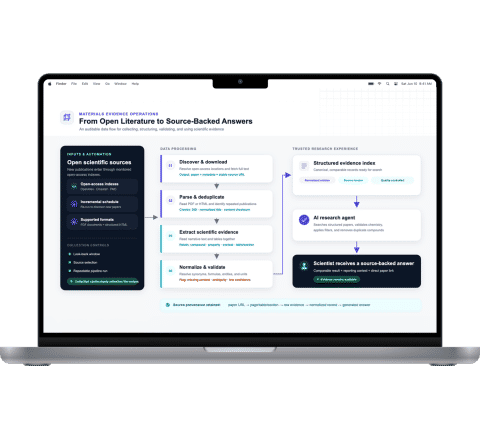
 Materials science
How Geniusee helped Planck Technologies process 10,000 scientific papers with an AI data pipeline
Planck Technologies develops AI-powered technology for materials discovery, helping researchers evaluate porous materials for industrial applications. They addressed Geniusee to build a scientific data pipeline that collects research publications, extracts and normalizes materials data, preserves source provenance, and supports AI-assisted scientific research.
Case details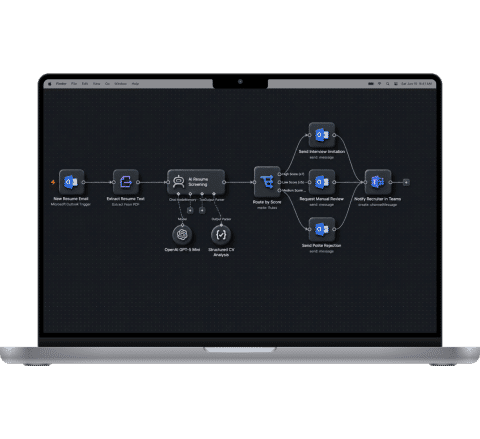
How Geniusee saved recruiters up to 25 hours in 2 weeks with AI agent
Geniusee partnered with an NDA-protected technology services company to automate one of the most time-consuming parts of its recruitment funnel: first-stage candidate screening. The resulting AI screening workflow evaluates inbound profiles against vacancy requirements, advances or disqualifies candidates, prepares personalized feedback, and gives recruiters a structured record of every decision. The resulting AI screening workflow evaluates inbound profiles against vacancy requirements, advances or disqualifies candidates, prepares personalized feedback, and gives recruiters a structured record of every decision.
Case details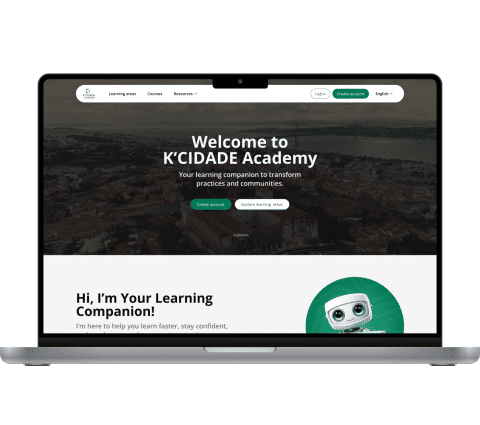
K’CIDADE Academy: How we built an AI-powered learning platform for AKF Portugal
K'CIDADE Academy is AKF Portugal's professional learning platform for civil society organizations, educators, and community leaders. Built on adaptive learning pathways, an AI virtual tutor, and a gamified progress system, it delivers personalized training to professionals working across social inclusion, education, and community development.
Case details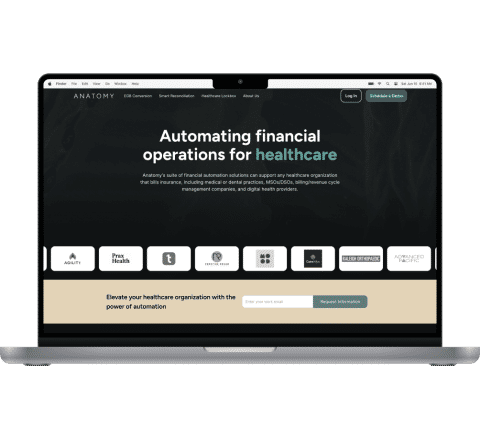
Anatomy Financial: Automated financial management software for healthcare
Anatomy introduces an innovative solution designed to automate document processing, compare various documents and banking transactions, and handle the intricacies of physical check processing. By conducting a thorough analysis, the system identifies discrepancies between the declared prices of medical procedures and the actual amounts received by the clinic.
Case details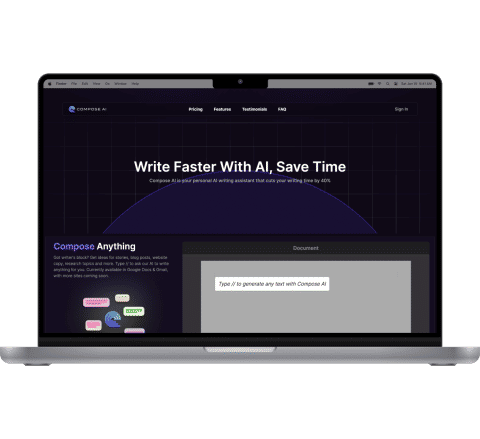
 Martech
Compose AI: Advanced content writing solution
We partnered with Compose AI to enhance their AI-powered writing platform through cloud migration, UX improvements, seamless integrations, and scalable feature development, upporting their growth from YC-backed startup to a widely adopted productivity tool.
Case detailsGeniusee’s prompt engineers follow a structured workflow built around a single core idea: every prompt helps the AI understand what your business actually needs. By designing, testing, and refining that instruction layer, your copilots, chatbots, RAG systems, and automated workflows produce more accurate, consistent results with less rework and wasted compute.

Requirement analysis
We study your AI use case, target users, input data, expected outputs, business rules, and success criteria. This helps define what the prompt system should do, where it may fail, and which level of accuracy, tone control, and output consistency your product needs.
Prompt architecture
Our team designs the core prompt structure, including system instructions, role definitions, task prompts, reusable templates, context rules, and output formats. This creates a clear foundation for reliable AI behavior across repeated business scenarios.
Model and context alignment
We adapt prompts to the selected LLM, context window, retrieval setup, and AI integration environment. This may include GPT models, Claude, Gemini, Azure OpenAI, or Amazon Bedrock-based systems, depending on your product requirements, latency expectations, and governance needs.
Prompt development
Our prompt engineers create prompts for specific workflows, such as customer support, document summarization, internal knowledge search, data extraction, reporting, recommendations, or assistant-style interactions. We craft each prompt to align with the specific task, user intent, available context, and required output format.
Guardrails and output control
We add rules for tone, scope, fallback behavior, source grounding, sensitive data handling, and off-brand responses. For RAG systems, this also includes instructions for citation behavior, missing-data cases, and answers based only on approved context.
Testing and prompt optimization
We test prompt variants against real and edge-case scenarios to check accuracy, relevance, consistency, formatting, token usage, and hallucination risks. Then we refine prompts based on measurable output quality instead of subjective guesswork.
Documentation and governance
You receive documented prompt templates, version history, usage notes, and recommendations for future updates. This helps your product, QA, support, and engineering teams maintain prompt quality as models, data sources, and business workflows evolve.













Geniusee adapts prompt engineering to the AI platforms, cloud environments, and data systems powering your product. Instead of relying on fixed model versions, we shape prompt behavior around platform capabilities, deployment rules, data access, governance needs, latency targets, and cost expectations.











Genuisee’s versatile experience, gained over more than 8 years, has enabled us to form a team with a proven track record.






With Geniusee’s prompt engineering services, you can harness the power of AI more efficiently and unlock new possibilities for your business. Let our prompt engineers accelerate your AI journey and deliver remarkable results. Hire our prompt engineers to take your AI initiatives to new heights!
What is prompt engineering?
At its core, prompt engineering is about shaping how an AI understands and responds to instructions. That includes designing prompts, system messages, guardrails, examples, and retrieval logic for LLM applications. In practice, prompt engineering ensures your AI assistants, copilots, and automated workflows produce outputs that are accurate, consistent, and actually useful in a business context — not just in a demo.
What do Geniusee’s prompt engineering services include?
Geniusee’s prompt engineering services span the full instruction layer: prompt strategy, system prompt design, RAG prompting, output formatting, guardrails, optimization, testing, and reusable prompt libraries. The aim is straightforward — help your AI features perform reliably in real workflows, not just in controlled conditions.
When should my business hire prompt engineering specialists?
Usually, when something feels off, but the model itself isn’t the problem. If your AI tool gives inconsistent answers, ignores instructions, hallucinates, or struggles with internal data, prompt engineering specialists can diagnose and fix the layer beneath. It’s also worth bringing in specialists when you need safer outputs, structured responses, or reusable prompt templates across teams.
What kind of AI systems can prompt engineering improve?
Most generative AI solutions that rely on clear instructions and structured output benefit from it — AI assistants, internal copilots, enterprise search, document processing, customer support automation, analytics assistants, and content generation workflows. The more business-critical the output, the more urgent engineering matters are.
Can you help with OpenAI, Azure OpenAI, Claude, Gemini, or Amazon Bedrock projects?
Yes. As a prompt engineering company, Geniusee works across OpenAI, Azure OpenAI, Anthropic Claude, Google Gemini, Vertex AI, and Amazon Web Services, including Amazon Bedrock-based environments. We adapt prompt behavior to your project’s platform, deployment setup, data access rules, latency requirements, and governance constraints.
How is prompt engineering different from fine-tuning?
Prompt engineering works at the instruction layer — improving model behavior through better prompts, system messages, examples, and guardrails, without touching the model itself. Fine-tuning involves training the model on training data, which is a more intensive and costly process. In most AI deployments, prompt engineering is the practical first step, and often the only one needed.
Can prompt engineering consulting help if we already have an AI product?
Often, this is exactly when it helps most. Prompt engineering consulting can review what you have, surface failure patterns, improve output consistency, reduce token waste, and strengthen guardrails. If your AI feature already works but produces unreliable or off-brand responses in production, structured prompt work tends to fix that faster than rebuilding.
How does prompt engineering help maximize AI value?
Poorly designed prompts create a quiet tax on your team — repeated corrections, manual reviews, inconsistent outputs, and unnecessary model calls. Better prompt design helps maximize AI value by making features more dependable across support, operations, knowledge search, and automation, while keeping delivery more predictable for product and engineering teams.
How much do prompt engineering services cost?
It depends on what you’re working with. A focused prompt audit is a relatively light engagement. Production-ready prompt architecture for AI assistants, RAG systems, or enterprise copilots involves deeper discovery, testing, documentation, and optimization — and is scoped accordingly. The best starting point is a conversation about your current setup and where outputs are falling short.