Geniusee builds AI chatbots that answer from your own content, connect to your CRM, help desk, or learning management system (LMS), and pass the conversation to a person when a question goes beyond what a bot should decide. We build assistants for customer support, internal knowledge, and in-product help, with source citations, access control, and monitoring included, so your first release is ready for real customers and for your compliance review.
Our custom AI chatbot development services help businesses in 4 situations:
Support leaders with a backlog of repeat questions
Your agents answer the same order, account, and policy questions all day, and your current self-service deflects little. You need a customer support assistant that resolves routine questions and hands the rest to a person with context attached.
Operations and IT leaders with answers spread across systems
Procedures live in PDFs, policies in a wiki, pricing rules in a spreadsheet, and the real answer in someone’s head. An internal AI assistant that reads only approved sources, respects permissions, and cites where each answer came from turns that sprawl into a single place to ask.
Product teams adding an assistant to their platform
You want custom chatbots that feel like part of your application: an in-product helper, onboarding guide, or tutor, with your tone, your data, and your release cycle.
CTOs replacing a rules-based chatbot
A decision-tree or intent-based bot already runs on your site, and containment is poor. You want to upgrade it to a large language model (LLM) assistant grounded in your data without rebuilding every channel and integration from scratch.
Geniusee reviews
Check all reviews
65+ REVIEWS
5.0
AI & ML
”They give us a lot of comfort and confidence in the fact that we have a solid and trusted partner behind us.”
Gilles Dahan
Founder & CEO, Zebulon.ai
5.0
Edtech
“The quality of work delivered by Geniusee exceeded my expectations.”
Anonymous
Project Manager, Mind by Gab
5.0
Software development
“The camaraderie and support among team members have made the work enjoyable, even during challenging times.”
Phil Mason
Technical Product Lead, Event UK
5.0
Martech
“The exceptional combination of responsibility and creativity made our collaboration a standout experience!”
Anonymous
Project Manager, Zap Media Group
5.0
AI & ML
“Geniusee’s commitment to customer satisfaction and flexible project management are very impressive.”
Anonymous
CEO, Legal AI-Powered Tool Company
5.0
Edtech
“The team had more than just strong technical, data engineering skills.”
Debs Taylor
Head of Data, Financial Edge
What separates a demo from a production-ready AI chatbot
Connecting an advanced AI model to a chat window takes an afternoon. Making it answer correctly, stay inside policy, and keep working after launch takes engineering. In Gartner’s survey of 5,728 customers, only 14% of customer service issues were fully resolved through self-service. Most of that gap comes from assistants that cannot find the right content, cannot see the customer’s account, or cannot tell when to stop.
Three gaps stall most AI chatbot projects between the demo and the rollout, whatever AI technologies they run on:
Accuracy without evidence
The assistant sounds confident and is sometimes wrong, because language models generate fluent text whether or not the source exists. Without grounding in your approved sources, an evaluation set, and a visible “I don’t know” path, legal and compliance will not sign off.
Answers that depend on systems the bot cannot reach
“Where is my order?” and “Can I change my plan?” need live data from your CRM, help desk, billing, or LMS. An AI solution that only knows your FAQ page stops at the first real question.
Nobody owns it after launch
Content changes, prompts drift, a model version gets deprecated. Without monitoring, flagged-conversation review, and a retraining routine, quality drops within months.
Our AI chatbot development services close all three before your customers see the assistant, and we agree on the metrics before we build.
Custom chatbot development: 4 AI chatbot solutions we build
We scope each assistant around one business problem first. Every build ships with multilingual support and deployment on your website, mobile app, and messaging channels.
Customer support assistants
Resolve repeat questions from your help center, order data, and account records, and pass the rest to an agent with the conversation summarized. We build into your existing help desk and keep agents in the loop with AI reply suggestions, the pattern we used when extending Forethought’s agent-assist tools with real-time AI autocomplete.
Typical buyers: Head of Customer Experience (CX), Support Director.
Internal knowledge assistants
Give employees one place to ask about procedures, policies, pricing, or product specs. The assistant answers from approved documents with role-based access, cites the source, and refuses when the answer is not in the sources. Works inside Slack, Teams, or your intranet, and pairs with our AI-based knowledge management approach.
Typical buyers: COO, Operations Director, CIO.
In-product and learning assistants
Embed an assistant inside your web or mobile product: onboarding help, guided workflows, or an AI tutor that adapts to each learner. We handle the mobile app development and LMS side too.
Typical buyers: founder, Head of Product, Head of Learning.
Upgrading an existing chatbot to an LLM assistant
We keep your channels and integrations and replace the brittle intent logic. We audit your current bot’s transcripts, map failure patterns, and migrate to a grounded LLM assistant in stages, so containment improves release by release instead of in one risky switch.
Typical buyers: CTO, CX leader. If you need an audit of your current bot first, our conversational AI consulting team can run it.
AI chatbots we have built: Chatbot development solutions in production
Three projects show how our chatbot development services deliver custom AI assistants in production:
AKF Portugal, EdTech non-profit
Challenge: Practitioners in social inclusion needed Portuguese-language training that adapts to each role, inside a GDPR-compliant platform.
What we built: An LLM tutor with voice input, spoken responses, and conversation memory, fine-tuned on and grounded in the client’s own training materials, plus a public chatbot on Chatbase, integrated into the platform.
Result: Full platform live in 2.5 months, no open high-severity security issues at go-live, and an NPS of 100 from the client team.
Challenge: Support reps at Forethought’s enterprise customers needed AI help inside the tools they already use.
What we built: We extended Forethought’s Assist and Discover products into enterprise environments and built a Chrome extension with real-time AI autocomplete, smart notes, Jira task templates, and an analytics dashboard for ticket volume and agent performance.
Result: The extension is in use by support teams in e-commerce, FinTech, and SaaS.
Challenge: Travelers sent requests by email, phone, and chat, and a small team answered each one by hand.
What we built: An AI concierge chatbot on the OpenAI API with an admin platform for content, users, and operations, on Node.js, NestJS, PostgreSQL, and AWS with Terraform.
Result: MVP released with the traveler chatbot and admin console, so the client can validate demand before further investment.
Genuisee’s versatile experience, gained over more than 8 years, has enabled us to form a team with a proven track record.
20+
Countries
200+
Projects completed
80
NPS score
300+
Industry-specific experts
Why choose Geniusee for AI chatbot development
Geniusee is a software development company with 300+ specialists. Four reasons teams choose us as their AI chatbot development partner:
One team from discovery to monitoring
One team covers discovery, retrieval and model work, integrations, QA, and post-launch monitoring, as on the K’CIDADE Academy platform, delivered in 2.5 months.
We know the support stack from the agent’s side
Our work on Forethought’s agent-assist tools shapes how we design handoff, so the bot helps the agent instead of dumping on them.
We prepare your content for retrieval
Grounded answers depend on clean, structured content. Our data engineering team built the pipeline that processed 10,000 scientific papers for Planck Technologies.
Production-grade on AWS, with QA built in
AWS Advanced Tier Services Partner, ISO 27001 certified, ISTQB-certified QA engineers, and post-launch support from the same team that built the assistant. Clients rate us 5.0 on Clutch across 70+ reviews.
Legal, security, and support leaders sign off on an AI chatbot when six controls are in place. We build all six into the architecture.

Grounded answers with citations
The assistant retrieves from your approved content and shows which source it used. We engineer the retrieval layer the same way as in our retrieval-augmented generation (RAG) development work: chunking, metadata, and ranking tuned to your documents, not default settings.
A visible “I don’t know”
When confidence is low, or the question is outside scope, we ensure the chatbot says so and offers a person. We tune this behavior with prompt engineering and test it against adversarial questions before release.
Human handoff with a summary
The conversation, the user’s intent, and what was already tried go to your agent in one message, inside your help desk. For regulated flows such as payments or account changes, the assistant collects the request, and a person approves the action.
Access control and personally identifiable information (PII) handling
Role-based permissions decide which documents the assistant may read for which user. We mask personal data in logs and prompts, and apply the same controls we use in our cybersecurity services.
Evaluation before every release
We build a test set of real questions with expected answers (usually 100–300 cases) and run it on each prompt, model, or content change. A release goes when the pass rate holds.
Monitoring after launch
A dashboard tracks resolution rate, handoff rate, flagged conversations, latency, and token cost. Your team and ours review flagged conversations weekly, and we feed the misses back into the content and the test set.
Video testimonials
Rob FrohweinCEO at Keep Financial
Fergal O'MullaneCEO at Validify
Dhruv GhulatiCEO at Factmata
Nathan VealTechnical Lead at Imagine AI
Johnathan LamProduct manager at Teambridge
Julian MeyerCEO at Ajuma
Gregg WarshawCo-founder at Flock
Guillaume KendallCEO at Attention Exchange
Off-the-shelf chatbot solution or custom chatbot: choosing the right chatbot type
Not every company needs custom chatbot development, and we will tell you when a platform is enough. Three situations decide which option fits:
Situation
What fits
Your answers live in one help center and one channel, and you want it live this month
An off-the-shelf chatbot solution: AI chatbot software such as Intercom Fin, Zendesk AI, or a Chatbase-style bot. We can configure and ground it for you, as we did for AKF Portugal’s public chatbot.
Answers depend on account data, several systems, strict compliance, or a workflow that ends in an action
A custom AI chatbot connected to your CRM, help desk, or LMS, with your access rules and evaluation set
The assistant is part of your product or a differentiator for your users
A custom chatbot built into your application, with your tone, memory, and release cycle
We also extend platforms you already pay for: a custom retrieval layer or handoff logic on top of a SaaS bot is often the fastest path to the right chatbot.
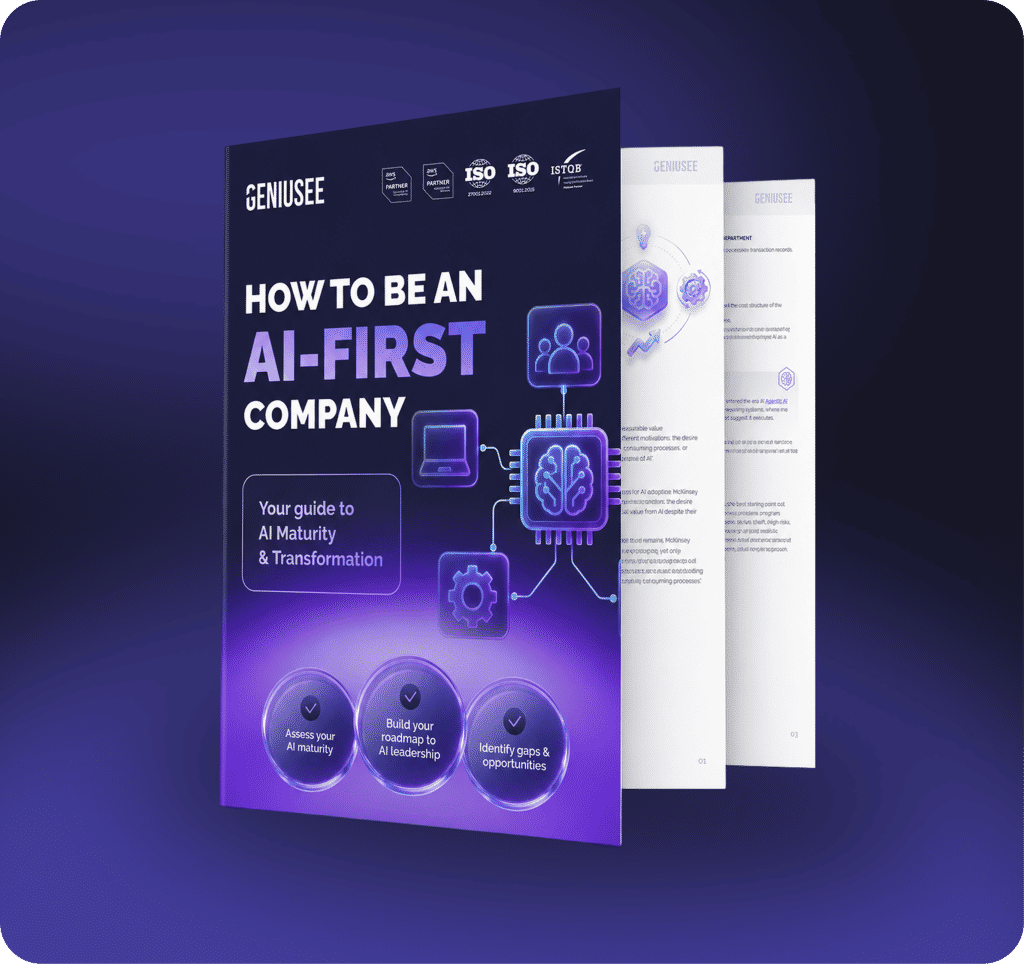
Tested across 7 Geniusee departments
Check if your AI idea is worth building
Download the whitepaper to evaluate AI use cases, set value gates, validate PoCs, and scale only the workflows that prove measurable value. Includes readiness score, use case framework, PoC validation steps, governance, and scaling roadmap, based on Geniusee’s internal AI transformation, where one workflow saved up to 120 hr/month.
Final scope and price depend on channels, systems to integrate, and compliance requirements. Typical timelines:

Proof of concept (3–4 weeks)
A working assistant grounded in a sample of your content, tested on 50–100 real questions, with a report on accuracy, gaps, and the production plan. This proof of concept (PoC) follows our AI PoC development format.
MVP (6–10 weeks)
One use case in production: full content ingestion, one or two system integrations, handoff into your help desk, monitoring dashboard, and a user-facing release on one channel.
Production rollout (3–6 months)
Several use cases or channels, multi-language support, deeper integrations, custom guardrails, and a support plan with retraining cycles.
Our portfolio
AI & ML
AI & ML
From fragmented travel requests to an AI-powered concierge platform
Geniusee partnered with a small travel company to develop an AI-powered concierge platform that integrates travel assistance and service management into a single digital environment.
The MVP combines an AI-powered chatbot for travelers with an administrative platform for managing its content, users, data, and operations.
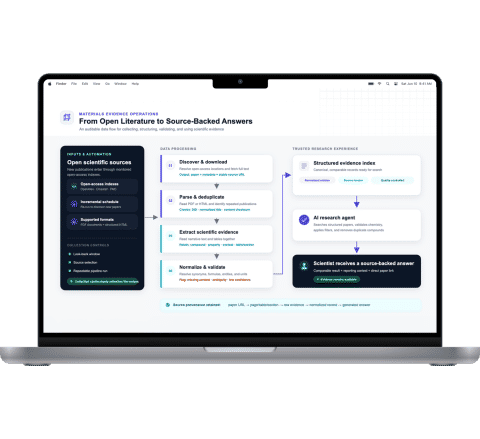
Planck Technologies develops AI-powered technology for materials discovery, helping researchers evaluate porous materials for industrial applications. They addressed Geniusee to build a scientific data pipeline that collects research publications, extracts and normalizes materials data, preserves source provenance, and supports AI-assisted scientific research.
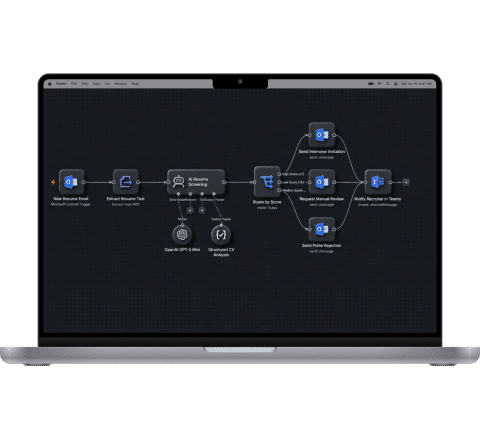
Geniusee partnered with an NDA-protected technology services company to automate one of the most time-consuming parts of its recruitment funnel: first-stage candidate screening.
The resulting AI screening workflow evaluates inbound profiles against vacancy requirements, advances or disqualifies candidates, prepares personalized feedback, and gives recruiters a structured record of every decision.
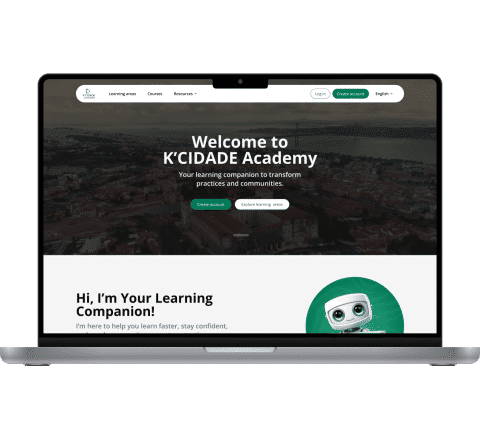
K'CIDADE Academy is AKF Portugal's professional learning platform for civil society organizations, educators, and community leaders. Built on adaptive learning pathways, an AI virtual tutor, and a gamified progress system, it delivers personalized training to professionals working across social inclusion, education, and community development.
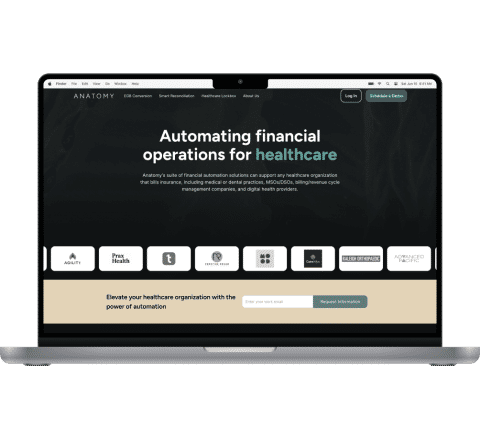
Anatomy introduces an innovative solution designed to automate document processing, compare various documents and banking transactions, and handle the intricacies of physical check processing. By conducting a thorough analysis, the system identifies discrepancies between the declared prices of medical procedures and the actual amounts received by the clinic.
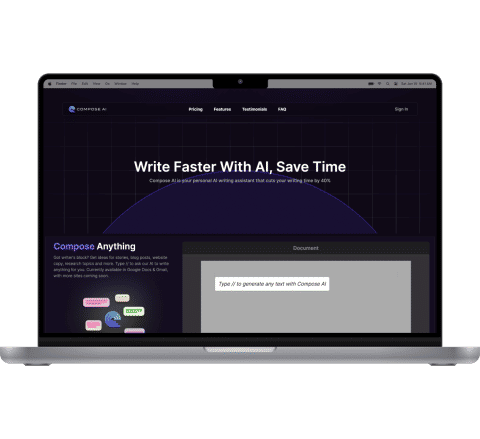
We partnered with Compose AI to enhance their AI-powered writing platform through cloud migration, UX improvements, seamless integrations, and scalable feature development, upporting their growth from YC-backed startup to a widely adopted productivity tool.
We map the top intents from your tickets, chats, or search logs, pick the first use case, and agree on the metrics, the knowledge sources, and the systems the assistant needs. You get a scope, an architecture sketch, and a cost range.
Build and evaluate the PoC
Our chatbot developers ingest a representative slice of your content, connect one system, and build the evaluation set. You test the chatbot on real questions and see where it answers, where it refuses, and where it hands off.
Integrate and harden
Full content ingestion, CRM and help desk integrations, access control, PII masking, channel deployment, and QA across edge cases by our ISTQB-certified engineers, following security best practices, through QA and software testing.
Launch, monitor, and improve
We deploy to production in your cloud account, hand over the monitoring dashboard and runbook, and run the first review cycles with your team. Ongoing post-release support covers retraining, model updates, and new use cases.
Our AI chatbot development tech stack
We pick the AI model and chatbot development tools for generative AI chatbots per project, based on data residency, cost per conversation, latency, and the languages you need.
Large language models and AI platforms
OpenAI, Anthropic Claude, Amazon Bedrock, Azure OpenAI Service, Google Vertex AI, and open-source models (Llama, Mistral) for private deployments. Our LLM comparison explains how we choose.
Orchestration and agent frameworks
LangChain, LangGraph, Model Context Protocol (MCP) for tool and data connections.
Retrieval and vector search
Pinecone, pgvector, Amazon OpenSearch, Weaviate.
Backend and data
Python, Node.js, NestJS, PostgreSQL, Redis.
Cloud and infrastructure
AWS (Cognito, S3, RDS, CloudFront, Lambda), Terraform, CI/CD, and monitoring through our AWS development services.
Existing chatbot platforms we extend or migrate from
Listing questions, viewing scheduling, and tenant support connected to your CRM and property data.
Chatbot services vs AI agents, RAG, and consulting: Which one do you need?
A chatbot or assistant talks with people and answers questions or completes simple tasks, such as order status or booking. When the job is a multi-step workflow that acts across several systems on its own, that is an AI agent. If you are still deciding what to build, start with conversational AI consulting.
Need autonomous workflows?
AI agent development covers agentic AI: agents that plan, call tools, and act with human approval points.
Need retrieval only, for search or an existing app?
RAG development covers the retrieval layer without a chat interface.
Need a chatbot strategy, an audit of your current bot, or platform selection?
Conversational AI consulting comes first, and we combine consulting and development services when you want one team for both.
Build AI chatbots your customers and your compliance team can trust
Tell us which questions your team answers most and which systems hold the answers. A solution architect replies within 1 business day with clarifying questions or a first cost range.
High load systems: Definition, metrics, and when your product needs one
Ihor Demkovych27.11.2026
AI in supply chain management: what works, what doesn’t, and how to start
Oles Dobosevych20.11.2026
Local LLM use cases: What running LLMs locally solves for your business
Oles Dobosevych31.07.2026
From insight to action: How AI predictive analytics drives enterprises
Oles Dobosevych31.07.2026
AI agent development costs in 2026 for tech leaders
Oles Dobosevych22.07.2026
How AI is rewriting the rules of modern recruiting
Oles Dobosevych14.07.2026
How AI is used in inventory management
Oles Dobosevych01.07.2026
How to build multi-agent AI for enterprise workflows
Oles Dobosevych30.06.2026
About us
Geniusee was founded in 2017 and since then we provide top-notch custom software solutions to clients all over the world. With years of experience in the industry, we have helped many businesses grow and achieve their goals by delivering innovative and scalable software products.
Years of experience in software engineering and IT
+300
Software developers and other IT professionals on board
+200
Active clients building and augmenting software with us
FAQ: Questions buyers ask an AI chatbot development company
How much does AI chatbot development cost, and what drives the cost?
The three cost drivers are the number of systems to integrate, the volume and messiness of your content, and compliance requirements such as PII handling or audit logs, which is where enterprise chatbot development costs the most. After a short scoping call, we send a cost range for the PoC and the MVP. Running costs after launch depend on conversation volume and the AI model you choose. Our AI development cost guide explains the estimate logic.
How long does it take to develop AI chatbots?
Most teams get a tested PoC in 3–4 weeks and a production MVP in 6–10 weeks; compliance approvals and the number of knowledge sources add the most time.
How do you measure chatbot success?
Our AI chatbot services deliver against metrics we agree before development starts: share of conversations resolved without an agent, first-response time, handling time for handed-off cases, customer satisfaction (CSAT) on bot conversations, and cost per resolved request. For internal assistants, we track time to find an answer and the share of answers with a verified source, and we report on all of them monthly after launch.
Can the chatbot use our internal data safely?
Yes. The assistant reads only the sources you approve, applies role-based access so each user sees what they are allowed to see, and masks personal data in prompts and logs. For sensitive data, we deploy on your own cloud account or a private model, and we document the data flows for your security review. Our overview of local LLM models explains the private deployment options.
How do you stop the chatbot from making things up?
It retrieves from your approved sources only, cites the one it used, and is tested against your question set before each release. When it is not confident, it says so and offers a person. After launch, your team and ours review flagged conversations weekly and update the content and the test set.
What happens when the chatbot cannot answer?
It hands the conversation to a human agent inside your help desk, with a summary of what the user asked and what was already tried. For actions with consequences, such as refunds or account changes, the assistant collects the request and a person approves it.
Will it connect to our CRM, help desk, or LMS?
Yes. Integrations with your CRM, help desk, LMS, billing, or internal APIs are part of every build. We integrate through your existing APIs or MCP connectors, and we test the chatbot to ensure each integration respects your access rules before launch.
What are the monthly running costs after launch?
Expect three lines: model usage (per conversation), cloud infrastructure, and support time for retraining AI models and content updates. We size each line during the PoC from real conversation volumes, so you see the monthly figure before committing to the MVP.
How do we choose among the best AI chatbot development companies?
Ask each vendor for a live chatbot case with a measured result, a written answer to how they ground answers and handle handoff, a price range after the first call, and who maintains the assistant after launch. Those four answers show whether a vendor has run assistants in production.

Thank you!
Your request was sent successfully! Our representative will contact you shortly.
While you're waiting for our response, would you like to use our AI estimator? It will help you create your own project plan.