



Tightly coupled backend architecture
Fast MVP APIs organically become hard-to-change monoliths where a change in one route breaks another. Teams defer fixing this because rewriting pauses feature delivery, and stakeholders resist that trade-off.
- Modular architecture was enforced from the beginning
- Strict separation of concerns, including domain-driven design where complexity warrants it
- Services designed to scale independently
Blocking the event loop
Unoptimized CPU-heavy tasks and poorly handled async operations silently choke the single-threaded server. These issues don’t surface in local testing but appear as random timeouts under production traffic spikes.
- Proactive performance budgets set before sprint one
- Worker threads for CPU-heavy tasks
- Strict load testing before any production release
- Async patterns reviewed and optimized throughout
Fragile and undocumented database I/O
Missing data validation, unindexed queries, and inconsistent ORM usage lead to memory leaks and slow response times. Teams avoid touching the database layer because altering it risks breaking historical data.
- Incremental query layer refactoring
- Caching is introduced step by step with Redis, where appropriate
- Zero data loss and zero service downtime throughout migration





Custom Node.js application development
We start by asking what your traffic looks like (bursty, steady, spiky around specific events) and build the data layer and caching strategy around that answer, not around a template.

Node.js API development and integration
APIs that the team consuming them can use: properly versioned, sensibly rate-limited, and well-documented enough that a new developer doesn’t have to ask in Slack what a field means.

Real-time application development
Live chat, collaborative editing, trading dashboards, delivery tracking, built with reconnect logic that handles a dropped phone connection gracefully, and load-tested at the connection count you’ll see.

Microservices development
We draw service boundaries around what your business does: orders, inventory, notifications. Bad boundaries are more expensive to fix than no boundaries at all.

Node.js + React or Next.js full-stack applications
One shared type system between frontend and backend means a changed API field shows up as a build error, not a production bug weeks later.

Legacy backend migration to Node.js
We migrate in phases, with the old system running until the new one’s proven, so “we’re switching backends” doesn’t become a maintenance-window headline for your users.

Performance audits and optimization
We profile the event loop, identify exactly what’s blocking, and show you the before-and-after numbers so it’s not a trust exercise.
Node.js consulting services
Sometimes the cheapest thing we do is tell you not to build something the way you planned to. A few hours of architecture review before a six-month build is the best money you’ll spend this quarter.

Dedicated Node.js development team
Engineers who join your standup from the beginning, and write code the way your team already does.

Support and maintenance services
We patch the npm vulnerability the week it’s disclosed, not the month after someone exploits it. Ongoing ownership, not a one-time handoff.








Discovery and scoping (1-2 weeks)
Before anyone writes a line of code, we want to know your peak traffic, your slowest existing endpoint, and what “down” costs you per hour. That shapes every decision after this.
Architecture and API design
Service boundaries, queue strategy, database choices, and API contracts are defined and documented before the sprint starts, so the team isn’t improvising structure mid-build.
Sprint development (2-week cycles)
You see working software every 2 weeks, demoed by the people who built it. You won’t need a translation layer or a status deck written by someone outside the code to understand progress.
Code review and testing
Every pull request gets a second set of eyes. Load testing happens before launch, not after a customer complains about timeouts.
Staging, UAT, and sign-off
Nothing reaches production without a full run-through in staging and your explicit go-ahead.
Deployment and post-launch support
We set up the monitoring before launch day, not after the first outage teaches us what to watch. Then we stay on for updates, scaling adjustments, and whatever may suddenly break.









One team across the full delivery cycle
Most backend engagements eventually hit a handoff problem: the Node.js shop finishes the API, and someone else owns the frontend, QA, and deployment.
At Geniusee, the same team that designs your service boundaries also handles:
- Frontend integration and shared type system alignment
- Load testing and performance benchmarking before launch
- CI/CD pipeline setup and monitoring configuration
- Post-launch support, dependency patches, and incident response
Backend experience where the stakes were real
Most Node.js shops can build an API. Fewer have built one where a slow response carries direct financial or compliance consequences.
We’ve delivered backends where the margin for error was narrow:
- A multi-market trading platform where API latency has a direct financial cost
- An LMS serving concurrent live classroom sessions for hundreds of thousands of users
- Inventory and order routing systems where 2 services disagree on stock count is an immediate customer-facing problem
- Inherited codebases with undocumented queue logic and no test coverage, stabilized and made buildable again
Verified delivery credentials
Credentials that reflect consistent delivery across complex, regulated, and high-stakes products, not a marketing logo set.
Our verification covers:
- AWS Advanced Tier Services Partner with DevOps and Education competencies
- ISO 27001 certified across security and data handling practices
- Clutch Top 1000 company based on verified client reviews
- 200+ products created across fintech, edtech, retail, and real estate since 2017

Custom financial index investment service
Our client provides custom investing indexes for the financial and insurance industries. We are honored to become one of the reasons for the client's success story. Geniusee helped to tailor one of the most important parts of their direct indexing service. We strengthened their team with our profound expertise in data engineering.
Case details

MyTutor: Online tutoring platform
MyTutor is an online tutoring platform that reshapes school-based learning by automatically grouping students with similar needs and learning styles. With built-in scheduling, class formation, and management tools, it helps tutors and schools deliver personalized support at scale.
Case details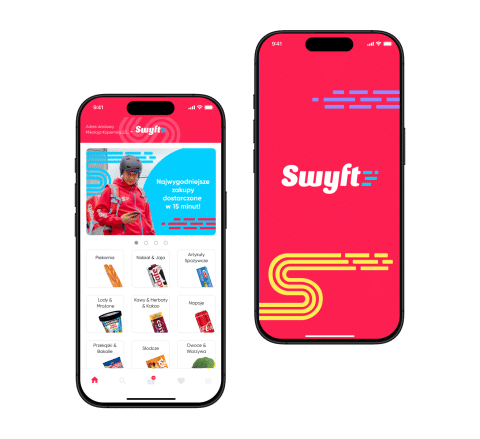
Swyft – Grocery delivery platform
Swyft partnered with Geniusee to build the platform from scratch, including Android and iOS apps, an admin panel, order management systems, and integrations with Polish payment and geolocation services. Together, we delivered a high-performance solution for the competitive instant-delivery market.
Case details
Happy House: 24/7 digital rental platform for properties
Geniusee empowered the Happy House team with deep technical expertise to develop a rental property management app. Together, we built a system that allows users to “Find great tenants with zero risk from the comfort of your sofa.” In addition, this property management software digitizes the managing properties process, bringing online traditionally offline procedures such as tenant screening, maintenance requests, rent payments, and more.
Case details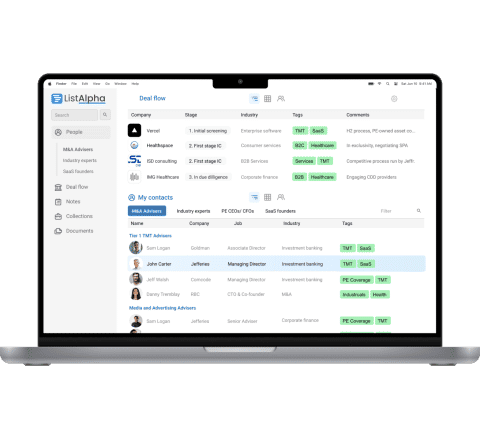
ListAlpha: Investor CRM software system
Managing numerous deals, calls, and transactions can be challenging for investors without a unified system. That's why Geniusee developed an effective and reliable investor CRM software for our UK client. This solution allows investors to seamlessly manage their notes, contacts, plans, and deals through an iOS mobile application or web-based software, all with robust security built on AWS cloud infrastructure.
Case details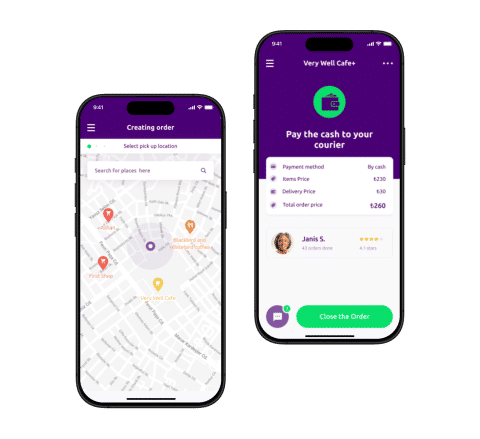
Tamam – Scalable on-demand delivery app for the Turkish market
Tamam partnered with Geniusee to build a full-cycle digital product – from discovery to UX/UI, mobile app development, admin dashboard, and microservice infrastructure. Together, we created a robust MVP that evolved into a scalable platform with over 50,000 downloads and a 4.5-star rating.
Case details
Certified AWS Partner delivering secure, scalable cloud-native solutions.

ISO-compliant processes ensuring quality, security, and reliability.

Trusted integration partner for financial data connectivity and open banking.

Team of ISTQB-certified QA engineers for world-class software testing.

Consistently rated ★5.0 by clients for reliability and delivery excellence.

Accredited partnership supporting advanced testing and continuous QA automation.
How fast can you start a Node.js development engagement?
Usually, 2-3 weeks from the first call to the first sprint. If you just need extra hands, a senior Node.js developer can be onboarded in about 2 weeks.
We already have a Node.js codebase. Can you jump in?
Yes, and we’d insist on an audit first, regardless of what the documentation says. Every existing codebase has surprises. Better to find them in week one than week six.
Is Node.js right for what we’re building?
Honestly, it depends. Great for I/O-heavy, real-time, API-driven work. Not great for heavy CPU computation or batch processing at scale. If your project’s a bad fit, we’ll tell you that in the scoping call instead of taking the contract anyway.
How do you handle scaling and security as the product grows?
Stateless services, externalized sessions, load balancing built in from the start, not retrofitted after the first traffic spike. Dependency and security review happens every sprint, not once a quarter.
What do you need from our side?
A product owner who can answer questions and review sprint demos. For larger builds, a technical stakeholder participates in architecture calls. No dedicated PM required on your end.
Do you stick around after launch?
Yes, that’s the default, not an upsell. Dependency patches, bug fixes, monitoring, and ongoing features. We don’t develop and disappear.
How do you price a Node.js project?
Scoping session first, then a real number covering timeline, team size, and cost range. For anything large or fuzzy, a short paid discovery phase happens before we commit to a fixed estimate, cheaper for you than a wrong guess.