

Your business may need custom FinTech development services in several situations. For example, you may want to launch new financial services without losing control over security, compliance, or the underlying infrastructure. Another common scenario is outgrowing generic software suites — as your customer base expands, off-the-shelf solutions often fail to meet operational and infrastructure demands. Here are some typical scenarios:

Many FinTech companies do not encounter growth constraints because their idea is weak. They reach that point because the product, architecture, or delivery model no longer keeps pace with growth. Geniusee helps financial teams remove those limits, allowing them to expand with a stronger product foundation.
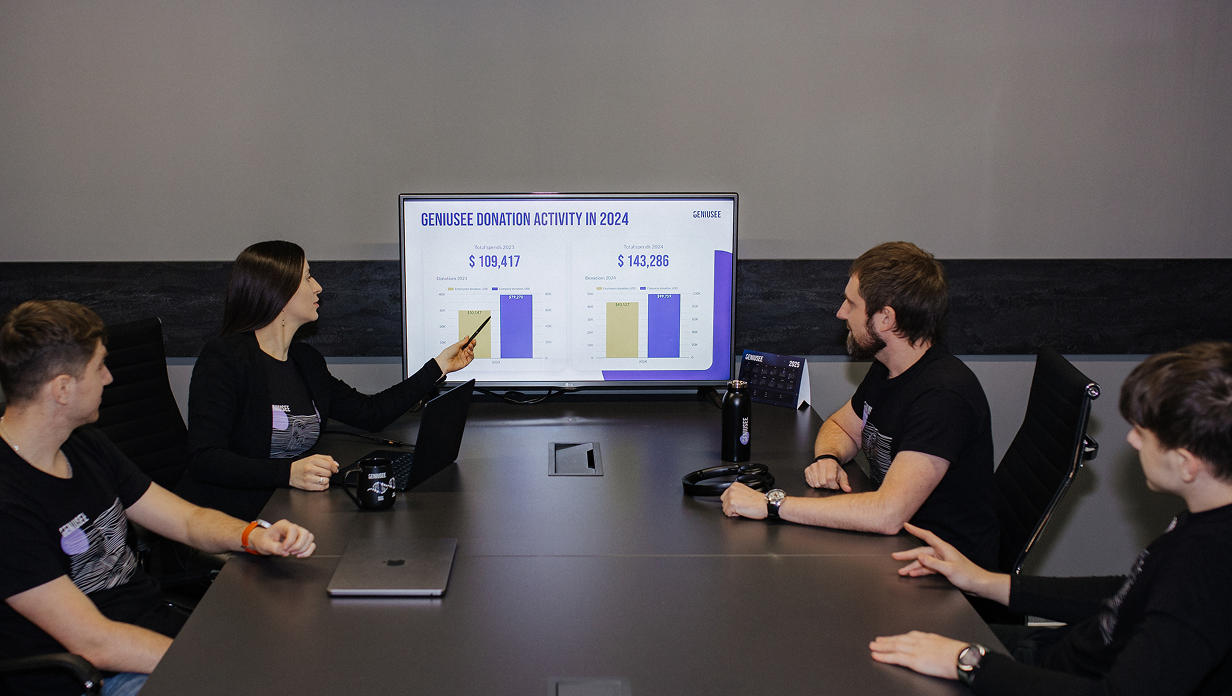


Make the FinTech software development process easier to scale
Growth becomes expensive when every new release depends on too many manual decisions, unclear ownership, or fragile delivery routines. We help structure the FinTech software development process, so your team can move from isolated feature work to a more stable path for product expansion, infrastructure change, and long-term delivery.

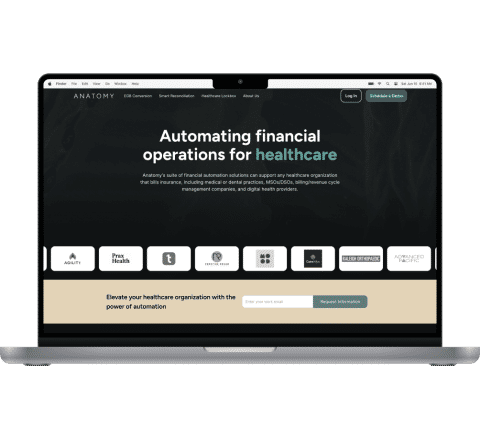
Anatomy Financial: Automated financial management software for healthcare
Anatomy introduces an innovative solution designed to automate document processing, compare various documents and banking transactions, and handle the intricacies of physical check processing. By conducting a thorough analysis, the system identifies discrepancies between the declared prices of medical procedures and the actual amounts received by the clinic.
Case details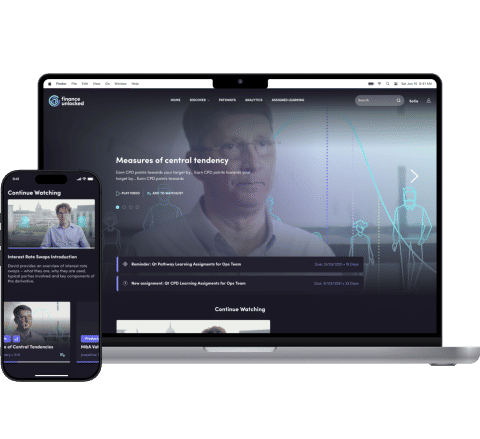

xUnlocked: Video learning platform for finance teams
xUnlocked is a multi-domain, enterprise-grade learning ecosystem that delivers structured education across Finance, Sustainability, and Data Analysis. The platform enables global organizations to upskill teams at scale through expert-led video courses, interactive pathways, and company-specific learning environments — all built on a single, scalable architecture.
Case details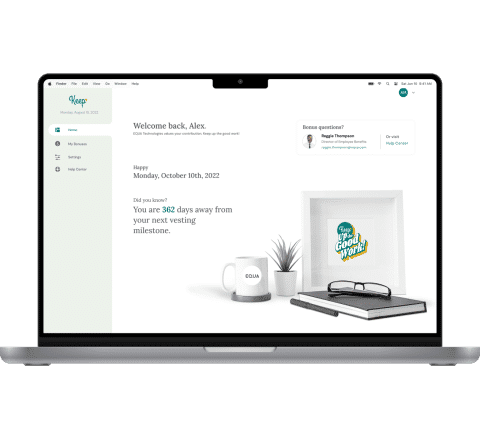

Keep: Employee retention application
Keep is a next-generation retention platform built to modernize compensation strategies. Instead of relying on equity during volatile market cycles, companies use Keep to offer vesting-based cash bonuses structured as employer-funded loans. Employees receive their full bonus upfront, while the vesting schedule governs forgiveness over time, creating transparency, commitment, and a predictable retention mechanism. Our team helped transform this concept into a secure, compliant FinTech application that streamlines bonus management for employers and delivers a simple, intuitive experience for employees.
Case details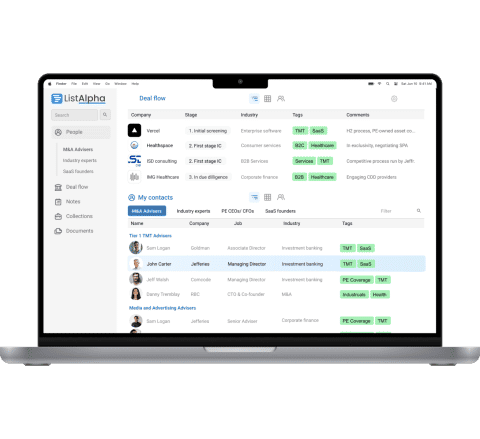
ListAlpha: Investor CRM software system
Managing numerous deals, calls, and transactions can be challenging for investors without a unified system. That's why Geniusee developed an effective and reliable investor CRM software for our UK client. This solution allows investors to seamlessly manage their notes, contacts, plans, and deals through an iOS mobile application or web-based software, all with robust security built on AWS cloud infrastructure.
Case details

Scalability growth for Financial Edge Training
Financial Edge Training combines over a century of collective expertise with advanced technology to offer new hire training programs tailored for the top investment banks. Their distinguished faculty ensures seamless training experiences, making top-tier financial education accessible and affordable online. Committed to fostering career growth, Financial Edge empowers students with a world-class curriculum that concludes with a micro-degree certification recognized across Wall Street.
Case details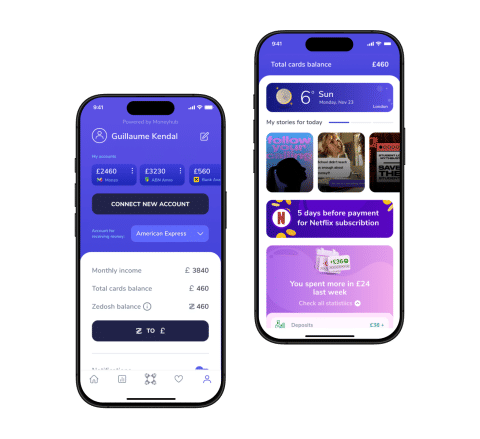
Zedosh: Digital advertising solution
Zedosh partnered with Geniusee to turn a new advertising model into a working product—one that rewards users for watching ads and leverages real financial data to deliver relevant content. Together, we moved from an early concept to a secure, scalable mobile app with instant micro-payments, open-banking integrations, and a full campaign management toolkit. The result is a platform that helps brands reach the right audience while giving Gen Z direct financial value for their attention.
Case detailsOur team handles backend, cloud, and integration challenges common to FinTech platforms, including AWS infrastructure, Plaid-connected bank data flows, and PCI DSS-aligned payment architectures. The delivery standards are aligned with ISO 9001 and ISO 27001, including strong attention to performance, data protection, and maintainability.



Trading and market analytics platform
Give traders and finance teams live charts, order books, aggregated liquidity views, and low-latency market data in one interface. Geniusee’s custom FinTech development team has built platforms with 40+ crypto market integrations, real-time streaming, distributed caching, and dynamic price analysis delivered in six months.









Equip your financial organization with new FinTech solutions that connect siloed data, making it easier to meet regulatory requirements and withstand market pressure. Let our FinTech application development experts help you launch a new FinTech product or roll out new revenue-generating features faster. We cover the full FinTech app development cycle, including software engineering, cost-efficient cloud architecture, DevOps support, and an AI-automated QA process.





Many FinTech problems do not start at the product layer. They begin deeper in the stack, where legacy logic, disconnected data, aging integrations, and manual controls make financial systems harder to change, scale, and govern. Our team builds FinTech software services around those pressure points, helping financial organizations modernize core operations, connect external providers, improve data reliability, and support regulated product growth with cleaner architecture.

Certified AWS Partner delivering secure, scalable cloud-native solutions.

ISO-compliant processes ensuring quality, security, and reliability.

Trusted integration partner for financial data connectivity and open banking.

Team of ISTQB-certified QA engineers for world-class software testing.

Consistently rated ★5.0 by clients for reliability and delivery excellence.

Accredited partnership supporting advanced testing and continuous QA automation.
What you receive
- Strategic technology roadmap
- Regulatory impact analysis
- Security posture assessment
- Architecture cost optimization
- Vendor selection guidance
Our commitment
- Deep domain expertise
- Actionable deliverables
- Clear ROI metrics
- No-surprises proposals
- Executive alignment

What you receive
- End-to-end product delivery
- Cloud-native, microservices
- AI/ML feature integration
- Enterprise-grade security
- Continuous delivery pipelines
Our commitment
- Transparent code access
- Agile sprint cadences
- 24/7 support SLA
- Quality first mindset
- On-time delivery
What you receive
- On-demand FinTech engineers
- Seamless process integration
- Flexible scaling up/down
- Domain-trained specialists
- Reduced hiring overhead
Our commitment
- Cultural fit hiring
- Rapid ramp-up time
- Dedicated account manager
- Knowledge transfer
- Full NDA compliance









Genuisee’s versatile experience, gained over more than 8 years, has enabled us to form a team with a proven track record.




















How do you ensure secure data handling?
We adhere to the rigorous requirements of both ISO 9001 (Quality Management) and ISO 27001 (Information Security Management) to guarantee that every aspect of our data processes is sturdy, secure, and continuously improving. This includes:
- Incident response procedures aligned to ISO 27001 Annex A controls.
- A formally documented quality management system (QMS).
- An information security management system (ISMS) that mandates risk assessments, defined security controls, and periodic internal and external audits.
- ISO-grade encryption in transit and at rest, combined with strict role-based access control to ensure only authorized personnel can view or modify sensitive data.
- Continuous vulnerability scanning and scheduled penetration tests in our financial software development process to detect and remediate weaknesses before they can be exploited.
How long does it take to develop a FinTech solution?
The timeline for building a FinTech platform varies based on complexity, integrations, compliance requirements, and your chosen deployment model in financial software development. In general:
- Discovery & planning (4–6 weeks): Requirements gathering, regulatory review, technical architecture design, and project roadmap.
- MVP development (4–9 months): We develop and test core features like user onboarding, transaction processing, basic reporting, and security control.
- Enterprise rollout (12–18 months): We add advanced modules (AI-driven analytics, open banking APIs, automated compliance workflows, blockchain integrations); end-to-end testing and performance optimization complete the cycle.
- Post-launch & scaling (ongoing): Continuous delivery pipelines, security updates, and feature enhancements ensure the platform evolves with market demands and regulatory changes.
What AI solutions for FinTech can you deliver?
We offer a full spectrum of FinTech AI-driven capabilities to transform every layer of your financial stack:
- Fraud detection & AML: Real-time anomaly and pattern recognition across millions of transactions to flag suspicious activity.
- Automated credit scoring & underwriting: Multi-factor risk models that blend traditional financial metrics with alternative data (e.g., mobile usage, social signals) for faster, fairer credit decisions.
- Personalized wealth & robo-advisory: AI-powered portfolio optimization engines that tailor investment mix based on individual risk profiles and market forecasts.
- Algorithmic trading & quantitative models: High-frequency signal extraction from tick-level market data using time-series analysis and deep learning.
- RegTech & compliance automation: NLP-driven document ingestion to parse, classify, and extract regulatory requirements from rulebooks and legislation.
- Customer engagement & conversational AI: Intelligent chatbots and virtual assistants for 24/7 client support, KYC onboarding, balance inquiries, and dispute management.
- Predictive analytics & risk management: End-to-end risk-scoring pipelines that ingest market data, portfolio exposures, and macroeconomic indicators to forecast credit, market, and liquidity risk.
- Computer vision for KYC: Image-based ID verification and liveness detection to automate onboarding and reduce manual review times. And more…
How do you approach legacy modernization in FinTech custom software development?
In FinTech custom software development that involves legacy codebases, aging interfaces, or tightly coupled backend logic, a full rebuild is rarely the smartest first step. We usually begin by isolating the parts that slow the product down most — unstable integrations, hard-to-change transaction logic, reporting gaps, or infrastructure limits — and then modernize them in stages. That approach helps you improve the system, like banking software, without freezing delivery or disrupting live operations.
Can you work with our in-house team during software development for FinTech?
Yes. Software development for FinTech is always a team effort, where different specialists contribute product, backend, cloud, QA, security, compliance, and integration expertise. That is why working alongside your in-house team, external consultants, or other contractors is never a problem for Geniusee. Our FinTech development company’s engineering team can join an existing delivery setup, take over a defined workstream, or coordinate with several parties inside one FinTech project.
Do we need to prepare everything before contacting a FinTech software development company?
Not at all. You can come to Geniusee with a clear product vision, an early-stage business idea, or even just a rough understanding of the problem you want to solve. Our FinTech solutions development company can help shape the concept, clarify priorities, define the right delivery scope, and turn an initial idea into something more structured from both the business and technical sides. It is completely normal to start before every requirement, workflow, or integration has been fully mapped out.
What does Plaid integration mean for a FinTech product?
Plaid integration helps a FinTech product connect bank accounts for tasks such as account linking, verification, balance checks, and transaction-based workflows. For users, that means a smoother experience. For businesses, it supports cleaner data flows and stronger compliance in FinTech.
At Geniusee, Plaid integration is implemented as part of a broader product architecture that also supports secure workflows, third-party connectivity, and regulated financial operations. That helps clients build reliable FinTech products with the level of control expected from high-quality FinTech software.