




No ownership, no roadmap control
When the vendor updates their platform, your app changes whether you want it to or not.
Features get deprecated, pricing shifts, and your release timeline depends on someone else’s sprint planning.
These are the custom app development services we deliver most, each one handled by expert mobile app developers who’ve built production apps across regulated and fast-moving industries
Native iOS app development
Every iPhone and iPad app we deliver covers the full cycle – product discovery, architecture design, development, QA, and App Store release. Not just the coding part.
We build with Swift and SwiftUI, follow Apple’s Human Interface Guidelines, and support both consumer-facing and enterprise iOS app development. Performance, usability, and long-term maintainability are the baseline, not the bonus.
Native Android development
Android app development done properly means more than writing Kotlin. We support custom device integrations, background services, secure user flows, and scalable architecture using Kotlin and Jetpack Compose, and our Android app development process includes end-to-end testing across device types and OS versions before any release goes out. Works for consumer apps, enterprise mobile tools, and platform extensions.
Cross-platform software development
Speed, budget control, and a shared codebase are legitimate priorities — and React Native and Flutter deliver on all three when the product is scoped correctly. We’re direct about the trade-offs: where native app modules are needed, we build them.
Cross-platform development doesn’t mean cutting corners. It means being smart about where you invest engineering time. For teams building a hybrid app or evaluating cross-platform vs. native mobile, we’ll give you a straight answer during discovery.

Hybrid mobile development
Not every product is a clean native-or-cross-platform decision. Some of the best-architected apps we’ve built use a mixed approach — native UI where performance demands it, with shared business logic via Kotlin Multiplatform. It’s worth considering when you need a platform-specific feel without duplicating your entire codebase. We’ll tell you whether this makes sense for your product during discovery.

Mobile SDK development
If your product needs to integrate with third-party apps, or you’re building a platform that other developers build on top of, we design and deliver mobile SDKs for iOS and Android. Authentication libraries, analytics modules, payment integrations, device feature wrappers — scoped, documented, and built to be maintained.

MVP development for mobile products
Fast to market only matters if the foundation can support what comes next. We help startups and product teams define the minimum feature set that actually validates the core assumption, then build mobile products without the technical debt that blocks phase two. The output is a real product (not a prototype) with clear architecture and room to scale.

AI features for mobile apps
Smarter search, adaptive content, better retention, fewer manual steps for end users — these are the problems worth solving with AI in a mobile app.
We embed personalization engines, recommendation systems, and predictive analytics into applications, working with Apple Foundation Models on iOS and Google’s on-device ML stack on Android.
Agentic mobile development
We build AI-native mobile features that go beyond static inference, including agentic workflows where the app reasons, plans, and takes multi-step actions on behalf of the user. Built using frameworks like Cursor and integrated with LLM backends, these are the kinds of features that genuinely change how users interact with a product, not just surface-level AI polish.

Mobile app modernization
That moment when your app costs more to maintain than to improve is the right time to start a modernization engagement, not after another failed release cycle. We migrate legacy iOS and Android codebases to SwiftUI and Jetpack Compose, refactor monolithic structures, and add modern features without rebuilding from scratch where it isn’t necessary.

Mobile backend and API
A mobile app is only as good as its backend. We design secure RESTful and GraphQL interfaces that connect mobile frontends to ERP, CRM, payment, and analytics systems, with authentication, tokenization, notifications, and real-time data sync as standard components. Integration is a core engineering problem, and we treat it like one.

Mobile app consulting and discovery
Before a line of code gets written, the most expensive mistakes are already being made — wrong platform choice, bloated scope, architecture that can’t scale. We run structured discovery and consulting engagements for teams that need clarity on what to build, how to build it, and what it’ll actually cost before committing to a full development cycle.

AI-assisted mobile testing
We use AI-driven tooling for UI and unit test generation on mobile, reducing the manual overhead of test coverage while catching regressions that traditional suites miss. Faster feedback loops, higher coverage, less time spent writing boilerplate test cases.

How much does mobile app development cost?
This is almost always the first question, and it deserves a straight answer rather than “it depends.”
| App type | Typical cost range |
| MVP (focused feature set, one platform) | $30,000 – $80,000 |
| Mid-complexity product (both platforms, integrations) | $80,000 – $150,000 |
| Enterprise platform (backend, multiple integrations, custom architecture) | $150,000 – $500,000+ |





Here’s how our mobile app development process works, and what you get at each stage:
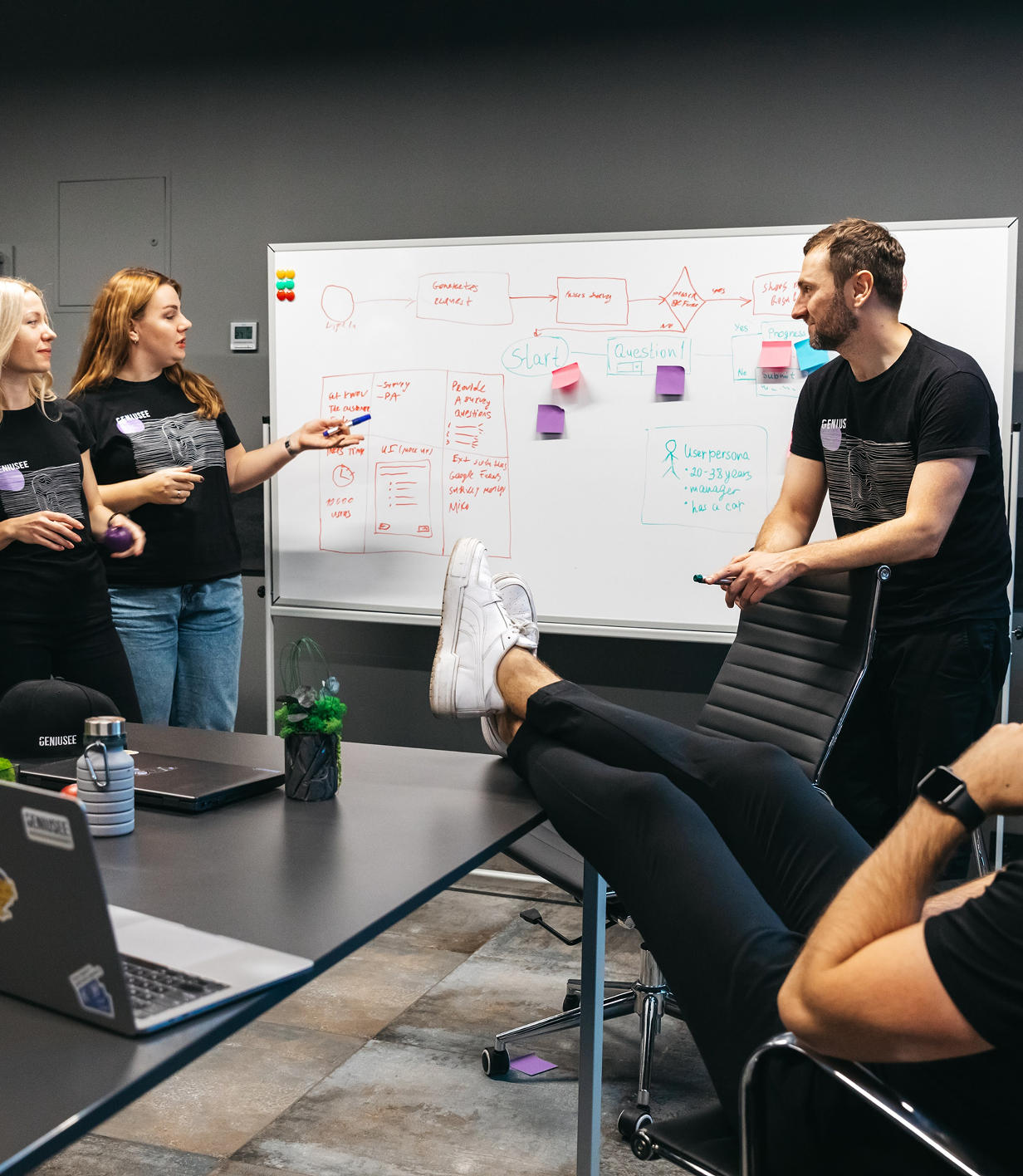
Discovery
We define product scope, user flows, platform priorities, architecture assumptions, and delivery roadmap. We clarify what MVP is and what comes later. It’s the work that stops you from spending six months building the wrong thing. The output is a clear brief that the entire development team can work from.
UX/UI design
We map user journeys for mobile contexts — not desktop workflows squeezed onto a smaller screen. Touch-friendly navigation, clear information hierarchy, and scalable app design and development systems. UX decisions are aligned with business goals and release scope from the start, not redesigned after development begins.
Development
We build native or cross-platform mobile applications based on the architecture agreed upon in discovery. APIs, authentication, push notifications, analytics, and core feature logic are all part of the development process. Code quality and release readiness are tracked throughout, not checked at the end.
Product optimization
For product-led mobile apps, we help set up the foundations for growth after launch, including monetization strategy, product analytics, A/B testing, and product experiments. This allows teams to validate decisions faster, improve retention, and optimize revenue based on real user behaviour.
QA and testing
We test app experience across devices, screen sizes, OS versions, and critical user flows. Performance, security, and release stability are validated before any deployment. Our QA process covers both automated and manual testing, depending on the application’s requirements.
Deployment
We prepare App Store and Google Play releases, configure builds, manage approvals, and handle production rollout. The goal is a clean launch without last-minute surprises, which only happens when deployment planning starts early in the development project, not the week before release.
Maintenance and support
We monitor crashes, release performance updates, push OS compatibility fixes, and support product growth after launch. A mobile product that doesn’t get maintained degrades fast — OS updates break things, user behavior changes, and competitors move. We treat post-release as part of the engagement, not an optional extra.
Native vs. cross-platform: which is right for your product?
| Criteria | Native (iOS / Android) | Cross-platform (React Native / Flutter) | Hybrid / Mixed (Kotlin Multiplatform) |
| Performance | Maximum, direct access to OS APIs | Near-native for most use cases | Native UI performance with shared logic |
| Development speed | Slower, two separate codebases | Faster, single shared codebase | Moderate, native UI layers, shared core |
| Cost | Higher, two teams or longer timeline | Lower, shared development effort | Mid-range, invest where it matters |
| Access to device features | Full, immediate | Most features covered; some require native modules | Full, native layers handle platform specifics |
| Best for | Complex, performance-critical apps | Products where speed-to-market matters | Teams that want a native feel without full duplication |
| Long-term maintenance | Two separate update tracks | Single codebase, easier to maintain | Shared logic reduces drift between platforms |
Most mobile apps today don’t need to be 100% native. React Native and Flutter handle the vast majority of use cases well. The exceptions are apps with heavy graphics, real-time audio/video processing, or deep hardware integration — there, native is the right call. We’ll tell you which one fits your product during discovery, and we won’t recommend native just because it’s a larger engagement.



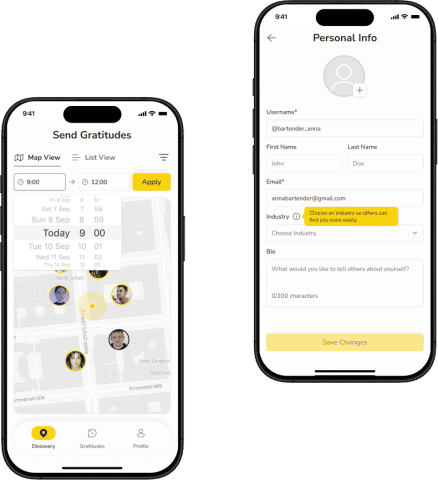
BeEpic: Digital tipping and appreciation app
BeEpic is a mobile app that reimagines tipping and appreciation for everyday services, where the giver and receiver may never meet in person. Geniusee helped the startup design and develop an MVP with accurate geolocation logic, asynchronous gratitude matching, and a scalable technical foundation for future enterprise integrations.
Case details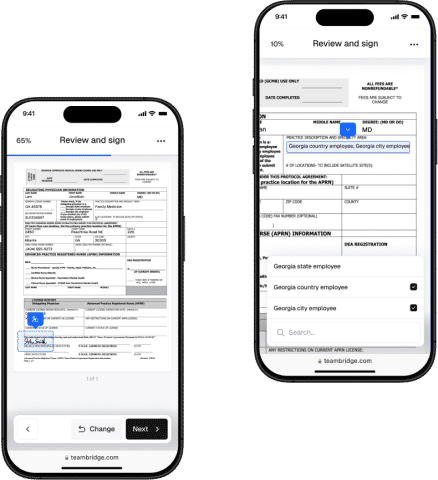
Building native document and e-signing workflows for TeamBridge
TeamBridge users managed scheduling, time tracking, onboarding, and workforce coordination in one platform. But when it came to compliance documents, employee onboarding forms, and contract signing, they still had to leave the system and rely on third-party document tools. Geniusee engineered a native Document Studio and integrated the E-Sign engine inside the TeamBridge ecosystem. Now, users can create, edit, distribute, automate, and sign documents directly in the platform while keeping workforce and compliance data connected.
Case details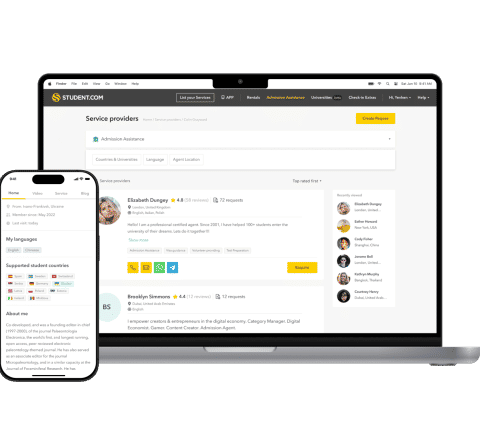

Student: Edtech platform for students and service providers
Student is a global EdTech marketplace that helps international students find and book education and relocation services. Geniusee built the platform from the ground up, delivering both web and mobile versions with a scalable, serverless architecture. The solution supports service discovery, request management, secure payments, user verification, and content moderation. Our work focused on creating a seamless, intuitive experience for students, agents, and service providers across multiple markets.
Case details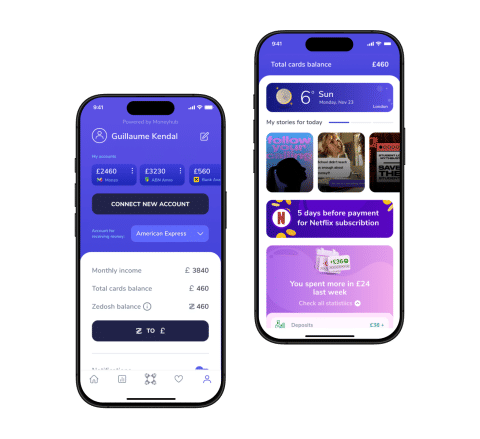
Zedosh: Digital advertising solution
Zedosh partnered with Geniusee to turn a new advertising model into a working product—one that rewards users for watching ads and leverages real financial data to deliver relevant content. Together, we moved from an early concept to a secure, scalable mobile app with instant micro-payments, open-banking integrations, and a full campaign management toolkit. The result is a platform that helps brands reach the right audience while giving Gen Z direct financial value for their attention.
Case details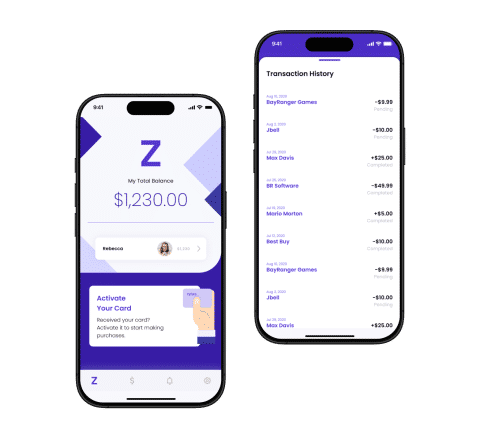

Zytara: Gamified digital banking app
Zytara is a digital banking app built specifically for Gen Z, combining financial education with a gamified, customizable user experience. Our team developed a secure, blockchain-enabled platform that lets parents manage and monitor their children’s spending and saving, while giving young users a more engaging way to interact with money. We introduced game-inspired card skins, personalized modes, and a built-in shop featuring branded merchandise from e-sports, gaming, and music partners. One of the most unique aspects of the project was enabling users to manage digital assets and complete full NFT lifecycles directly within the app.
Case details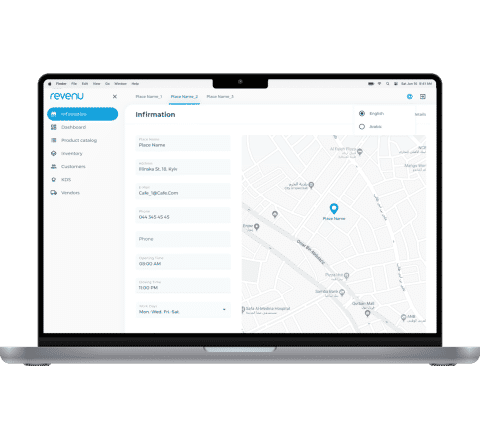
Revenu: All-in-one POS and restaurant management system
When Revenu approached Geniusee, they had a clear vision: to transform the restaurant experience through a unified POS and management system. Together, we set out to create a solution that simplifies restaurant operations, boosts staff efficiency, and enhances customer satisfaction.
Case detailsGenuisee’s versatile experience, gained over more than 8 years, has enabled us to form a team with a proven track record.


Strong mobile engineering team
250+ experts, including iOS and Android app developers, UX designers, QA engineers, and mobile architects. ISTQB-certified QA. AWS partnership. Eight years of mobile-specific delivery experience.















Certified AWS Partner delivering secure, scalable cloud-native solutions.

ISO-compliant processes ensuring quality, security, and reliability.

Trusted integration partner for financial data connectivity and open banking.

Team of ISTQB-certified QA engineers for world-class software testing.

Consistently rated ★5.0 by clients for reliability and delivery excellence.

Accredited partnership supporting advanced testing and continuous QA automation.
Why choose Geniusee for custom mobile app development services?
Eight years of mobile development delivery, 180+ completed projects, and a 5.0 Clutch rating. We offer flexible engagement models (dedicated team, time and material, or outstaffing) and cover the full mobile application development services cycle from discovery to post-release support. Our team includes iOS and Android app developers, UX designers, QA engineers, and mobile architects. We work across fintech, edtech, retail, healthcare, and real estate.
How long does it take to build an app?
An MVP on a single platform typically takes three to six months. A mid-complexity product with both iOS and Android and backend integrations runs six to nine months. Enterprise platforms with custom architecture and multiple integrations can take nine to twelve months. We provide a realistic timeline after a discovery phase.
Try our Estimator or talk with our team to get an approximate timeline of your development project.
How much does it cost to develop an app?
MVP builds start around $30,000–$80,000. Mid-complexity mobile apps, including both platforms and integrations, typically fall in the $80,000–$150,000 range. Enterprise mobile platforms with custom backends, security requirements, and complex integrations run $150,000–$500,000 or more.
Try our Estimator or talk with our team to get an approximate timeline.
Do you build both iOS and Android apps?
Yes. We build native iOS apps with Swift and SwiftUI, native Android apps with Kotlin and Jetpack Compose, and cross-platform apps using React Native and Flutter. We’ll recommend the right approach (native or cross-platform) based on your product requirements, not on what’s more profitable for us.
What industries do you have the strongest mobile expertise in?
Fintech (mobile banking, payments, lending), edtech (learning platforms, virtual classrooms), retail (shopping apps, loyalty programs), real estate (listing and leasing apps), manufacturing (ERP-connected mobile tools), and logistics (tracking and routing apps). Most of our portfolio is in these verticals, so we bring real domain knowledge to the mobile app development process.
Can you help me complete my app development project?
Yes, we have the expertise and experience to help you complete your custom mobile app development project. Our dedicated team has worked with startups and enterprises alike to build successful iOS and Android apps from concept to launch.
What platforms should I develop my custom mobile app for?
There’s a clear framework for making that decision. If performance and device-level features are critical, native is the right call. If speed-to-market and cost control matter more, cross-platform delivers the same app experience for most use cases. We cover mobile app types across both approaches and will recommend the best mobile app development path for your specific product during discovery.