






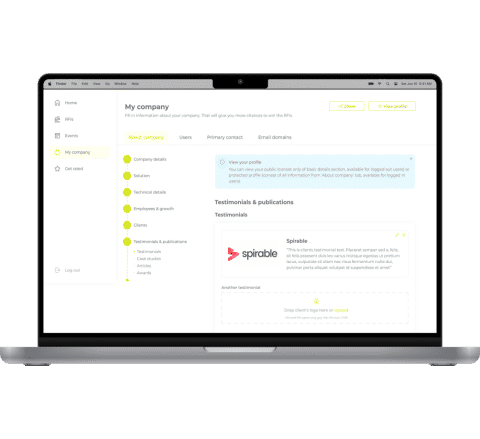

Validify – Retail vendor management platform
See how Geniusee built Validify’s scalable vendor management platform with advanced UX, data architecture, and automated RFI workflows.
Case details
Celery: Open-source library for Fortune 500 company
Celery is an Open-Source distributed system that offers simplicity, flexibility, and reliability for efficiently processing enormous volumes of messages. It equips operations with the essential tools to effectively maintain such a system. Designed with a focus on real-time processing, Celery serves as a task queue while also providing support for task scheduling. Celery operates under the BSD License, ensuring open collaboration and widespread accessibility.
Case details
Low-latency cryptocurrency analysis platform
Learn how Geniusee built a real-time crypto trading dashboard integrating 40+ exchanges with low-latency streaming and secure AWS infrastructure.
Case details
Flexible virtual lighting console for UA Light
UA Light partnered with Geniusee to build a reliable, scalable, and configurable Virtual Console capable of supporting demanding live environments. Our team delivered a powerful software engine that offers multi-protocol support, stable DMX generation, cross-platform drivers, and a modern visualization approach.
Case details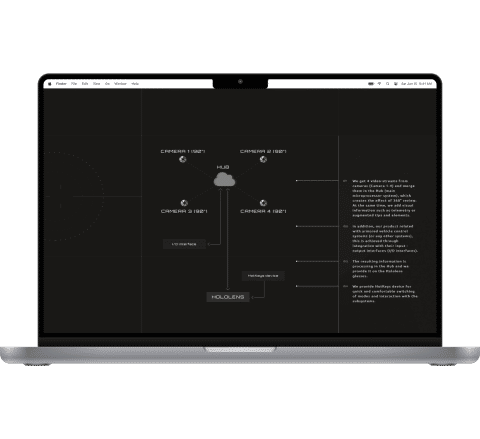
360° Mixed reality circular review system for armored vehicles
Geniusee helped engineer a 360° mixed reality review system for armored vehicles, combining HoloLens integration, optical and thermal cameras, and real-time video streaming to create a “transparent armor” experience.
Case detailsIn five focused days, we uncover user needs, ideate impactful solutions, prototype designs, and validate with real users to de-risk development smartly
1 step – Design sprint facilitation
Gather stakeholder insights, define objectives, analyze market data, outline sprint goals to set the foundation for ideation and design activities.
2 step – Wireframes & concepts
Translate goals into low-fidelity wireframes conceptual mockups, exploring multiple layouts to identify optimal user flows and feature hierarchies.
3 step – UI design & visual refinement
Design high-fidelity interfaces with refined aesthetics and typography based on brand guidelines ensuring layouts enhance usability and visual appeal.
4 step – Development preparation
We offer an interactive and adaptive layout, connecting integrations with CRM, ERP, online payments, delivery services, and email/SMS mailing for enhanced retail systems.
5 step – Testing & validation
Conduct prototype validation sessions to gather feedback, confirm design assumptions, and ensure the final product aligns with user needs.






Genuisee’s versatile experience, gained over more than 8 years, has enabled us to form a team with a proven track record.









Certified AWS Partner delivering secure, scalable cloud-native solutions.

ISO-compliant processes ensuring quality, security, and reliability.

Trusted integration partner for financial data connectivity and open banking.

Team of ISTQB-certified QA engineers for world-class software testing.

Consistently rated ★5.0 by clients for reliability and delivery excellence.

Accredited partnership supporting advanced testing and continuous QA automation.


What is a design sprint?
A Design Sprint method is an intensive, five-day process where a cross-functional team collaborates to understand a problem, sketch solutions, build a prototype, and test it with real users. It was popularized by Google Ventures as a way to validate new product ideas quickly without committing months of development time. By the end of the week, you’ll have concrete feedback on whether your solution resonates with users before you build the full product.
What is the difference between a Scrum sprint and a Design Sprint?
A Scrum sprint is part of agile software development, typically lasting 1–2 weeks, where teams plan, build, and deliver increments of working software in iterative cycles. A Design Sprint, on the other hand, focuses solely on rapid ideation, prototyping, and user testing to validate concepts – usually over a single, uninterrupted five-day period.
How many days is a Design Sprint?
A classic Design Sprint runs for five consecutive days. Each day has a clear focus: understanding and mapping the problem on Day 1, sketching solutions on Day 2, deciding on a direction and storyboarding on Day 3, building a prototype on Day 4, and testing with users on Day 5.
What is the primary goal of a Design Sprint?
The main goal is to de-risk product or feature decisions by validating them with real users before spending significant time and money on development. You end the sprint with a tested prototype that either proves your idea’s viability or highlights issues you hadn’t considered.
How much does a Design Sprint cost?
A five-day design sprint can range from around $5,000 to $25,000+, depending on your market and requirements.