

Educational software development involves more user roles than most products: learners, teachers, parents, administrators, and content creators. Most teams come to us at one of four points.

Three platforms, three different problems. Each result below comes from the published case study, so you can check the details yourself.
MyTutor: online tutoring for the UK and U.S. markets
4M+ lessons · 250K+ learners · first live U.S. version in 2 months
MyTutor, a UK tutoring platform, needed a white-label product for the U.S. market and a modernized core platform, without pausing releases. Our 40+ experts worked across 4 product streams and built React and Java services on AWS. We also built Zoom-connected video lessons, scheduling, and secure payments. The lesson space gives tutors and students a shared whiteboard and voice chat.
xUnlocked: video learning for enterprise finance teams
100,000 learners · 93% video completion rate · 350% client’s annual growth
xUnlocked needed to move its WordPress video platform to an architecture built for enterprise clients. Those clients asked for corporate login, their own branding, and team management. We rebuilt it as a Laravel and React eLearning platform with tenant-level branding, Auth0 and SAML SSO, and ChargeBee billing, plus manager dashboards and learner analytics.
Medical admissions eLearning platform (U.S., confidential client)
100K+ users, up from 40K at launch · 7 exam-prep products · MVP in 9 months
Students preparing for medical school admission exams needed video lessons, practice tests, and progress tracking on any device. We delivered native iOS and Android apps and a responsive web platform. An AI chatbot and AI evaluation of video and written answers give students feedback between lessons.
Choose your LMS solution: White-label, pre-built, or custom LMS development
Building a learning management system from an empty repository spends budget on logins, course catalogs, and reports that every LMS already has. We maintain our own LMS accelerators: ready software solutions for the standard parts, and custom software solutions for the parts that make your product different. You pay for custom development only where it adds value.
| White-label AI LMS | Pre-built LMS | Custom LMS development | |
| Time to launch | Days to a few weeks, depending on setup and integrations | Faster than a custom build; depends on integrations and data migration | A prototype takes about 400–500 hours; a complex platform takes 6–9 months |
| What you get | Courses, assessments, analytics, AI content creation, HRIS, CRM, and video integrations, and your domain and branding | Everything in white-label, plus custom learning and enrollment flows, SSO and API integrations, advanced reporting, and data migration | Custom modules, tailored UX and workflows, complex integrations and architecture, and a dedicated team with an SLA |
| Ownership | Hosted platform under your brand | Full ownership of your LMS and data | Full ownership of code, data, and IP |
| Best fit | Training teams that need a branded LMS this quarter | Education businesses with their own enrollment logic or integration needs | EdTech companies whose learning model is the product |
| Next step | Explore white-label LMS | Explore pre-built LMS | Explore custom LMS development |
HRIS stands for human resources information system, CRM for customer relationship management, and SLA for service-level agreement.

We provide software development services to build each layer of an educational platform, from the content engine to the mobile app. Explore our education software development services below. Each one has its own page with scope, features, and delivery details, so you can go straight to the eLearning solutions that match your project.
Explore AI-based LMS options that fit your timeline and budget.
White-label AI LMS
Start in days. Use immediately.
Includes:
- Ready-to-use LMS with core features (courses, assessments, analytics)
- AI-powered content creation and learner support
- Standard integrations (HRIS, CRM, video tools)
- White-label basics (domain, branding, email templates)
- User and role management with onboarding flows
- Basic analytics and reporting dashboards


Pre-built LMS
Flexible by design. Tailored to your needs.
Includes:
- Pre-built core with custom flexibility
- Custom learning flows and enrollment logic
- Additional integrations (SSO, HRIS extensions, APIs)
- Advanced reporting and configuration options
- Full ownership of your LMS and data
- Extended branding and UI customization
- Ongoing support with priority email support and 1 hour of consulting per month
- Setup, data migration, and admin onboarding support





Cutting-edge educational AI pays off when it takes routine work away from tutors and gives learners faster feedback, which is what moves educational outcomes. We build three kinds of AI features into learning platforms, and each one runs for a client today. For the full range of AI services, see AI solutions for education.



Why choose Geniusee?
Most rankings of software development companies in 2026, from lists of top educational software development companies to top custom software development firms, sort vendors by headcount and review volume. In the software development services space, that tells you little about how a team handles exam-week traffic or student data. The best education software development companies answer the six questions below with evidence. Ask them of every educational software development company on your shortlist, including us.
| What to check | Why it matters | Geniusee’s evidence |
| Shipped EdTech products with results | A general portfolio of software development solutions does not show whether a team understands learner roles, content workflows, and peak loads | 23+ EdTech products delivered; MyTutor: 4M+ lessons to 250K+ learners |
| Own LMS accelerators | Ready modules shorten time to market and cut the development cost of standard features | White-label AI LMS and pre-built LMS |
| Learning standards and integrations | Schools and enterprises expect their content, identity, and video tools to work on day one | xAPI and H5P for LINFOR, SAML SSO for xUnlocked, Moodle plugins for Financial Edge, Zoom APIs for MyTutor |
| Student data protection | FERPA, COPPA, and GDPR obligations reach the vendors that process student records | ISO 27001-certified processes; compliance scope set in discovery, before architecture decisions |
| Accessibility | Under ADA Title II, U.S. public schools and universities must meet WCAG 2.1 AA; the DOJ moved the first deadline to 26 April 2027 for large entities | Screen reader support, ARIA attributes, and alt text built into K’CIDADE Academy |
| Cloud architecture for peak load | Exam weeks, live sessions, and cohort launches multiply traffic in hours | AWS Advanced Tier Services Partner with the AWS Education Services Competency |
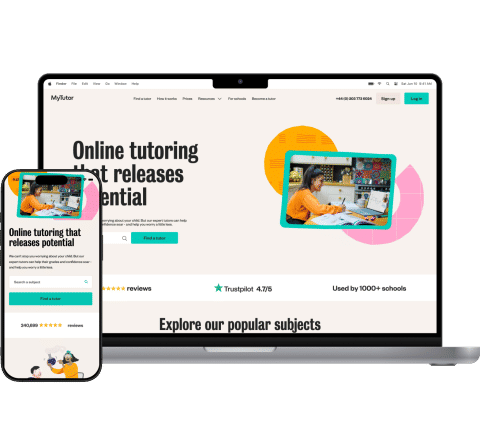

MyTutor: Online tutoring platform
MyTutor is an online tutoring platform that reshapes school-based learning by automatically grouping students with similar needs and learning styles. With built-in scheduling, class formation, and management tools, it helps tutors and schools deliver personalized support at scale.
Case details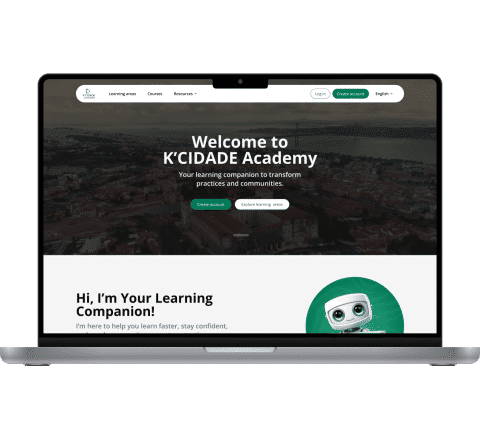
K’CIDADE Academy: How we built an AI-powered learning platform for AKF Portugal
K'CIDADE Academy is AKF Portugal's professional learning platform for civil society organizations, educators, and community leaders. Built on adaptive learning pathways, an AI virtual tutor, and a gamified progress system, it delivers personalized training to professionals working across social inclusion, education, and community development.
Case details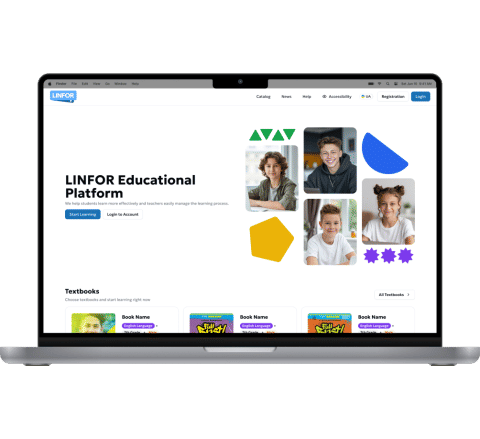

How Geniusee built LINFOR, an EdTech learning platform for Linguist
Geniusee partnered with Linguist to develop LINFOR, a learning platform designed for Ukrainian schools to create, deliver, and manage interactive digital supplements to textbooks. The platform connects existing educational materials with digital exercises and dedicated environments for teachers, students, parents, and administrators.
Case details
Interactive e-learning platform for medical school applicants
We partnered with a confidential client in the medical education space to create a modern e-learning platform with structured lessons, practice tests, student analytics, and personalized AI assistance. The solution was built from the ground up across web and mobile, ensuring seamless content delivery and scalable performance. The client addressed Geniusee to modernize their platform by combining real-time IoT data, AI analytics, and an intuitive user experience. As a result, we delivered a scalable, secure, and analytics-driven ecosystem that helps enterprises make informed workspace decisions.
Case details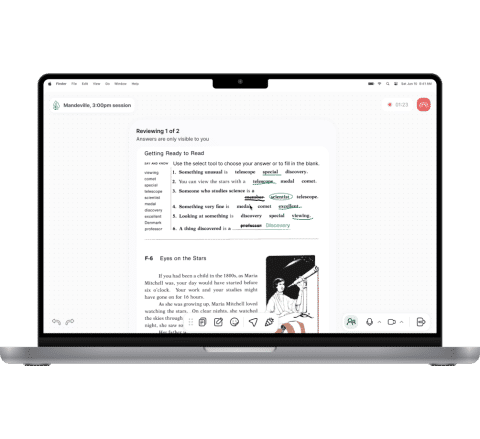
Custom virtual classroom solutions for a leading K-12 education provider
We partnered with a U.S.-based enterprise client to build a secure, educationsl, AI-enabled platform that streamlines operations, modernizes workflows, and enhances the user experience. Due to NDA restrictions, the client’s identity and certain details remain confidential.
Case details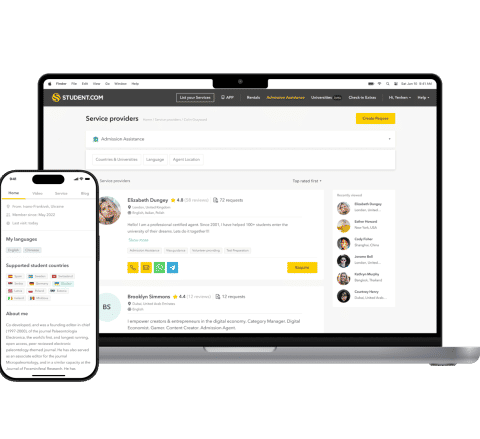

Student: Edtech platform for students and service providers
Student is a global EdTech marketplace that helps international students find and book education and relocation services. Geniusee built the platform from the ground up, delivering both web and mobile versions with a scalable, serverless architecture. The solution supports service discovery, request management, secure payments, user verification, and content moderation. Our work focused on creating a seamless, intuitive experience for students, agents, and service providers across multiple markets.
Case detailsWe run every software project through the entire development lifecycle, from the first workshop to support after launch. Our software developers, designers, and QA engineers work in Scrum sprints, and you review working software at the end of each one.

Discovery and learning model
During the discovery phase, we map who will use the platform and which systems it must connect to, then choose the LMS route. You leave with a scope, an estimate, and a release plan.
UX for every role
Our UI/UX designers prototype the learning experiences for each user type and test them with your teachers and learners before development starts.
Mobile and web development in streams
Our product development teams run new features and legacy cleanup as separate streams, so releases keep moving while old code gets fixed. MyTutor ran 4 such streams in parallel.
Testing for peak load and accessibility
Our QA engineers use exam-season traffic as the benchmark for load tests and check accessibility before every major release.
Launch, monitoring, and growth
After go-live, the same team keeps the platform monitored and ships new features as part of post-release support.








Choose how you work with our software services team:

Dedicated development team
A full product team for long-term platform development
Time and material
Flexible scope for discovery, MVPs, and evolving roadmaps
Outstaffing
Individual engineers who join your in-house development team
Certified AWS Partner delivering secure, scalable cloud-native solutions.

ISO-compliant processes ensuring quality, security, and reliability.
Trusted integration partner for financial data connectivity and open banking.
Team of ISTQB-certified QA engineers for world-class software testing.

Consistently rated ★5.0 by clients for reliability and delivery excellence.

Accredited partnership supporting advanced testing and continuous QA automation.
How much does educational software development cost?
The development cost depends on user roles, integrations, AI features, and compliance scope. As a guide, a custom LMS with basic features typically costs 37,000–53,000, and a white-label AI LMS costs less to launch. Our educational software development services start with discovery, which ends in a detailed estimate. For a quick range, try our project estimator.
How long does it take to build an LMS or eLearning platform?
A white-label LMS can launch in days to weeks. Custom builds vary: we shipped MyTutor’s first U.S. version in 2 months and K’CIDADE Academy in 2.5 months, while the medical admissions MVP took 9 months. A complex custom LMS usually needs 6–9 months.
Which data privacy and accessibility standards do you build to?
We build to FERPA for U.S. student records, COPPA for platforms with users under 13, and GDPR for European users. Accessibility follows WCAG, with WCAG 2.1 AA required for U.S. public institutions. We set the compliance scope in discovery. The U.S. Department of Education’s guidance on online educational services explains what schools expect from vendors.
Can you integrate a new platform with our existing systems?
Yes. We have connected learning platforms to SSO providers such as Auth0 and SAML-based corporate login, HR and CRM systems, billing tools such as ChargeBee and Stripe, Zoom, Moodle, and xAPI content. Discovery starts with an audit of your current tools, so the new platform fits the way your teams already work.
Can you add AI to an existing education platform?
Yes. Most AI work we do in EdTech extends a platform that already has users. K’CIDADE Academy added an AI tutor and adaptive learning paths to an existing WordPress setup. We start with one AI feature tied to measurable learning outcomes, test it with real learners, then expand.
Do we own the code and data?
Yes, on pre-built and custom builds. The codebase, data, documentation, and design assets belong to you under the agreed contract terms. With the white-label AI LMS, you get your domain and branding on our hosted platform. We document architecture and environments so your team or another development firm can take over.
Do you work with EdTech startups or only Fortune 500 companies?
Both. We have built MVPs for early-stage EdTech companies, such as the Student marketplace, delivered in 6 months, and platforms for established providers whose clients include Santander and the London Stock Exchange. The engagement model and team size change with your stage, while the delivery process stays the same.
Are you an education software development company in the USA?
Geniusee has an office in Austin, Texas, and teams in Poland, Sweden, and Ukraine. U.S. clients can work through the Austin office, and we plan meeting hours around U.S. time zones. European clients get nearshore delivery in their own or a neighboring time zone.