
Good iOS app development shows up in how the product works with Apple devices, connected hardware, backend systems, and real production workloads.









Apple users expect a polished experience, while App Review and platform requirements are incompatible with weak technical solutions. Most iOS development engagements start with one of three needs.

IT experts are ready to start creating iOS apps for you
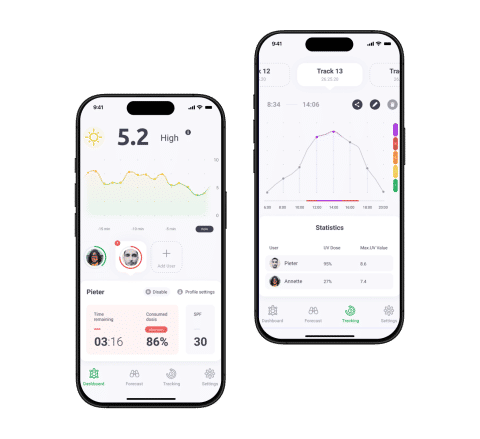
Ajuma – IoT + HealthTech mobile app development
Ajuma approached Geniusee with a vision: to help families protect themselves from harmful UV exposure through a smart wearable device paired with a mobile app. Their UV-Bodyguard sensor continuously measures real-time ultraviolet radiation and warns users before overexposure occurs.
Case details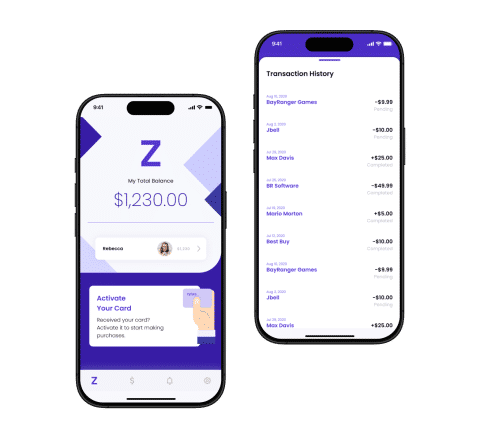

Zytara: Gamified digital banking app
Zytara is a digital banking app built specifically for Gen Z, combining financial education with a gamified, customizable user experience. Our team developed a secure, blockchain-enabled platform that lets parents manage and monitor their children’s spending and saving, while giving young users a more engaging way to interact with money. We introduced game-inspired card skins, personalized modes, and a built-in shop featuring branded merchandise from e-sports, gaming, and music partners. One of the most unique aspects of the project was enabling users to manage digital assets and complete full NFT lifecycles directly within the app.
Case details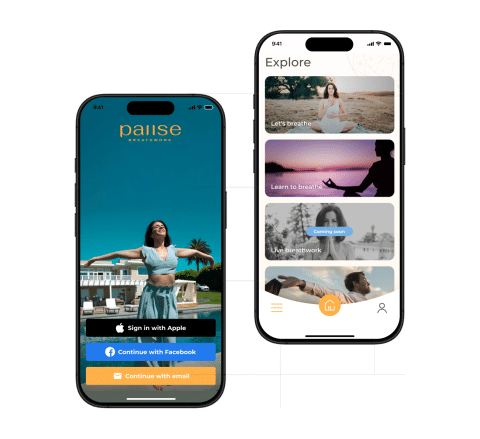
Pause Breathwork – Meditation App that reduces stress and builds healthy habits
Pause partnered with Geniusee to design and develop a cross-platform app with real-time video, push notifications, community features, and personalized daily routines.
Case details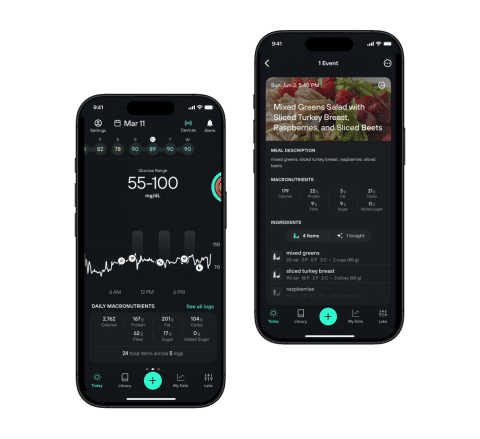
Levels Health: a mobile app for tracking metabolic health
The global rise in chronic diseases like diabetes has fueled the demand for personalized health management tools. Levels Health, an A16z-backed startup, identified a gap in the market for a user-centric app that leverages CGM data to empower individuals to optimize their metabolic health. Levels partnered with Geniusee to create a mobile app that would be their core user engagement platform.
Case details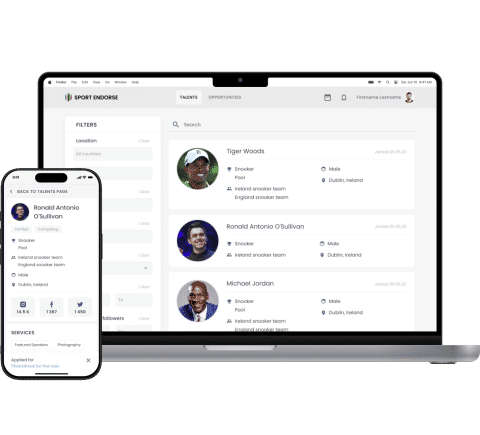
Sport Endorse: Sports collaborative marketing platform
Explore the cutting-edge MarTech platform connecting brands to 7,000+ athletes across 280+ sports in 85 countries for seamless sponsorships and campaigns. Geniusee built a scalable web/mobile solution with intuitive UX, serverless AWS, and secure payments. We launched the platform in just 4 months.
Case details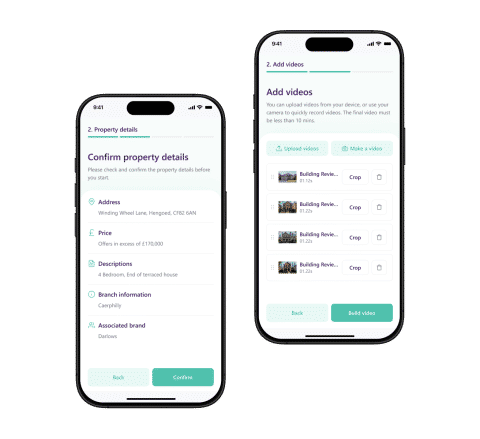
 Real estate
Spicerhaart: How Genuisee helped accelerate branded property tour videos
Spicerhaart Group Ltd is one of the UK's largest independent estate agency networks, operating 7 well‑known brands across residential sales, lettings, and financial services. Geniusee delivered a mobile video solution that simplifies property marketing: agents can capture, enhance, and publish fully branded property tours in minutes, with seamless CRM integration and automated brand consistency.
Case details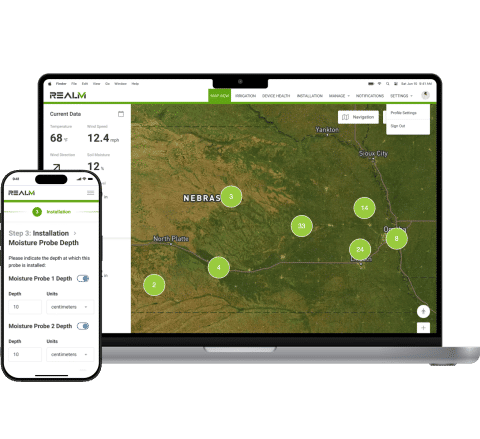
RealmFive – IoT AgriTech platform for smarter farming operations
RealmFive partnered with Geniusee to build a native iOS and Android app capable of aggregating data from multiple IoT devices, ensuring fast processing, reliable cloud delivery, and an intuitive user experience. Together, we delivered a robust, high-performing platform that helped RealmFive scale rapidly, secure new funding, and win industry awards.
Case details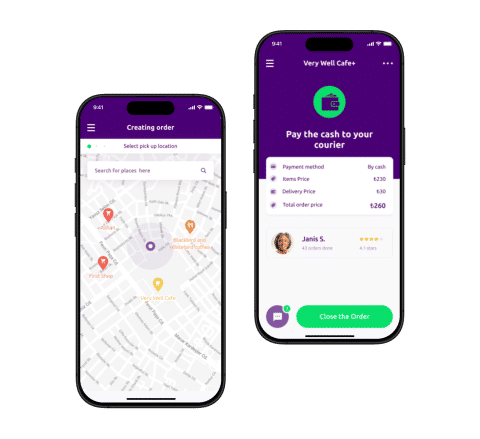
Tamam – Scalable on-demand delivery app for the Turkish market
Tamam partnered with Geniusee to build a full-cycle digital product – from discovery to UX/UI, mobile app development, admin dashboard, and microservice infrastructure. Together, we created a robust MVP that evolved into a scalable platform with over 50,000 downloads and a 4.5-star rating.
Case details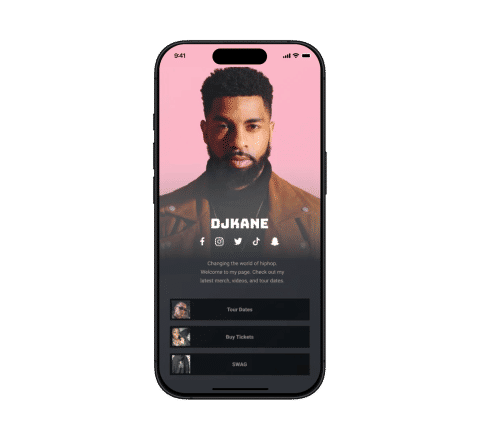
Drum: Mobile app engaging followers with one click
Drum is a mobile platform that helps creators, influencers, and brands turn a single bio link into a personalized landing page, storefront, and analytics hub. Geniusee partnered with Drum to deliver and scale cross-platform applications, modernize the tech stack, and support rapid product evolution in the creator economy.
Case details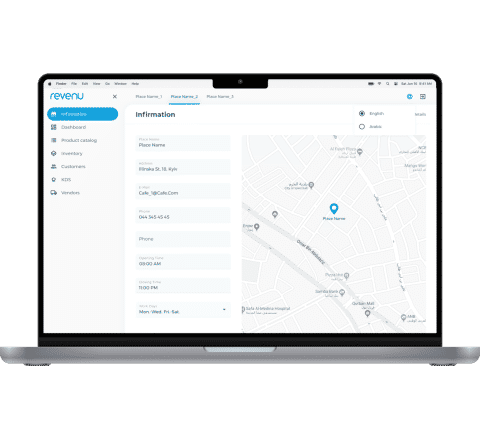
Revenu: All-in-one POS and restaurant management system
When Revenu approached Geniusee, they had a clear vision: to transform the restaurant experience through a unified POS and management system. Together, we set out to create a solution that simplifies restaurant operations, boosts staff efficiency, and enhances customer satisfaction.
Case details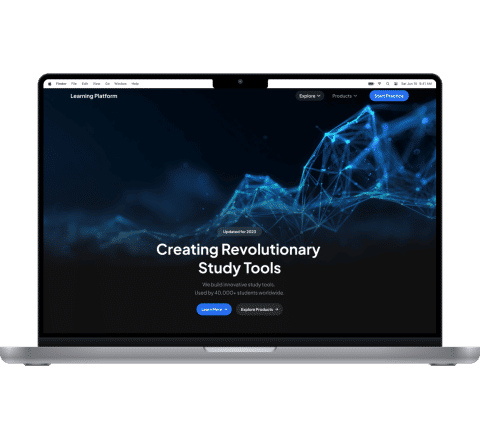
Interactive e-learning platform for medical school applicants
We partnered with a confidential client in the medical education space to create a modern e-learning platform with structured lessons, practice tests, student analytics, and personalized AI assistance. The solution was built from the ground up across web and mobile, ensuring seamless content delivery and scalable performance. The client addressed Geniusee to modernize their platform by combining real-time IoT data, AI analytics, and an intuitive user experience. As a result, we delivered a scalable, secure, and analytics-driven ecosystem that helps enterprises make informed workspace decisions.
Case details
Some engagements begin with nothing but an app idea. Others begin with 5 years of code, an overloaded backlog, and an architecture nobody wants to touch. The service scope changes accordingly.






Discovery and scope
🟣 Define users, goals, and product requirements
🟣 Consult with a mobile expert on scope and technical direction
🟣 Map integrations and Apple-platform constraints
🟣 Prioritize the first release
🟣 Estimate effort and timeline
Architecture and product design
🟣 Select native or shared-code architecture
🟣 Define APIs, data, privacy, and offline behavior
🟣 Design iPhone and iPad flows in Figma
🟣 Align interfaces with Apple guidelines
Development
🟣 Build in short iterations
🟣 Release regular TestFlight builds
🟣 Use our AI agentic development flow for routine coding
🟣 Run iOS, backend, and QA in parallel
🟣 Keep engineers in control of key decisions
Quality and App Store release
🟣 Automated and real-device testing
🟣 Security and privacy review
🟣 Certificates, provisioning, and signing
🟣 App Store submission and phased release
iOS app care
🟣 Crash and performance monitoring
🟣 Security and compatibility updates
🟣 Preparation for new iOS releases
🟣 Continued roadmap development

- Native iOS banking and wallet apps with Face ID, Keychain, and secure authentication
- Apple Pay, lending, payment, and core-banking integrations
- Financial assistants, spending insights, and AI features with human oversight
- App modernization and ongoing iOS app care for regulated products
- iPhone and iPad learning apps with offline lessons and media playback
- VoiceOver, Dynamic Type, and accessibility, aligned with applicable requirements
- AI tutors and adaptive-learning features with learner privacy safeguards
- Shared iOS experiences for students, tutors, and administrators
- Shopping and loyalty apps with Apple Pay and omnichannel inventory
- iPad apps for store associates, scanning, stock, and fitting-room workflows
- Personalization and recommendation features tied to conversion goals
- iOS modernization, release support, and ongoing app care
- iOS apps for agents to capture property photos, video, and CRM data
- Property search with maps, media, geolocation, and offline access
- Tenant and property-management apps with document and e-signature workflows
- AI assistants for lead qualification and listing content
- iPad inspection and work-instruction apps that operate offline
- ERP, MES, equipment, and field-service integrations
- Barcode, NFC, Bluetooth, and IoT sensor connectivity
- On-device AI for defect detection and predictive maintenance alerts







How much does iOS app development cost?
Cost depends on product scope, backend readiness, user roles, payments, hardware integrations, AI, security, and compliance. After the initial consultation, we can provide an indicative budget. Discovery then turns the selected scope into a more detailed estimate.
How long does iOS app development take?
A focused iOS MVP can typically reach the App Store in 3–6 months. Larger products with complex integrations, hardware, AI, or compliance requirements often take 6+ months.
Modernization, app takeover, and Android-to-iOS projects may take several weeks to several months, depending on the existing codebase, backend readiness, integrations, and App Store requirements.
The first consultation can provide an indicative timeline and budget based on your current scope.
Should we build native iOS or use a cross-platform framework?
Use Swift and SwiftUI when deep Apple integrations, sensors, Bluetooth, background execution, or new Apple APIs are central to the product.
React Native or Flutter can make sense when shared UI and one cross-platform delivery team matter more. Kotlin Multiplatform can share business logic while keeping a native SwiftUI interface.
Can you take over an iOS app built by another vendor?
Yes. We audit the repository, dependencies, certificates, environments, App Store Connect access, and architecture before resuming feature development.
Should AI in an iOS app run on-device, in the cloud, or use a hybrid approach?
It depends on privacy, latency, supported devices, model capability, battery use, and cost.
- On-device AI is well-suited to privacy-sensitive, low-latency, or offline features.
- Cloud AI supports more capable models and company knowledge, but adds cost, connectivity, and data residency considerations.
- Hybrid AI combines local processing with cloud fallback when device support or model capabilities vary.
- Agentic AI adds tool and API access, so permissions, approvals, and auditability become part of the architecture.
Can you rescue a vibe-coded iOS app?
Yes, where the existing product logic is viable.
We review authentication, secrets, data handling, architecture, dependencies, and release readiness, then decide which modules should be kept, refactored, or rebuilt.
Can you integrate AI into an existing iOS app?
Yes. We can evaluate on-device AI, cloud models, or a hybrid approach based on privacy, latency, supported devices, offline use, and cost.
Do you build iOS apps for wearables and connected hardware?
Yes. Geniusee works with Bluetooth, sensors, background execution, HealthKit, connected devices, and mobile-to-cloud synchronization.
Can you build an iOS app from an existing Android or web product?
Yes. Proven workflows, business rules, data models, and backend APIs can usually be reused. The iOS interface, payments, notifications, lifecycle, and Apple platform behavior are designed specifically for iPhone and iPad.
Who owns the code and App Store account?
You do. Repositories, certificates, and the Apple Developer account remain under client control, with documentation and handover included in delivery. iOS app development services
How should I evaluate an iOS development partner?
Look for production Swift experience, backend and cloud capability, documented QA and security processes, clear ownership terms, and evidence from products with real device, integration, and scale requirements. iOS app development services