
Listing technology carries different pressure depending on whether you own the data, the members, or the interface. Teams evaluating MLS real estate software usually arrive from one of the situations below. These are the cases where building custom MLS software costs less over time than working around the current system.
















Platforms built for lighter listing volumes still run, but the real estate industry pays for them elsewhere: engineering hours spent maintaining feeds instead of new features, agents re-keying properties across the MLS and the CRM, buyers abandoning search without a match, and licensing questions that take days to answer.



Every new integration turns into a project of its own
CRM, transaction management, e-signature, payments, and portal feeds each get connected in a slightly different way.
Without a shared integration pattern, each connection handles its own authentication, retry logic, and failure modes. Maintenance costs then grow faster than the feature list, and each new partner request lands as a custom build.

IT experts are ready to start building MLS solutions for you

Certified AWS Partner delivering secure, scalable cloud-native solutions.

ISO-compliant processes ensuring quality, security, and reliability.

Trusted integration partner for financial data connectivity and open banking.

Team of ISTQB-certified QA engineers for world-class software testing.

Consistently rated ★5.0 by clients for reliability and delivery excellence.

Accredited partnership supporting advanced testing and continuous QA automation.



From fragmented travel requests to an AI-powered concierge platform
Geniusee partnered with a small travel company to develop an AI-powered concierge platform that integrates travel assistance and service management into a single digital environment. The MVP combines an AI-powered chatbot for travelers with an administrative platform for managing its content, users, data, and operations.
Case details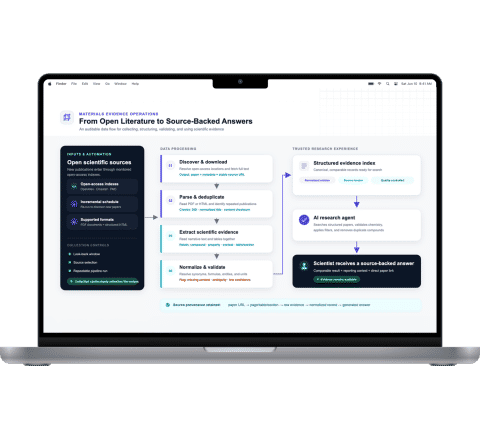
 Materials science
How Geniusee helped Planck Technologies process 10,000 scientific papers with an AI data pipeline
Planck Technologies develops AI-powered technology for materials discovery, helping researchers evaluate porous materials for industrial applications. They addressed Geniusee to build a scientific data pipeline that collects research publications, extracts and normalizes materials data, preserves source provenance, and supports AI-assisted scientific research.
Case details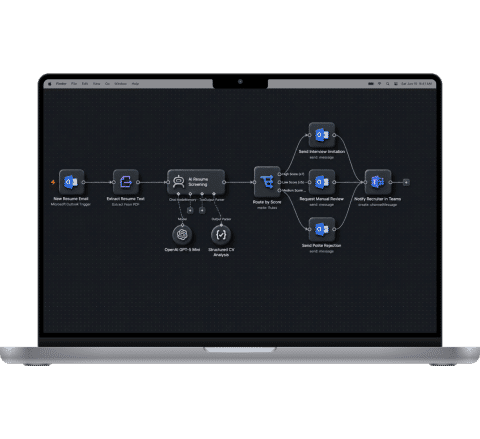
How Geniusee saved recruiters up to 25 hours in 2 weeks with AI agent
Geniusee partnered with an NDA-protected technology services company to automate one of the most time-consuming parts of its recruitment funnel: first-stage candidate screening. The resulting AI screening workflow evaluates inbound profiles against vacancy requirements, advances or disqualifies candidates, prepares personalized feedback, and gives recruiters a structured record of every decision. The resulting AI screening workflow evaluates inbound profiles against vacancy requirements, advances or disqualifies candidates, prepares personalized feedback, and gives recruiters a structured record of every decision.
Case details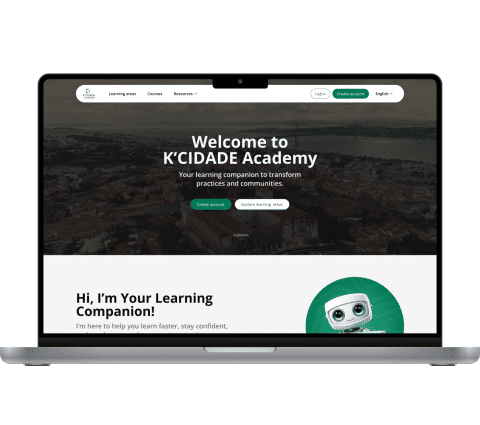
K’CIDADE Academy: How we built an AI-powered learning platform for AKF Portugal
K'CIDADE Academy is AKF Portugal's professional learning platform for civil society organizations, educators, and community leaders. Built on adaptive learning pathways, an AI virtual tutor, and a gamified progress system, it delivers personalized training to professionals working across social inclusion, education, and community development.
Case details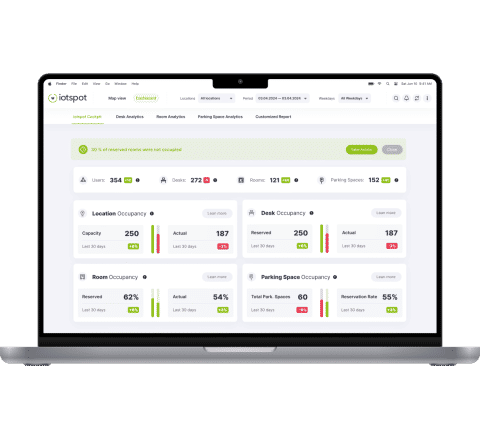
 Real estate
How Geniusee helped iotspot optimize hybrid workplaces with AI and IoT analytics
iotspot is a Dutch technology company focused on enabling hybrid workplaces through IoT-powered data intelligence. Iotspot helps enterprises track workspace usage, air quality, and employee movement to design more efficient, sustainable offices. The client addressed Geniusee to modernize their platform by combining real-time IoT data, AI analytics, and an intuitive user experience. The result: a scalable, secure, and analytics-driven ecosystem that helps enterprises make informed workspace decisions.
Case details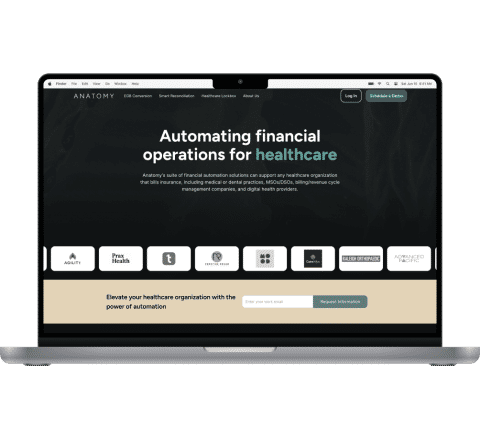
Anatomy Financial: Automated financial management software for healthcare
Anatomy introduces an innovative solution designed to automate document processing, compare various documents and banking transactions, and handle the intricacies of physical check processing. By conducting a thorough analysis, the system identifies discrepancies between the declared prices of medical procedures and the actual amounts received by the clinic.
Case detailsWe work across the full stack of a listing product, from the data contracts underneath it to the interfaces agents and consumers touch. Most engagements combine several of the capabilities below, and nearly all of them rely on software integration services as the connective layer.













Our real estate MLS software development covers the whole path from data architecture and feed integration through portal and mobile delivery, AI and cloud setups, testing, and long-term support, all under one engineering partner.

Understand the data and the obligations
We map the existing feeds, consumers, licensing agreements, and business rules, then document what the platform must preserve. Careful business analysis at this stage prevents the most expensive category of rework later.
Define the scope worth building first
We agree on the smallest release that delivers real value, whether that is one normalized feed, a broker portal, or a mobile listing entry flow. This keeps the first delivery measurable instead of turning it into a platform program.
Design the architecture and the interfaces
Data model, API contracts, permission logic, cloud topology, and user flows are designed together, because in listing products, the data model and the interface constrain each other more than in most systems.
Build and integrate
Our software developers build the platform, the normalization layer, the integrations, and the client applications in parallel, with continuous review against the rules defined during discovery.
Validate against real conditions
Testing covers provider-specific field behavior, permission edge cases, media handling, search relevance, load profiles, and mobile parity, using production-shaped data rather than clean samples. An API security review checks object-level authorization, token handling, and data exposure before release.
Release, monitor, and improve
We prepare the cutover, keep parallel paths running where needed, and set up monitoring for feed health, latency, and error rates. After launch, the same team continues delivery through ongoing maintenance and support, so knowledge stays with the product.
How a property moves from intake to market
- Guided intake that adapts required fields to the market a property belongs to, with drafts held until every condition is met
- Status progression from coming soon through pending, contingent, and sold, with automatic expiry warnings and re-list handling
- Media handling for photos, floor plans, video, and 3D tours, including ordering rules, watermarking, and per-portal size requirements
- Address geocoding, price anomaly warnings, and duplicate record detection applied before a listing goes live
What buyers and tenants experience
- Map exploration with polygon drawing, radius, commute time, and school or amenity overlays
- Alerts on new matches, price changes, and status shifts, delivered instantly or on a schedule
- Property pages that carry tour scheduling, payment estimates, price history, and comparable properties in one view
- Query handling that copes with the buyers’ phrases loosely, without forcing them through filter menus
What agents and brokers do every day
- Showing scheduling with availability rules, confirmations, and structured feedback captured after each visit
- Comparative market analysis generated from live comparables rather than exported spreadsheets
- Offer tracking through to close, with documents and signatures held against the property record
- Cooperation and compensation terms visible per listing, with a full history of what changed and when
What the organization needs to see and control
- Hierarchies for members, offices, and teams, with administration delegated to the level that should own it
- A rules engine that applies display, syndication, and licensing obligations per data consumer
- Entitlement separation across IDX, VOW, and back-office use, with every request logged
- Feed health dashboards that surface a data problem before a member reports it


Fixed-price delivery
Suits a defined scope with a clear end state, such as a first normalized feed, a broker portal, or a migration off a legacy connection. Scope, timeline, and cost are agreed upon before work starts.
Suits platform work that continues past the first release, where priorities shift as markets, partners, and member requirements change. You get a stable group that keeps context rather than re-learning the system every quarter.








What do MLS software development services actually include?
They cover architecture and data modeling, integration with listing feeds, normalization of property records, search and mapping functionality, add and edit workflows, permission and compliance logic, web and mobile interfaces, AI features, cloud infrastructure, testing, and post-release support. Most projects also include migration planning when an existing system is involved.
Can you extend our current platform?
Yes, and that is often the better commercial decision. A custom MLS solution can start as a normalization layer, a new portal, a mobile client, or an AI search module built on top of your existing core, then modernize the remaining components incrementally rather than running a full replacement program.
How long does a custom MLS platform take to build?
A focused integration layer or portal typically takes 2 to 4 months. A broker portal with search, alerts, CRM synchronization, and analytics typically takes 3 to 5 months to build. A full listing platform with add and edit workflows, compliance tooling, member administration, and mobile clients typically takes 6 to 12 months to build, depending on the number of connected markets and the depth of the rules engine.
How do you handle data licensing and display rules?
We build a permissions matrix that maps every data consumer to its agreement, allowed use cases, and display obligations, then enforce it through role-based access, request logging, and lineage tracking. This keeps IDX, VOW, and back-office use separate within the platform rather than in a policy document.
Do you build MLS mobile clients as well as web portals?
Yes. Our teams deliver native iOS and Android applications alongside responsive web products, with shared APIs so both surfaces read the same records. Agent-facing apps usually prioritize media capture, listing updates, and notifications, while consumer apps prioritize search, saved searches, and collaboration.
How do you reduce risk during a migration?
We first inventory every data consumer, run legacy and modern paths in parallel during an agreed transition window, preserve saved searches, contacts, and historical analytics, and stop issuing new legacy credentials before cutover. Communication planning with members and partners is part of the delivery scope, not an afterthought.
Where does AI actually help in a listing product?
The reliable wins are natural language search, listing description generation with human review, image quality, and room classification, duplicate detection, and internal support AI agents. We keep automated decisioning away from regulated business rules, where the value is lower, and the compliance exposure is higher.
Who owns the code after delivery?
You do, under the agreed contract terms, including the codebase, documentation, infrastructure definitions, and repositories. We keep architecture and deployment logic clean enough that your internal team or another vendor can pick the product up without a discovery project of their own.
Can you support the platform after launch?
Yes. Support can cover feed health monitoring, incident response, release management, security updates, performance tuning, cloud cost optimization, and continued feature delivery. Many clients keep a dedicated development team in place after launch, so platform knowledge stays with the product.