

AI PoC services make the most sense when AI initiatives look valuable in theory, but your team still needs proof of expected return. Geniusee’s engineers and business analysts help you validate potential AI use cases, define what to build first, and decide whether the idea should move toward an MVP, production, or a different direction.



Practical roadmap for the next phase
After the PoC, you receive a clear plan for productization, including architecture, backlog, integration needs, risks, timeline, team setup, and estimate drivers. This makes it easier to decide whether to move into MVP development, expand AI applications, or prepare the solution for production.

IT experts are ready to start building AI PoC for you
Why test the impact of AI solutions through a PoC?

“AI should prove its value inside your actual processes.
Many initiatives become costly because teams move straight into full-cycle automation without a clear business case, technical rationale, or measurable outcome.
AI proof-of-concept development services help companies test whether an AI solution is feasible, useful, and worth scaling.
When developing an AI PoC, our engineers help validate the idea, avoid expensive wrong turns, and focus investment on solutions with real business return.”
Nazar Hazdun
CTO at Geniusee
Our engineers assess the use case, data readiness, specific AI model fit, integration points, risks, and validation metrics, then build a focused PoC around a single high-value workflow. As a result, you get practical evidence before moving into MVP development, full product engineering, or a larger generative AI implementation.

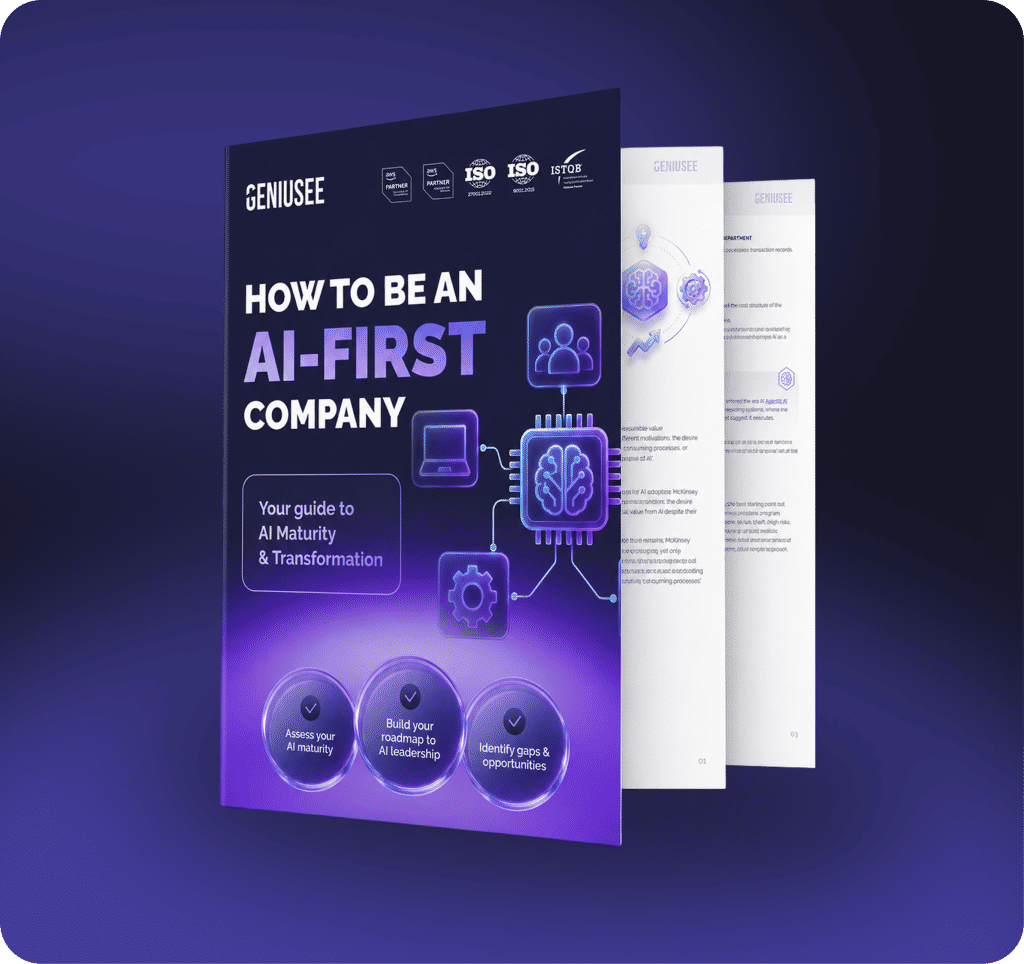
Check if your AI idea is worth building
Download the whitepaper to evaluate AI use cases, set value gates, validate PoCs, and scale only the workflows that prove measurable value. Includes readiness score, use case framework, PoC validation steps, governance, and scaling roadmap, based on Geniusee’s internal AI transformation, where one workflow saved up to 120 hr/month.





- Fraud triage that reviews transaction patterns, flags suspicious behavior, and prepares cases for analysts
- KYC document checks for uploaded files, missing fields, and compliance-ready summaries
- Customer support assistant for payment status, failed transfers, account questions, and loan inquiries
- Financial report analysis that extracts insights from dashboards, statements, and internal records
- Risk scoring for lending, insurance, trading, or payment workflows
- Learning assistant that answers course questions and explains materials using approved content
- LMS support for enrollment, assignments, certificates, deadlines, and learner navigation
- Tutor copilot for quizzes, feedback, lesson notes, and progress summaries
- Student engagement analytics that detects drop-off points and learning behavior patterns
- Content review for course clarity, duplication, structure, and learning-objective alignment
- A shopping assistant that helps customers compare products and get personalized buying hints
- Order support for delivery status, returns, refunds, warranties, and payment questions
- Product catalog cleanup for descriptions, tags, categories, and missing attributes
- Inventory signals that detect low-stock risks and suggest replenishment actions
- Marketing segmentation based on customer behavior, purchase history, and campaign potential
- Property matching that recommends listings by budget, location, amenities, and buyer intent
- Lead qualification that collects client requirements and routes serious inquiries to sales teams
- Document review for leases, permits, inspection notes, property files, and missing details
- Investor summaries that turn project data, timelines, and financial assumptions into structured briefs
- Listing content support for property descriptions across websites, portals, and CRM records

From fragmented travel requests to an AI-powered concierge platform
Geniusee partnered with a small travel company to develop an AI-powered concierge platform that integrates travel assistance and service management into a single digital environment. The MVP combines an AI-powered chatbot for travelers with an administrative platform for managing its content, users, data, and operations.
Case details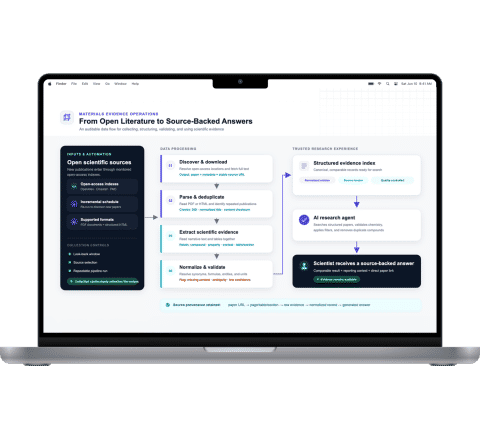
 Materials science
How Geniusee helped Planck Technologies process 10,000 scientific papers with an AI data pipeline
Planck Technologies develops AI-powered technology for materials discovery, helping researchers evaluate porous materials for industrial applications. They addressed Geniusee to build a scientific data pipeline that collects research publications, extracts and normalizes materials data, preserves source provenance, and supports AI-assisted scientific research.
Case details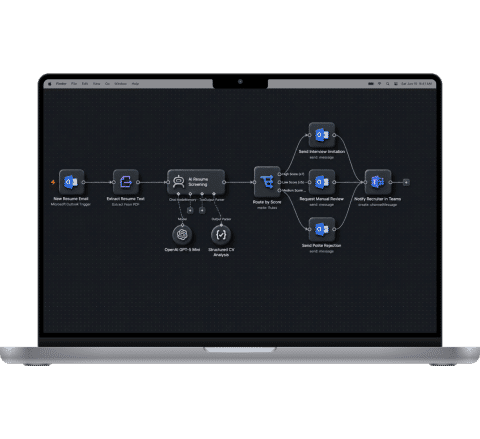
How Geniusee saved recruiters up to 25 hours in 2 weeks with AI agent
Geniusee partnered with an NDA-protected technology services company to automate one of the most time-consuming parts of its recruitment funnel: first-stage candidate screening. The resulting AI screening workflow evaluates inbound profiles against vacancy requirements, advances or disqualifies candidates, prepares personalized feedback, and gives recruiters a structured record of every decision. The resulting AI screening workflow evaluates inbound profiles against vacancy requirements, advances or disqualifies candidates, prepares personalized feedback, and gives recruiters a structured record of every decision.
Case details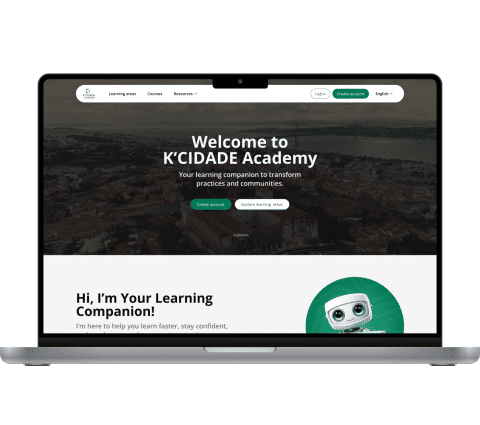
K’CIDADE Academy: How we built an AI-powered learning platform for AKF Portugal
K'CIDADE Academy is AKF Portugal's professional learning platform for civil society organizations, educators, and community leaders. Built on adaptive learning pathways, an AI virtual tutor, and a gamified progress system, it delivers personalized training to professionals working across social inclusion, education, and community development.
Case details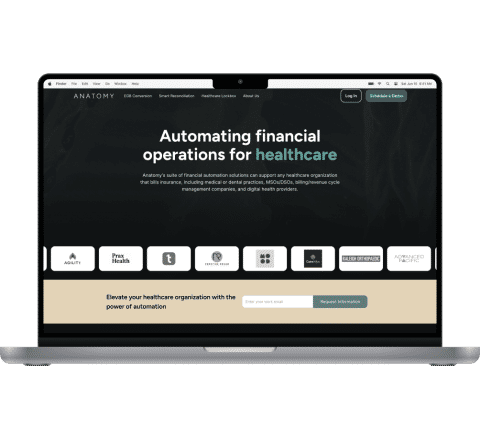
Anatomy Financial: Automated financial management software for healthcare
Anatomy introduces an innovative solution designed to automate document processing, compare various documents and banking transactions, and handle the intricacies of physical check processing. By conducting a thorough analysis, the system identifies discrepancies between the declared prices of medical procedures and the actual amounts received by the clinic.
Case details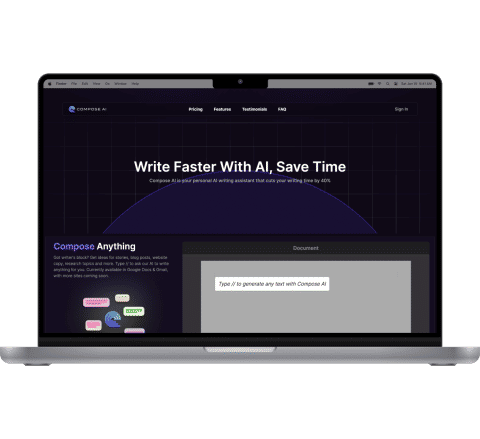
 Martech
Compose AI: Advanced content writing solution
We partnered with Compose AI to enhance their AI-powered writing platform through cloud migration, UX improvements, seamless integrations, and scalable feature development, upporting their growth from YC-backed startup to a widely adopted productivity tool.
Case details








Intake
We clarify the business goal, target users, current workflow, data sources, system constraints, and expected value. This step helps us understand your AI readiness and determine whether the idea has sufficient business and technical grounds for validation.
Scope
We choose the smallest meaningful use case for a structured PoC. Together, we define the workflow, success metrics, data access, integration points, risks, and the exact question the PoC should answer.
Build
Our engineers create a focused prototype using the selected AI model, real or sample business data, and the core logic needed to test the idea. Depending on the use case, this may include RAG, API integration, prompt logic, automation rules, or a lightweight user interface.
Validate
We test quality, feasibility, cost, latency, user value, and technical limits in realistic conditions. For AI PoCs, this step is critical because it shows whether the solution works beyond a polished demo and can support a real business case.
Roadmap
We turn the results into a practical next-step plan. You get recommendations on architecture, backlog, team setup, timeline, integrations, risks, and what it would take to scale AI from PoC to MVP or production.



Certified AWS Partner delivering secure, scalable cloud-native solutions.

ISO-compliant processes ensuring quality, security, and reliability.

Trusted integration partner for financial data connectivity and open banking.
Team of ISTQB-certified QA engineers for world-class software testing.

Consistently rated ★5.0 by clients for reliability and delivery excellence.

Accredited partnership supporting advanced testing and continuous QA automation.







What can Geniusee test with generative AI PoC development services?
Geniusee can test document review, internal knowledge search, support triage, report generation, chatbot assistance, and agent-based workflow automation. With our agentic and/or generative AI PoCs, your team can see how the AI model works with real data, user requests, business rules, and system constraints before moving into a larger build.
How does an AI proof-of-concept reduce project risk?
A PoC helps you check feasibility, data quality, model behavior, integration complexity, and expected business value early. Geniusee’s AI proof-of-concept development services give leadership, product, and engineering teams a practical basis for deciding whether to scale, adjust, or stop the initiative before committing significant budget to full development.
What does a gen AI PoC usually include?
A gen AI PoC usually includes use case validation, model selection, prompt logic, data preparation, a focused prototype, basic integrations, output testing, and success metrics. Geniusee can also define what the next version would need, including architecture, team setup, infrastructure, security controls, and production-readiness steps.
Why work with Geniusee as your AI PoC engineering partner?
As an experienced AI proof-of-concept development company, Geniusee combines AI engineering, business analysis, cloud, DevOps, backend, QA, and product expertise into a single delivery team. This matters because a useful PoC should prove more than model output. It should show how the future solution can work inside real software and business conditions.
Can a PoC help us understand our AI capabilities before full development?
Yes. A PoC helps your team understand current AI capabilities, data-readiness gaps, technical limitations, and the realistic business value. Geniusee supports both consulting and development, so you can move from idea screening to a working proof and then decide whether you need full-scale AI development for a larger production path.