You have a working no-code or AI-generated demo, but before fundraising or committing to an MVP build, you need to know what is reusable, what is risky, and what must be rebuilt for a scalable custom product.


You need a realistic roadmap before the next investment decision
Founders, product teams, and business owners often use this service before fundraising, budgeting, vendor selection, or internal approval.
The output provides a productization roadmap, backlog, timeline, risk map, and next-step estimate based on the actual complexity of your screens, user roles, auth, data structures, integrations, reuse vs. rebuild scope, and deployment expectations.

IT experts are ready to rebuild your no-code app to PoC
What is the difference between AI-generated apps, no-code/low-code projects, and a custom PoC?
An AI-generated app or a no-code/low-code platform project can help you test the idea. A custom product PoC checks whether the idea can work as a maintainable, testable, and engineerable product.
| Comparison point | AI-generated or No-code/Low-code application | Professionally developed custom PoC |
| Main purpose | Shows the idea through screens and workflows | Proves the idea through engineering validation |
| Ownership/handoff | May depend on platform limits, generated code, or an unclear setup | Includes custom, documented code and architecture ready for your team’s handoff |
| Technical foundation | Depends on the generated logic or platform limits | Uses planned architecture and custom code |
| Product validation | Confirms that the concept is understandable | Checks feasibility, KPIs, and real product logic |
| Code quality | May be hard to extend, debug, or transfer | Built for readability, reuse, and handoff |
| Data model | Often follows screen logic | Built around real entities and relationships |
| Security and access | May rely on basic or temporary permissions | Includes proper auth, roles, and access control |
| Integrations | Works for simple or happy-path connections | Tests APIs, webhooks, errors, and edge cases |
| Testing approach | Usually checked through manual demos | Validated through QA and controlled testing |
| Deployment readiness | Suitable for demos and early experiments | Produces evidence and architecture direction for MVP/product development |
| Best use case | Fast idea exploration and stakeholder demos | Product PoC development before a full build |
A working prototype can prove that the idea has potential. It does not prove that the app can handle real users, production data, changing business logic, or the technical pressure behind a custom product.
Can your no-code/low-code platform project become a real product PoC?

“A prototype can prove the idea. A proper PoC proves whether the product can be built, tested, and extended.
To move from an AI-created or no-code demo to a reliable product foundation, you need a custom-coded product slice, clear reuse vs. rebuild decisions, a risk map, and a realistic roadmap for the full build.”
Taras Tymoshchuk
CEO, Founder

You get more than a technical review of a prototype. Geniusee helps you translate an AI-generated app or a no-code/low-code platform project into a practical product PoC — with clear reuse vs. rebuild decisions, a custom-coded product slice, and a roadmap for the next development stage.
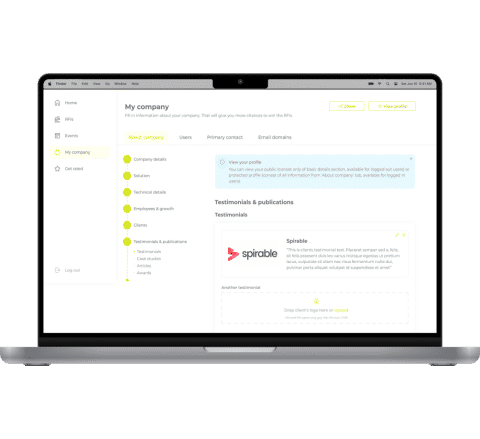

Validify – Retail vendor management platform
See how Geniusee built Validify’s scalable vendor management platform with advanced UX, data architecture, and automated RFI workflows.
Case details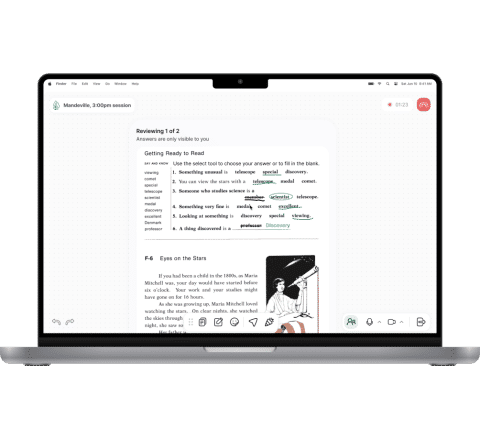
Custom virtual classroom solutions for a leading K-12 education provider
We partnered with a U.S.-based enterprise client to build a secure, educationsl, AI-enabled platform that streamlines operations, modernizes workflows, and enhances the user experience. Due to NDA restrictions, the client’s identity and certain details remain confidential.
Case details
Celery: Open-source library for Fortune 500 company
Celery is an Open-Source distributed system that offers simplicity, flexibility, and reliability for efficiently processing enormous volumes of messages. It equips operations with the essential tools to effectively maintain such a system. Designed with a focus on real-time processing, Celery serves as a task queue while also providing support for task scheduling. Celery operates under the BSD License, ensuring open collaboration and widespread accessibility.
Case details
Low-latency cryptocurrency analysis platform
Learn how Geniusee built a real-time crypto trading dashboard integrating 40+ exchanges with low-latency streaming and secure AWS infrastructure.
Case details
Flexible virtual lighting console for UA Light
UA Light partnered with Geniusee to build a reliable, scalable, and configurable Virtual Console capable of supporting demanding live environments. Our team delivered a powerful software engine that offers multi-protocol support, stable DMX generation, cross-platform drivers, and a modern visualization approach.
Case details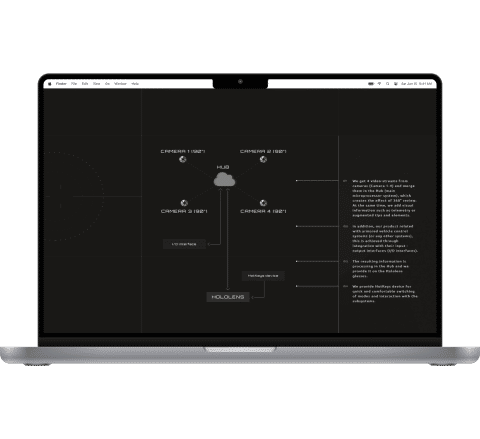
360° Mixed reality circular review system for armored vehicles
Geniusee helped engineer a 360° mixed reality review system for armored vehicles, combining HoloLens integration, optical and thermal cameras, and real-time video streaming to create a “transparent armor” experience.
Case details
Certified AWS Partner delivering secure, scalable cloud-native solutions.

ISO-compliant processes ensuring quality, security, and reliability.

Trusted integration partner for financial data connectivity and open banking.
Team of ISTQB-certified QA engineers for world-class software testing.

Consistently rated ★5.0 by clients for reliability and delivery excellence.

Accredited partnership supporting advanced testing and continuous QA automation.
Geniusee helps re-engineer no-code, low-code, and AI-generated prototypes that already show a workable idea but need technical validation before a full build. The PoC focuses on one business-critical flow or module, not the entire platform.















Intake and product context
We start by reviewing the current app and the product context behind it. This step helps us understand what the PoC should prove before any custom development decisions are made.
✔️ Current AI-generated app, like Lovable or Bolt, or a no-code/low-code platform project
✔️ Product goals and measurable KPIs
✔️ Target users, roles, and core use cases
✔️ Current blockers, doubts, and technical concerns
✔️ Desired product outcome after the PoC.
Prototype and technical assessment
Geniusee checks the visible product experience and the hidden technical layer behind the demo. The goal is to define whether the prototype can support a real custom product or needs deeper re-engineering.
✔️ User flows and conversion-critical screens
✔️ AI-generated code, no-code/low-code platform logic, and architecture
✔️ Data model, database relationships, and backend logic
✔️ Authentication, authorization, and user permissions
✔️ Third-party integrations, APIs, webhooks, and automations
✔️ UX gaps, security risks, deployment setup, and product risks.
Buildable product slice
We select the smallest meaningful flow that can prove the product direction in custom code. This product slice shows how the prototype can move from a generated demo to a maintainable PoC.
✔️ A single business-critical flow rebuilt properly
✔️ Frontend implementation with clear user states
✔️ Backend logic with defined boundaries
✔️ Database structure for the selected flow
✔️ Authentication, role-based access, or integration logic where needed
✔️ Maintainable custom code prepared for further development, including handoff details: repo structure, environment setup, API notes, test notes, deployment assumptions, and known limitations.
Validation and handoff readiness
After the product slice is rebuilt, we check whether it can support the next stage. Validation covers product usability, technical feasibility, delivery assumptions, and handoff readiness.
✔️ Usability and flow consistency
✔️ QA checks for the rebuilt product slice
✔️ Feasibility of the selected architecture and implementation approach
✔️ Integration behavior and edge-case handling
✔️ Technical handoff notes for the next build phase
✔️ Delivery assumptions, scope risks, and dependencies.
Productization roadmap
The final step defines what should happen after the PoC. You get practical decisions on what to keep, rebuild, stop, and build next — with enough detail to plan the proper custom product build.
✔️ Reuse-vs-rebuild decisions
✔️ Architecture recommendations
✔️ Backlog priorities and next-step scope
✔️ Risks that may affect budget, timeline, security, or scalability
✔️ Team composition recommendations
✔️ Timeline assumptions and a realistic estimate for the next development stage.
Geniusee helps teams transition from AI-generated apps or no-code/low-code platform projects to a validated, custom product architecture.










Which no-code, low-code, and AI app-builder tools can you review?
AI-generated prototypes are often built with tools such as Lovable, Bolt, Cursor, Replit, or internal AI coding assistants. No-code/low-code projects typically use platforms such as Bubble, Webflow, Retool, or FlutterFlow. Geniusee can review prototypes created with any of these systems and define what can be reused, refactored, or rebuilt in custom code.
What does this service not include?
This service focuses on bridging the gap between your prototype and a validated, custom-coded foundation. To clarify, it does not include a full product rebuild, delivery of a complete MVP, production-ready deployment, ongoing support, or discovery services unless they are scoped as separate engagements.
How long does it take to create a PoC from an AI-generated app or no-code project?
The timeline depends on the number of screens, user roles, data model, authentication logic, integrations, and the complexity of the business-critical flow being rebuilt.
Typically, we provide the following tiered estimates:
- Technical Audit only: 1-2 weeks.
- Audit + Core Product Slice: 3-5 weeks.
- Product Slice with complex integrations: 5-8+ weeks.
Timelines vary based on the specific complexity of your project’s screens, user roles, auth, and integration requirements.
Can you convert an AI-built prototype or no-code/low-code MVP into custom software?
Yes. Geniusee reviews the current prototype, checks the technical foundation, and defines which parts can move into the custom product build. Some product logic, UX patterns, and validated flows may be reused, while unstable code, weak architecture, or risky integrations may need refactoring or a full rebuild.
What do we receive after the prototype-to-product PoC?
You receive practical engineering decisions, a buildable product slice, reuse vs. rebuild recommendations, architecture notes, backlog priorities, risk areas, timeline assumptions, and a next-step estimate. The goal is to help your team move from a generated prototype to custom product development with fewer technical unknowns.