
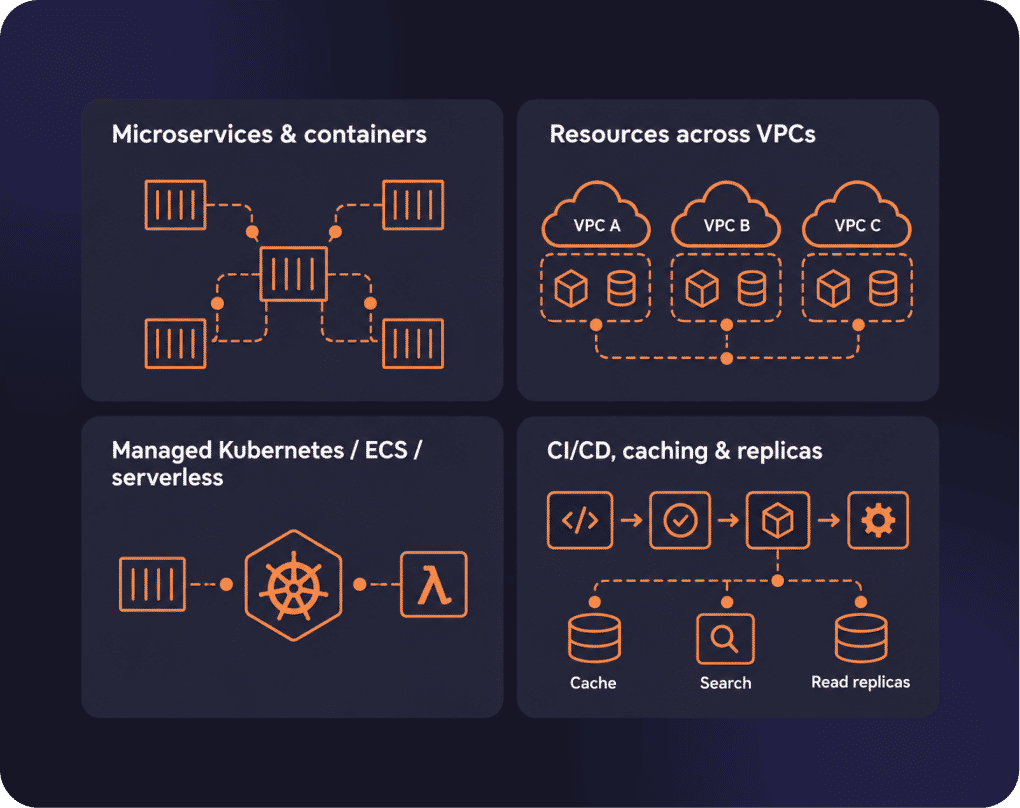
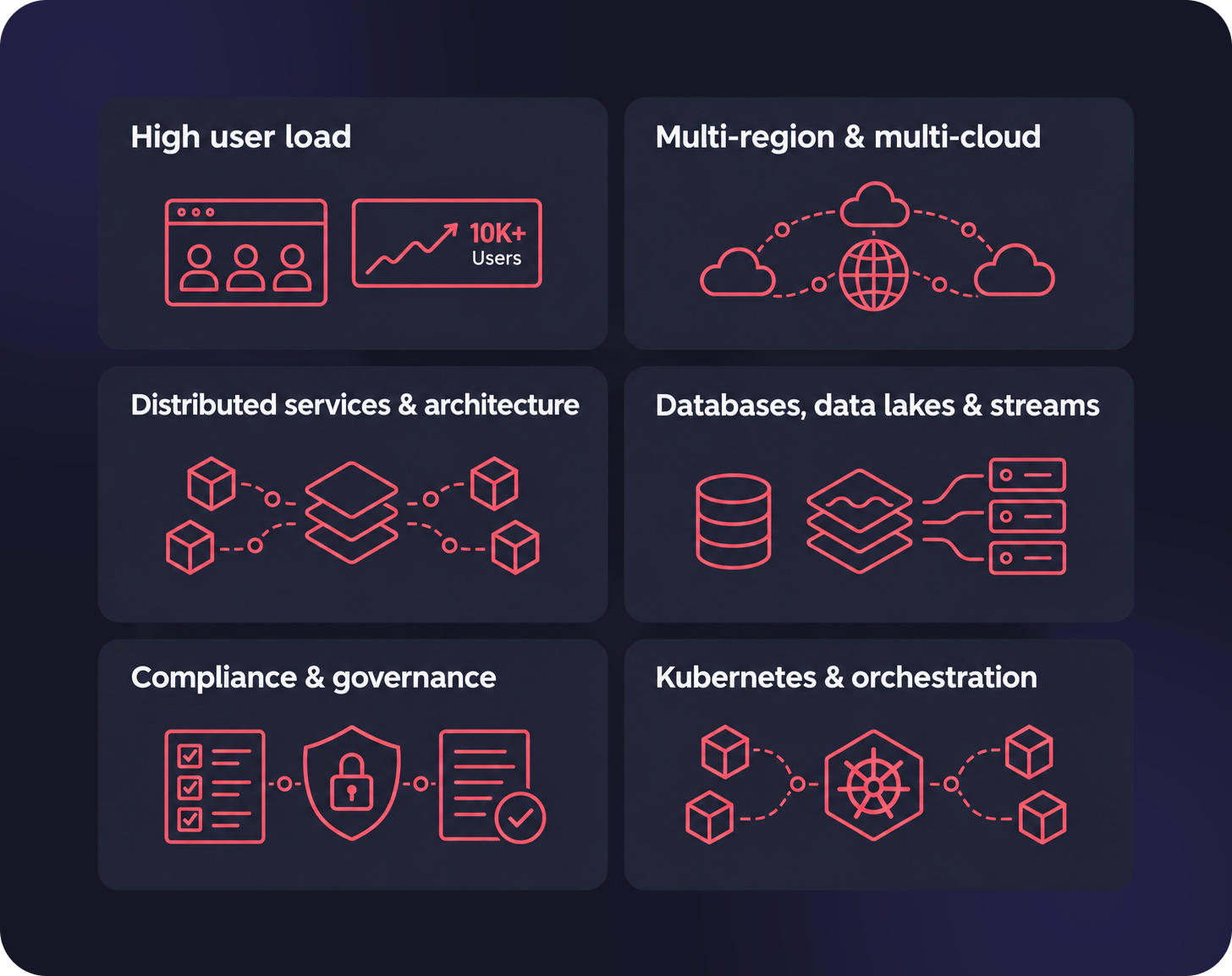
Users may encounter recurring errors, timeouts, or slow responses, and the root cause may hide deeper in the code, database, or cloud. This is where dedicated DevOps support helps you identify and resolve underlying inefficiencies, particularly when:
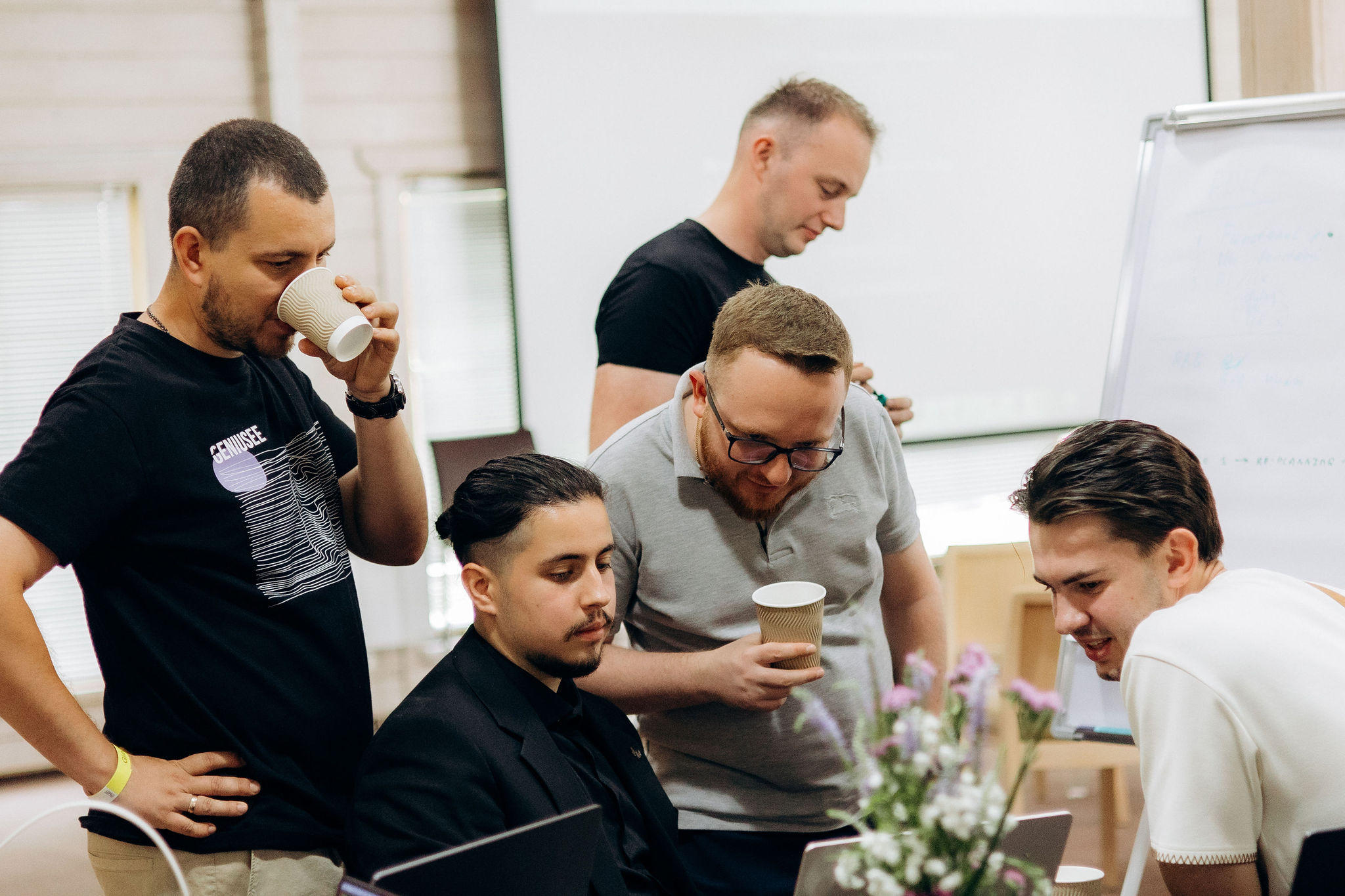
Relieve your product teams of time-consuming toolchain management and infrastructure tasks with Geniusee. You can protect your customer experience with reliable uptime by offloading L2 or L3 support to our managed DevOps team.


Optimize cloud usage and reduce infrastructure costs
We continuously review your cloud usage and apply FinOps practices, including resource optimization, rightsizing, waste elimination, and capacity optimization. This helps improve performance while frequently reducing cloud costs by 20-35%.

Select your ideal support coverage, best-fit response time, and complexity level. You can customize your support package, from 8×5 business-hours coverage to full 24/7 support, with the response speed you require. Our incident response service adapts to the complexity of your current infrastructure, whether you have a basic setup or a large, distributed application architecture.
Configuration Details
Engagement Specifics
Setup Fee
$1,500
One-time • First invoice
Extra Hours
$60/hr
Fixed out-of-scope rate
Total / Per Month
—
Why our DevOps support model works

“We designed this support model so clients do not have to keep a full-time DevOps function in-house just to maintain post-production stability.
Our agentic support routines preserve your team’s budget, time, and capacity, so your developers can focus on building new features and generating more value.
L2 and L3 support models are backed by skilled engineers, AWS Advanced Tier Services Partner status, ISO 9001 and ISO 27001 certifications, and over 200 completed projects across Fintech, EdTech, MarTech, and other industries.”
Nazar Hazdun
CTO at Geniusee

Certified AWS Partner delivering secure, scalable cloud-native solutions.

ISO-compliant processes ensuring quality, security, and reliability.

Trusted integration partner for financial data connectivity and open banking.
Team of ISTQB-certified QA engineers for world-class software testing.

Consistently rated ★5.0 by clients for reliability and delivery excellence.

Accredited partnership supporting advanced testing and continuous QA automation.
Our process combines cloud infrastructure assessment, AI-assisted monitoring, and hands-on engineering to keep your production environment stable, secure, and cost-efficient.

1. Preliminary cloud audit and support estimate
Our estimates include a complimentary preliminary audit of your current cloud stack. We assess your infrastructure, operational risks, and support needs to recommend the appropriate coverage, response times, and service scope.
2. Toolchain setup and support onboarding
We configure monitoring, alerting, incident management, and DevOps workflows around your existing infrastructure. Our engineers establish clear escalation procedures, access controls, and operational responsibilities to ensure your environment is prepared for ongoing support.
3. AI agent integration and observability
We connect our AI incident investigation agent to relevant data sources, including AWS, Azure, GCP, Datadog, New Relic, Prometheus, Grafana, Kubernetes, GitHub, and ServiceNow, as applicable to your environment. The agent helps engineers correlate alerts, investigate infrastructure issues, and identify likely root causes faster.
4. Continuous monitoring and incident response
Our DevOps engineers monitor your production environment, investigate alerts, and handle incidents in accordance with your agreed SLAs. With AI-assisted diagnostics and automated checks, we accelerate troubleshooting while keeping remediation decisions and production changes under engineering control.
5. Proactive maintenance and optimization
We conduct regular health checks, security updates, configuration audits, and cloud cost reviews to prevent recurring issues. Our engineers refine operational workflows, document improvements, and adjust your support model as your infrastructure evolves.
Observability & Monitoring





Cloud Providers
Databases

Kubernetes & Containers
CI/CD










The business impact of DevOps consulting services
- Eliminate recurring issues without pulling your core team away from product development
- Improve application performance and extend your software’s lifespan
- Keep your cloud system stable, scalable, and budget-efficient as your product grows
- Use our DevOps services and solutions to reduce operational friction and support long-term product growth


From fragmented travel requests to an AI-powered concierge platform
Geniusee partnered with a small travel company to develop an AI-powered concierge platform that integrates travel assistance and service management into a single digital environment. The MVP combines an AI-powered chatbot for travelers with an administrative platform for managing its content, users, data, and operations.
Case details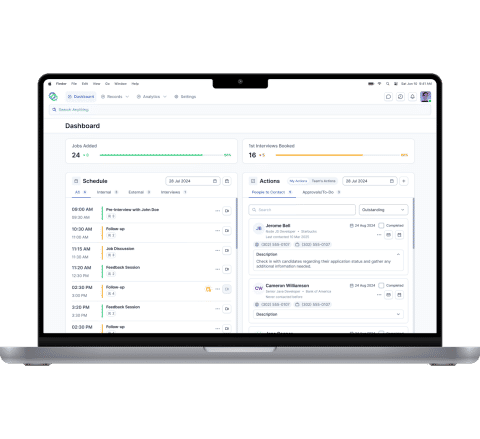
 Recruitment
How Geniusee helped Forsyth Barnes speed up hiring by up to 90% with Imagine AI
Geniusee developed Imagine AI, a scalable recruitment platform for Forsyth Barnes. The system centralizes workflows, embeds AI for candidate matching and CV tailoring, and integrates compliance and reporting tools. This solution facilitates recruiters' work and ensures full visibility across the hiring cycle.
Case details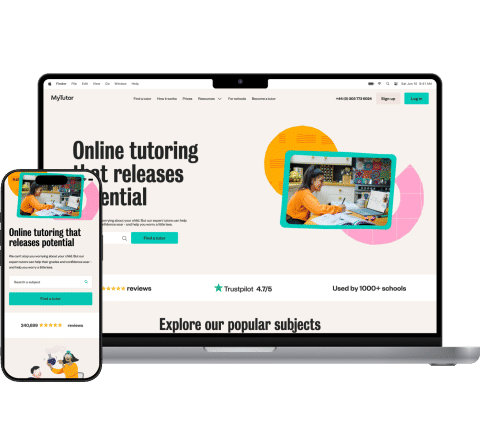

MyTutor: Online tutoring platform
MyTutor is an online tutoring platform that reshapes school-based learning by automatically grouping students with similar needs and learning styles. With built-in scheduling, class formation, and management tools, it helps tutors and schools deliver personalized support at scale.
Case details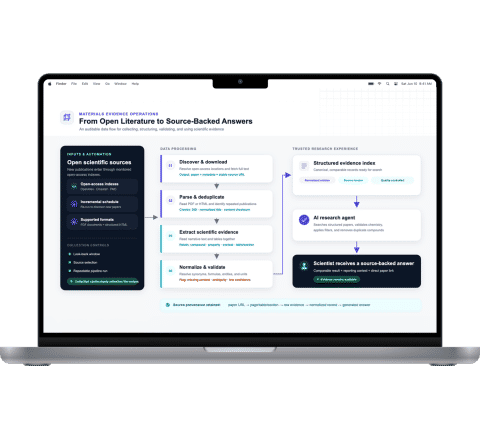
 Materials science
How Geniusee helped Planck Technologies process 10,000 scientific papers with an AI data pipeline
Planck Technologies develops AI-powered technology for materials discovery, helping researchers evaluate porous materials for industrial applications. They addressed Geniusee to build a scientific data pipeline that collects research publications, extracts and normalizes materials data, preserves source provenance, and supports AI-assisted scientific research.
Case details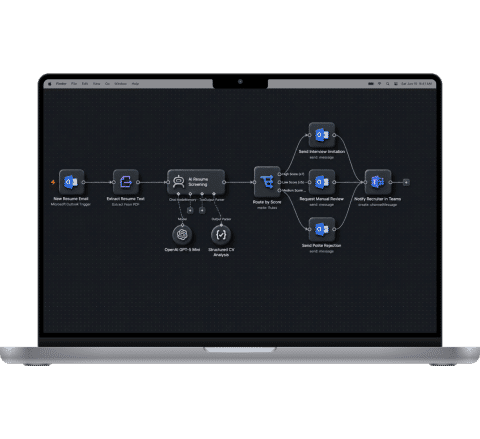
How Geniusee saved recruiters up to 25 hours in 2 weeks with AI agent
Geniusee partnered with an NDA-protected technology services company to automate one of the most time-consuming parts of its recruitment funnel: first-stage candidate screening. The resulting AI screening workflow evaluates inbound profiles against vacancy requirements, advances or disqualifies candidates, prepares personalized feedback, and gives recruiters a structured record of every decision. The resulting AI screening workflow evaluates inbound profiles against vacancy requirements, advances or disqualifies candidates, prepares personalized feedback, and gives recruiters a structured record of every decision.
Case details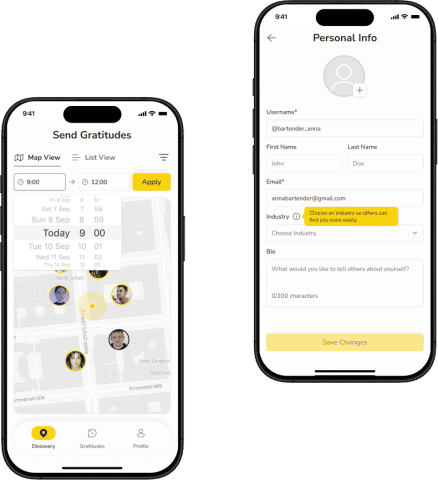
BeEpic: Digital tipping and appreciation app
BeEpic is a mobile app that reimagines tipping and appreciation for everyday services, where the giver and receiver may never meet in person. Geniusee helped the startup design and develop an MVP with accurate geolocation logic, asynchronous gratitude matching, and a scalable technical foundation for future enterprise integrations.
Case details







Genuisee’s versatile experience, gained over more than 8 years, has enabled us to form a team with a proven track record.





Do you use AI agents in your DevOps support services?
Yes. Our incident response copilot helps DevOps engineers monitor cloud infrastructure, detect anomalies, investigate alerts, and identify potential root causes in real time. We can connect our agentic DevOps solution to a wide range of data sources, including AWS, Azure, GCP, Datadog, New Relic, Prometheus, Grafana, Dynatrace, Kubernetes, GitHub, GitLab, PostgreSQL, MongoDB, and ServiceNow, to provide engineers with the operational context they need to resolve incidents faster.
Do your AI SRE agents make DevOps incident support services more cost-efficient?
Yes. Our AIOps copilot automates routine investigation tasks, correlates monitoring data, and helps engineers identify root causes much faster. This reduces the engineering hours spent on troubleshooting and repetitive manual work. Thanks to this combined human-AI approach, your support costs are lowering while we maintain reliable incident response with direct access to experienced DevOps professionals.
Do your DevOps support services include FinOps, DevSecOps, and AIOps?
Yes. We combine FinOps practices for cloud cost optimization, DevSecOps for automated security checks and infrastructure protection, and AIOps for intelligent monitoring and incident investigation. Together, these practices help you control cloud spending, identify security and operational risks earlier, and maintain a more reliable production environment without adding unnecessary manual work.
When does a business usually need DevOps support services?
You need DevOps incident management services once your product is live and production issues start distracting your core team. Common signs include recurring incidents, slow recovery times, unstable deployments, limited monitoring, cloud cost creep, or growing infrastructure complexity that your developers should not have to manage day to day.
Is DevOps support relevant if our platform is already stable?
Yes. A stable platform still needs monitoring, maintenance, patching, incident readiness, and ongoing infrastructure tuning. Geniusee’s expert DevOps professionals help keep production stable after launch, so your team can stay focused on roadmap delivery instead of reacting to avoidable operational issues.
What kinds of products benefit most from Geniusee DevOps managed services?
Geniusee DevOps support is especially relevant for SaaS products, fintech platforms, edtech systems, real estate marketplaces, retail platforms, AI-enabled applications, and other customer-facing products that depend on uptime, predictable performance, and reliable production releases.
How does Geniusee help when we do not want to hire a full-time DevOps engineer?
Our DevOps consulting company provides you with broader support, rather than relying on a single in-house hire. That includes dedicated L2 coverage, incident response, monitoring, proactive maintenance, and cloud optimization. This model often gives growing teams better flexibility, stronger continuity, and more controlled support costs.
What if L2 DevOps support isn’t enough to resolve our issue?
If the problem goes beyond infrastructure, our DevOps services company can provide additional support through L3 backend engineering. That is useful when recurring incidents come from the codebase itself, such as performance bottlenecks, technical debt, broken integrations, or logic-level defects that need direct AWS DevOps engineering work rather than operational fixes.
How does Geniusee improve long-term production support?
We improve long-term production support by first applying cloud DevOps consulting to define the right infrastructure setup, support scope, and operational needs. We then use DevOps automation to reduce repetitive manual work across monitoring, deployment, and incident response. With strong DevOps practices in place, your team gets a more stable production environment, faster recovery when issues appear, and a clearer path to continuous improvement.