



Supply chain software vendors
Supply chain software vendors often need extra development capacity to deliver features faster with a team that already understands the domain.
A single tool is rarely the root cause. These systems were bought separately over the years with no reliable way to connect, so syncing them falls to people, and decisions get made late.


A growing operation outpaces the software it started with
New locations, sales channels, and higher order volumes expose the original platform’s limits, leaving workarounds that constrain growth. A rebuild also creates the integrations and clean data for AI: RAG assistants that answer questions from your order and inventory records, or agents that coordinate planning, checks, and escalations previously handled by hand.

IT experts are ready to build supply chain solutions for you









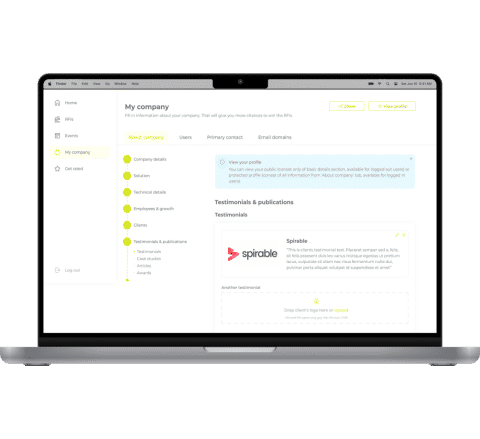

Validify – Retail vendor management platform
See how Geniusee built Validify’s scalable vendor management platform with advanced UX, data architecture, and automated RFI workflows.
Case details
Flexible virtual lighting console for UA Light
UA Light partnered with Geniusee to build a reliable, scalable, and configurable Virtual Console capable of supporting demanding live environments. Our team delivered a powerful software engine that offers multi-protocol support, stable DMX generation, cross-platform drivers, and a modern visualization approach.
Case details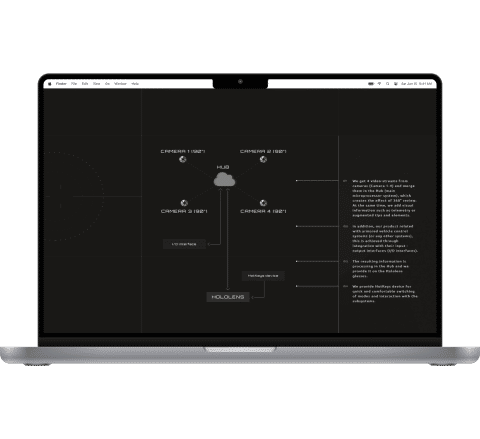
360° Mixed reality circular review system for armored vehicles
Geniusee helped engineer a 360° mixed reality review system for armored vehicles, combining HoloLens integration, optical and thermal cameras, and real-time video streaming to create a “transparent armor” experience.
Case details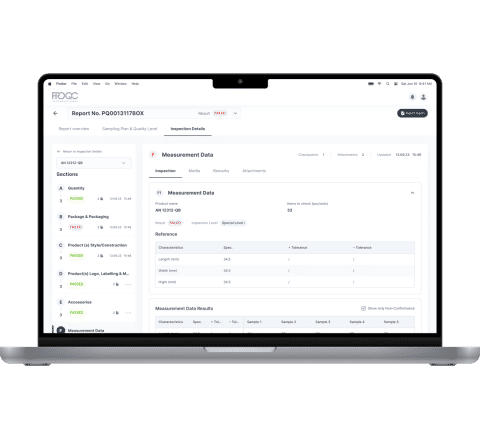
 Logistics
Pro QC: Streamlining inspections and audits with modern technology
As a long-standing provider of inspection and supplier management services, Pro QC supports clients in over 88 countries with product, factory, and process evaluations. Their global reach created operational complexity that legacy, document-based workflows could no longer handle efficiently. To improve accuracy and streamline work across regions, Pro QC engaged Geniusee to design a digital system that replaces manual processes with structured, scalable workflows.
Case details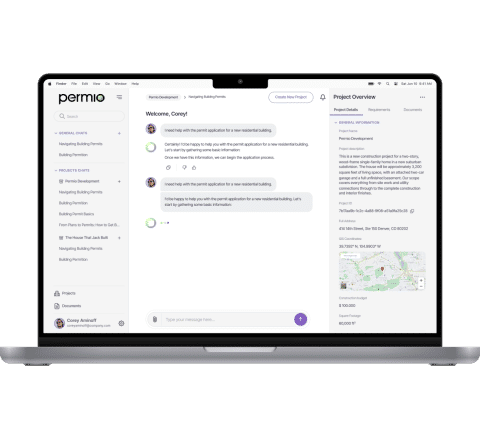
 Manufacturing
Permio: AI-powered permit workflows for Service First Permits
Permio is an AI-powered permitting platform built for Service First Permits to automate workflows and accelerate approvals across 240+ jurisdictions. Geniusee worked closely with SFP to design, engineer, and validate a system that modernizes the entire permitting lifecycle.
Case details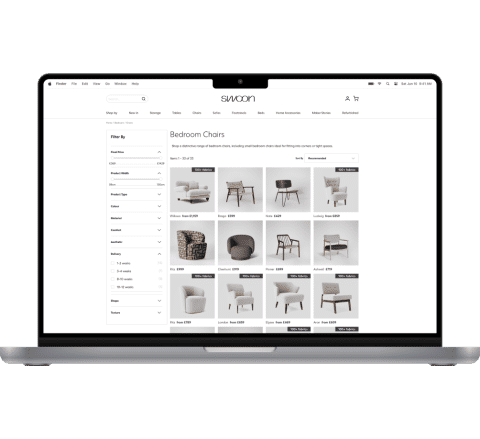
Swoon: Cloud-native backend for a furniture brand
Swoon partnered with Geniusee to modernize its backend and support a fast-growing e-commerce operation. The new serverless architecture cuts infrastructure costs, automates key workflows, and integrates payments, freight, and shipping systems into a single, reliable backbone for the brand.
Case detailsThe return shows up in specific places: decisions get made sooner, less cash stays locked in the wrong stock, and fewer problems reach customers before you hear about them.

SCM development at Geniusee covers the full path from first assessment to long-term support. Each service below can be delivered on its own or as part of a full program.
These capabilities work independently or connect into one platform covering the operation end-to-end. The list below reflects what most teams tackle first.


A supply chain solution only works when data flows into it from the tools your business already runs on. Geniusee builds those connections with clear rules specifying which system owns which data, so the same order or stock figure remains consistent wherever it appears.


Data and reporting tools
- Data warehouses and lakehouse platforms
- Business intelligence and dashboard tools
- Forecasting and optimization services
- Identity and access management systems





The process is designed to reduce risk at every step, so the business can keep running while the software improves.

Discovery and process mapping
We map your workflows, systems, and data to agree on scope and the outcomes that matter.
Architecture and data design
We set the technical foundation: how systems connect and how records stay consistent across them.
Pilot or first release
A bounded module or pilot proves the approach and delivers value early, before wider rollout.
Integration and iterative build
The system grows in steps. We test and review each release with your team.
Validation and rollout
We reconcile data, run the system in parallel where needed, and roll out site by site to avoid disruption.
Monitoring, support, and improvement
After launch, we monitor and refine the system as your operation and volumes change.
In a logistics and supply chain digital transformation project, the hard part is connecting multiple systems, ensuring their data is trustworthy, and delivering without disrupting the business.

Supply chain priorities vary by industry, from multi-client logistics and production planning to omnichannel fulfillment. These are the sectors where Geniusee combines domain knowledge with software engineering delivery.
- Multi-client inventory and warehouse visibility across locations
- Transportation planning, carrier coordination, routing, and load assignment
- Client portals, shipment tracking, SLA monitoring, and exception management
- API and EDI connections across shippers, carriers, warehouses, and partner systems

- Payment and settlement flows tied to supplier and order data
- Financing and working-capital tools built on live inventory positions
- Spend visibility and compliance reporting across procurement
- Secure data exchange between finance and operations systems
- Inventory and distribution tracking for physical learning materials
- Order and fulfillment tools for education suppliers and publishers
- Supplier and vendor management for institutions buying at scale
- Reporting that connects procurement to budgets and delivery

- Stock visibility across stores, warehouses, and online channels
- Order management that routes each order to the best fulfillment point
- Replenishment and demand forecasting to reduce stockouts and overstock
- Returns handling connected to inventory and the in-store retail systems your customers use
- Procurement and supplier management for construction and fit-out projects
- Materials tracking across sites and stages of a build
- Asset and equipment inventory for property portfolios
- Delivery scheduling tied to project timelines
- Production planning tied to material availability and supplier lead times
- Raw material and finished goods inventory across plants and warehouses
- Shop-floor and production system connections for live order status
- Inbound logistics and supplier delivery scheduling

















What is supply chain management software development?
It covers software that plans, tracks, and manages goods, orders, and information across a business and its partners. That can mean a new platform, connecting existing systems, or a modernized one, built around how your operation runs.
Which parts of the supply chain can Geniusee build software for?
Planning and forecasting, inventory and warehouse management, transportation, order management, procurement and supplier management, and control-tower visibility. These can be delivered as individual modules or as one connected system.
Can you integrate with SAP, Oracle, or Microsoft Dynamics?
Yes. Integration with major ERP platforms is a core part of the work, alongside connections to warehouse, transport, carrier, supplier, and e-commerce systems, using APIs, EDI, and other standard methods.
Can you modernize our existing warehouse or transport system?
Yes. Older logistics software can be updated step by step through cloud migration, new interfaces, additional integrations, and improved monitoring, so daily supply chain operations can continue running while the software improves.
How do you use AI in supply chain software?
Each use case is tied to a specific decision, the data it needs, a human review step, and a measurable result. Common examples include demand forecasting, shipment delay prediction, anomaly detection, RAG assistants that answer questions from your own records, and multi-agent systems that coordinate steps across a workflow. Recommendations support your team rather than replacing their judgment.
How long does a project take?
It depends on the scope. A tightly focused module or pilot may be delivered in a few months, while a larger platform with many integrations and multiple sites takes longer. Discovery gives you a realistic timeline before commitment.
What does a supply chain software project cost?
Cost depends on the scope. A focused module or pilot costs less than a full platform with many integrations. Discovery gives you a cost estimate alongside the timeline before you commit.
Can we start with a single module or a pilot?
Yes, and it is often the best way to begin. A bounded first step delivers value early, reduces risk, and creates a clear foundation for extending the system later.
Who owns the software once it is built?
You do, on the ownership terms agreed before work starts. Handover covers the source code, documentation, and a full knowledge transfer, and cloud environments are normally set up in your own accounts from the beginning. Third-party components retain their own documented licenses, so nothing about the arrangement is a surprise later.