
Not every company needs deep cloud consulting immediately. The need usually starts when AWS affects product delivery, security, compliance, resilience, or cloud costs.





Analytics platforms and AI product teams
Analytics platforms, AI products, reporting systems, and recommendation engines need cloud architectures built for large-scale data processing, and architecture decisions directly affect data reliability, processing costs, and model performance. Common priorities include:
☑️Storage architecture for large datasets
☑️ Compute optimization for analytics and AI workloads
☑️ Data pipelines and orchestration
☑️ Model infrastructure and deployment
☑️ Governance, security, and data accessibility across teams
AWS cloud consulting becomes useful when cloud decisions start affecting product delivery, security, budget control, or business continuity. Sometimes the problem is obvious, like rising cloud costs. Other times, it shows up slowly through unstable deployments, scattered accounts, limited visibility, or infrastructure that no longer aligns with your product’s architecture.
Your team is building a new product on AWS
You are starting a new platform, data product, AI feature, or customer-facing application and need the cloud architecture to be right from the beginning.
Early AWS decisions can shape the product for years. Compute, databases, storage, integrations, CI/CD, observability, and security controls must align with the product’s business logic, expected workload, regulatory requirements, and maintenance model.
What outcomes should AWS Consulting Partner help you achieve?

“Good AWS consulting should align cloud strategy with business goals, control costs and risks, ensure security, and support growth.
In our practice, those goals are tied to measurable outcomes, such as moving business-critical systems with near-zero downtime, lowering latency by 40%, and supporting 4x growth in connected-device data volume without performance degradation.
For each client, our AWS consultants set performance benchmarks that show where the work creates the most value”
Taras Tymoshchuk
CEO, Founder

Certified AWS Partner delivering secure, scalable cloud-native solutions.

ISO-compliant processes ensuring quality, security, and reliability.

Trusted integration partner for financial data connectivity and open banking.

Team of ISTQB-certified QA engineers for world-class software testing.

Consistently rated ★5.0 by clients for reliability and delivery excellence.

Accredited partnership supporting advanced testing and continuous QA automation.
Geniusee provides AWS cloud consulting services across assessment, architecture, migration, modernization, security, DevOps, data engineering, and ongoing cloud operations. The scope can range from a focused technical review to a complete implementation program.
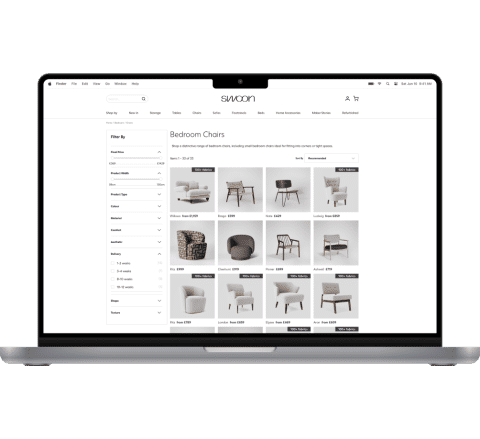
Swoon: Cloud-native backend for a furniture brand
Swoon partnered with Geniusee to modernize its backend and support a fast-growing e-commerce operation. The new serverless architecture cuts infrastructure costs, automates key workflows, and integrates payments, freight, and shipping systems into a single, reliable backbone for the brand.
Case details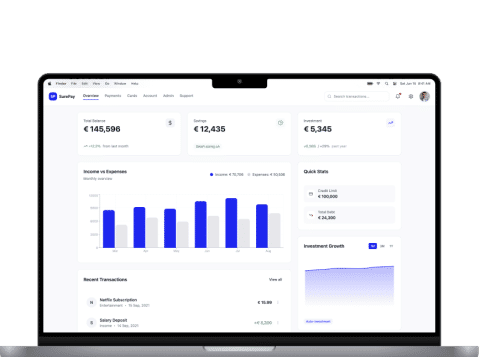
How we secured a business-critical Atlassian platform with near-zero downtime by migrating VMware to AWS
We migrated a multi‑node Atlassian platform from a single VMware host to a resilient AWS architecture in a way that was almost invisible to end users. The client eliminated a single point of failure, strengthened their security posture, and gained a clear roadmap for further cloud modernization. Instead of relying on one aging server, they now run in AWS in the eu‑central‑1 region, with an environment ready for future load and security stability.
Case details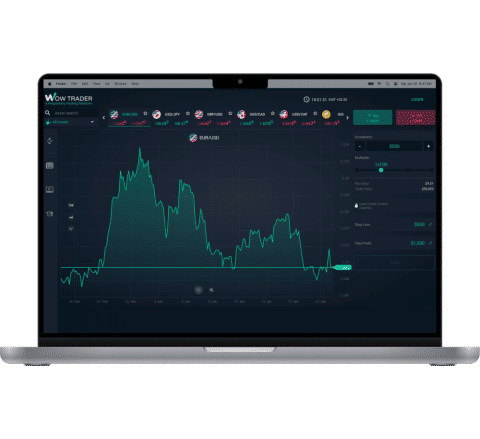
AWS Migration for TradeSmarter Trading Platform
Tradesmarter partnered with Geniusee to stabilize its trading infrastructure, enhance performance, ensure high availability, and automate processes – all while transitioning to a scalable cloud environment.
Case details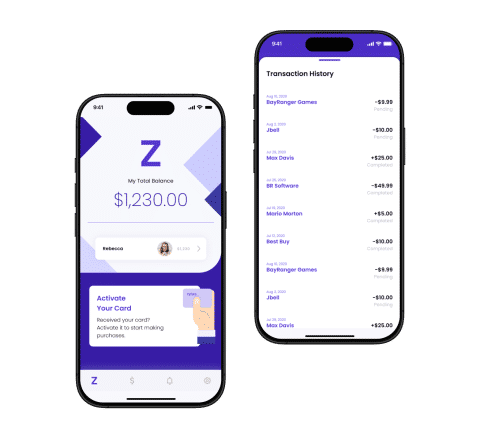

Zytara: Gamified digital banking app
Zytara is a digital banking app built specifically for Gen Z, combining financial education with a gamified, customizable user experience. Our team developed a secure, blockchain-enabled platform that lets parents manage and monitor their children’s spending and saving, while giving young users a more engaging way to interact with money. We introduced game-inspired card skins, personalized modes, and a built-in shop featuring branded merchandise from e-sports, gaming, and music partners. One of the most unique aspects of the project was enabling users to manage digital assets and complete full NFT lifecycles directly within the app.
Case details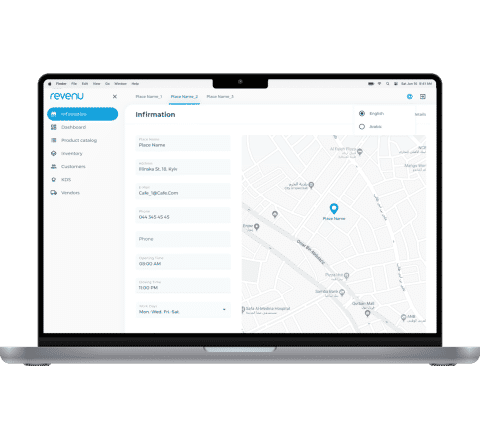
Revenu: All-in-one POS and restaurant management system
When Revenu approached Geniusee, they had a clear vision: to transform the restaurant experience through a unified POS and management system. Together, we set out to create a solution that simplifies restaurant operations, boosts staff efficiency, and enhances customer satisfaction.
Case details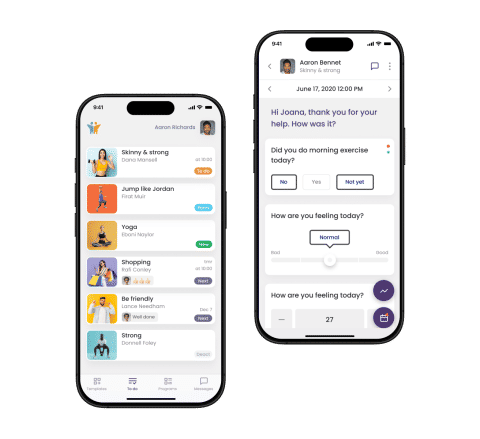
 Healthcare
Zebulon: Medtech app development
Zebulon set out to replace scattered health data with structured insight. The team wanted a mobile app that let clinicians build their own surveys, collect recurring inputs, and instantly see trends in a clear analytical view. With only the vision defined, Zebulon partnered with Geniusee to turn it into a functioning product. Our joint work resulted in a lightweight, secure application that captures continuous patient metrics and translates them into meaningful feedback for healthcare professionals.
Case details



Valuable AWS consulting prioritizes your specific business context and engineering challenges before introducing specific cloud tools or platform recommendations. Our engagement model follows this logic: Geniusee’s consultants make sure that every architectural decision is grounded in your specific business objectives.

Discover
We begin with your business context, current architecture, technical constraints, risk areas, and expected outcomes. This gives everyone the same baseline before any cloud changes happen.
Assess
Our engineers inspect the architecture, accounts, workloads, cost model, security controls, CI/CD, monitoring, and operational processes. We also identify quick wins and deeper structural issues.
Design
We prepare the target architecture, service selection, migration or modernization plan, security model, cost assumptions, and implementation roadmap. Each recommendation connects to a technical reason and a business impact.
Implement
Geniusee engineers help build, migrate, configure, automate, or modernize the required components. The scope may include infrastructure, applications, databases, pipelines, monitoring, security, and governance.
Stabilize
After launch or migration, we validate performance, reliability, recovery, security, observability, and cost behavior. This stage helps ensure the environment operates under real operating conditions.
Optimize
Cloud work does not end when the system is running on AWS. We review usage, costs, incidents, performance data, and new business needs, then improve the environment through a continuous optimization loop.
Geniusee combines AWS expertise with product engineering, DevOps, data engineering, and long-term cloud operations. That matters because most AWS decisions affect more than infrastructure. They affect application architecture, release velocity, security, compliance, and budget planning.
- AWS architecture consulting for trading platforms, digital banking products, and payment systems with strict uptime and latency requirements
- Multi-account governance and access management for environments subject to PCI DSS, SOC 2, and financial regulatory oversight
- Migration planning for financial workloads where data integrity and transaction continuity cannot be compromised
- Encryption, key management, and audit trail design for systems processing sensitive financial data
- Cost optimization for data-heavy fintech workloads with unpredictable usage patterns
- Scalable AWS architecture for learning platforms that handle seasonal enrollment peaks and high concurrent user activity
- Serverless and managed-service adoption to reduce operational overhead for lean EdTech engineering teams
- Content delivery and storage architecture for video-based learning products serving global audiences
- Data protection and access governance for platforms handling student records and learner data
- Infrastructure cost control for products where usage grows faster than revenue in early stages
- AWS architecture for eCommerce backends, order management, and inventory systems built for traffic spikes during sales periods
- Auto-scaling and load management design that keeps costs proportional to actual customer demand
- Data pipeline and analytics architecture for customer behavior, pricing, and demand forecasting workloads
- Integration architecture connecting AWS-hosted platforms with payment, logistics, and CRM systems
- Migration and modernization of legacy retail systems to managed AWS services
- Cloud architecture for property management, listing, and CRM platforms serving agents, landlords, and buyers
- Multi-tenant infrastructure design with role separation for platforms handling contracts and client documents
- Storage and data lifecycle planning for document-heavy real estate workflows
- IoT and occupancy data infrastructure for smart building and workplace management products
- Compliance-ready data residency and encryption design for platforms operating across multiple regions




How long do AWS cloud consulting services usually take?
Not every engagement needs a six-month roadmap. A focused assessment may take 2–4 weeks; a broader modernization, migration, or platform program can continue for several months. The actual timeline depends on the complexity of the workload, compliance constraints, existing technical debt, and the level of implementation support your team needs.
Can your AWS cloud consulting company work with our current systems?
Usually, that is where the work begins. We can assess legacy applications, on-premises platforms, third-party tools, existing CI/CD pipelines, and environments running on Azure or Google Cloud. Some components may stay exactly as they are. Others may need redesign, integration work, or gradual replacement.
How do your migration services reduce operational risk?
The safest migrations move in controlled waves, not one large cutover. We map dependencies, test lower-risk workloads first, define rollback paths, and verify performance, data integrity, access controls, and recovery procedures before production traffic changes. That keeps business continuity part of the plan rather than something checked at the end.
How do you approach cloud security and compliance?
We look at the full operating model: who has access, how data is protected, where logs are stored, and what happens during an incident. The review may cover identity, encryption, network exposure, backup, recovery, and evidence collection. Changes to AWS infrastructure are then prioritized by business risk, not by the number of tools available.
What AWS expertise will be involved in the project?
That depends on the problem. A project may involve solution architects, DevOps engineers, security specialists, data engineers, FinOps professionals, or AI/ML engineers. Relevant AWS certifications support their technical background, but production experience matters just as much, particularly when decisions affect uptime, cost, compliance, and future development.
Can you continue supporting AWS solutions after launch?
Yes, and the model does not have to be all-or-none. Your team may retain daily ownership while Geniusee handles architecture reviews, incident support, cost optimization, or security improvements. Alternatively, we can take on broader operational responsibility as the platform grows and priorities change.