
This engagement works best when a process has clear inputs, known decision rules, measurable output quality, and a manual effort cost that is easy to quantify. If your team can describe the workflow step by step, we can assess whether AI automation is the right solution to make this process more productive and error-free.



Compliance and audit requirements do not disappear when AI enters the workflow
In finance, legal, healthcare, and regulated operations, not every decision should be fully automated; this is a design consideration rather than a limitation of the technology.
A PoC that ignores human-review logic, exception thresholds, and auditability is not a production-ready plan. It is a prototype that will need significant redesign before it can be deployed safely in a real operational environment.

IT experts are ready to start building focused AI pilots for you





Workflow and ROI baseline
A documented map of the current process covering time per cycle, cost of manual effort, handoff gaps, exception paths, input data quality, risk areas, and the agreed success metrics for the automation. This becomes the brief against which the AI pilot is measured and the foundation for the business case for the rollout.
Working automation PoC
A running end-to-end flow built on real or representative data, using AI agents, OCR, RAG, classification, extraction, or decision-support logic, depending on what the process requires. The build covers the core automation path, and the review controls around it, not just the model in isolation.
Rollout roadmap
A structured plan covering architecture decisions, data requirements, integration touchpoints, review model design, compliance controls, KPIs, risk register, estimated timeline, and the next-step cost range for moving the automation into production.
Review and control model
A clear design for where human review stays in the loop, including exception thresholds, escalation logic, audit trail requirements, and override mechanisms. All of these are built into the PoC from day one rather than retrofitted after delivery.









 Martech
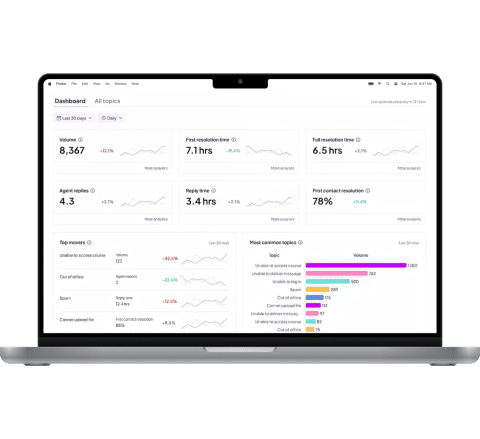
Forethought: Enterprise AI agents for customer support
Forethought partnered with Geniusee to extend and integrate its AI-powered support platforms (Assist and Discover) into complex enterprise environments. We helped enhance real-time agent assistance, streamline multi-system connectivity, and deliver a unified support experience across channels. The result is a scalable AI agent ecosystem that accelerates resolution times, boosts team productivity, and powers more consistent customer experiences.
Case details
From fragmented travel requests to an AI-powered concierge platform
Geniusee partnered with a small travel company to develop an AI-powered concierge platform that integrates travel assistance and service management into a single digital environment. The MVP combines an AI-powered chatbot for travelers with an administrative platform for managing its content, users, data, and operations.
Case details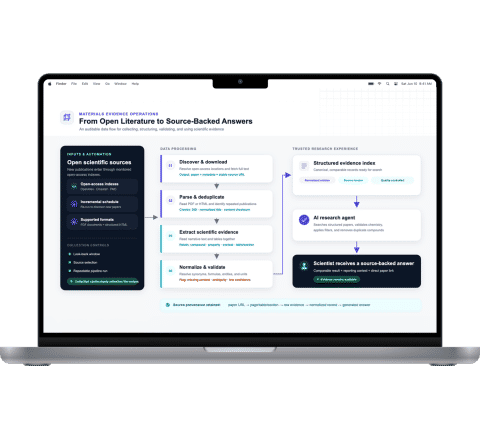
 Materials science
How Geniusee helped Planck Technologies process 10,000 scientific papers with an AI data pipeline
Planck Technologies develops AI-powered technology for materials discovery, helping researchers evaluate porous materials for industrial applications. They addressed Geniusee to build a scientific data pipeline that collects research publications, extracts and normalizes materials data, preserves source provenance, and supports AI-assisted scientific research.
Case details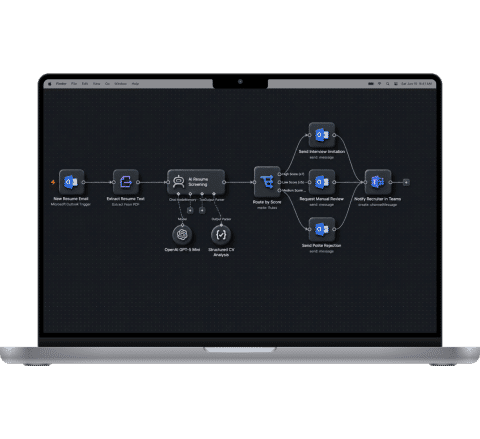
How Geniusee saved recruiters up to 25 hours in 2 weeks with AI agent
Geniusee partnered with an NDA-protected technology services company to automate one of the most time-consuming parts of its recruitment funnel: first-stage candidate screening. The resulting AI screening workflow evaluates inbound profiles against vacancy requirements, advances or disqualifies candidates, prepares personalized feedback, and gives recruiters a structured record of every decision. The resulting AI screening workflow evaluates inbound profiles against vacancy requirements, advances or disqualifies candidates, prepares personalized feedback, and gives recruiters a structured record of every decision.
Case details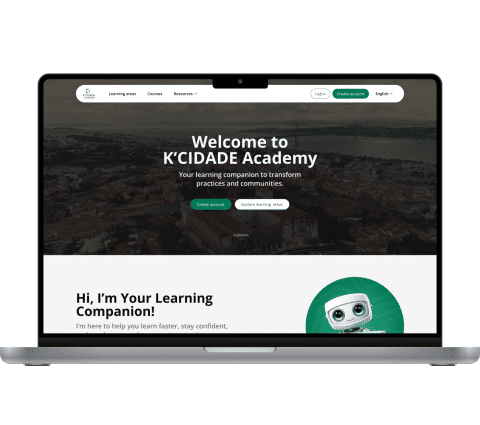
K’CIDADE Academy: How we built an AI-powered learning platform for AKF Portugal
K'CIDADE Academy is AKF Portugal's professional learning platform for civil society organizations, educators, and community leaders. Built on adaptive learning pathways, an AI virtual tutor, and a gamified progress system, it delivers personalized training to professionals working across social inclusion, education, and community development.
Case details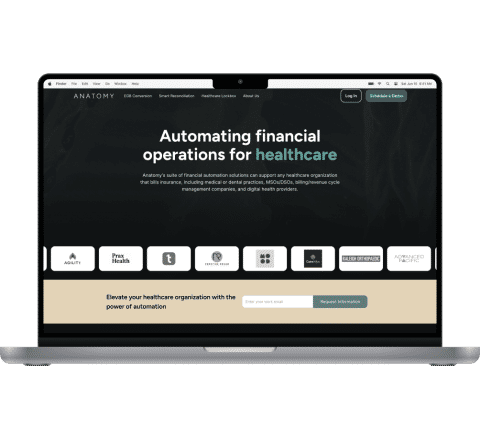
Anatomy Financial: Automated financial management software for healthcare
Anatomy introduces an innovative solution designed to automate document processing, compare various documents and banking transactions, and handle the intricacies of physical check processing. By conducting a thorough analysis, the system identifies discrepancies between the declared prices of medical procedures and the actual amounts received by the clinic.
Case details
A path to production, not another prototype on a shelf
The rollout roadmap turns pilot findings into a scoped production plan with architecture decisions already made and integration risks already identified. Teams that use the pilot to test AI technologies on a real workflow know exactly what comes next before the engagement ends, rather than facing a new scoping exercise after delivery.






Every AI agent depends on the workflow, data, software environment, and risk level that underpin it, so our process stays flexible rather than fixed to a single delivery template. Following the best standards of AI agent development services, Geniusee can start with a focused PoC, move into an MVP, and then scale the agent into a stable business system with the right integrations, monitoring, and infrastructure in place.

Map the process
We define the workflow scope, manual effort volume, cost per cycle, users involved, exception types, integration points, and target ROI together with your team. This step produces the automation brief and the success criteria that the PoC will be evaluated against before any build work begins.
Review the data
We assess input quality, document formats, system access, labeling needs, data volumes, edge cases, and any compliance or privacy constraints that will shape the automation design and the review model built around it.
Build the automation
We build the smallest end-to-end AI flow that covers the core path: extraction, classification, decision logic, integration, and output. Human-review controls are designed into the build at this stage, not added as a layer after the automation is already running.
Pilot and validate
We run the automation on real or representative data and measure output quality, processing speed, exception rate, human-review workload, and the gap between PoC performance and the actual requirements of a production deployment.
Deliver the rollout plan
We turn PoC findings into a structured production plan with architecture decisions already made, integration risks identified, compliance controls specified, and a realistic team model and timeline in place for the next phase.

- Invoice and payment processing automation for financial operations teams
- Reconciliation workflows that compare documents against transaction records and flag discrepancies
- Compliance document classification and audit trail generation for regulated processes
- Back-office reporting automation pulling structured data from multiple financial systems
- Onboarding document processing for new accounts, partners, or counterparties
- Enrollment and admissions document processing with missing-data detection and routing
- Content review automation that checks learning materials for completeness and consistency
- Learner progress report generation assembled from LMS, engagement, and assessment data
- Administrative workflow automation for course access, certification records, and compliance tracking
- Support ticket classification and routing for student and instructor request queues
- Product catalog processing that extracts, validates, and routes listing data across platforms
- Order and returns document handling with classification and exception flagging
- Supplier onboarding document workflows with verification and approval automation
- Back-office inventory and fulfillment reporting assembled from disconnected source systems
- Customer support ticket routing and response drafting for high-volume service operations
- Lease and contract document extraction with clause identification and comparison logic
- Permit and compliance workflow automation across multiple jurisdictions and agencies
- Property listing data processing and quality checking before publication
- Tenant and buyer onboarding document handling with verification and exception routing
- Operational reporting assembled from property management, CRM, and financial platforms

Certified AWS Partner delivering secure, scalable cloud-native solutions.

ISO-compliant processes ensuring quality, security, and reliability.

Trusted integration partner for financial data connectivity and open banking.
Team of ISTQB-certified QA engineers for world-class software testing.

Consistently rated ★5.0 by clients for reliability and delivery excellence.

Accredited partnership supporting advanced testing and continuous QA automation.
How do we know if our process is a good candidate?
The best candidates share a few characteristics: clear, repeatable inputs such as documents, emails, forms, or data records; defined decision rules that a human follows consistently; measurable output quality; and a manual effort cost that makes automation ROI visible. If your team can describe the process step by step, we can assess your potential AI pilot accurately on a 30-minute call.
How long does a single-flow AI pilot take?
Duration depends on process complexity, data readiness, the number of systems involved, exception volume, and compliance requirements. Simpler, well-documented workflows with clean data can reach the validation stage in a few weeks, while more complex document-heavy or multi-system processes take longer. The timeline is defined during the scoping step based on your specific situation rather than applied as a standard estimate.
What does Geniusee need from our side?
We need access to representative process data or anonymized samples, clarity on the target workflow and its exceptions, access to the relevant systems for integration assessment, and a point of contact who understands the current process in operational detail. The initial session is structured to gather what we need efficiently without requiring extensive preparation on your side.
Will the automation replace our team’s judgment on sensitive decisions?
Only where you decide it should. The AI pilot includes a human-review model that identifies which decisions can be automated, which require human confirmation, and which should receive only AI assistance rather than AI action. Compliance, risk, and exception thresholds are all defined before the build begins.
What accuracy level does the AI pilot need to reach to be considered successful?
Accuracy requirements are set during the process mapping stage based on the real cost of errors in your specific workflow, because a financial reconciliation process has meaningfully different tolerances than an initial ticket classification. The pilot validates whether the required accuracy is achievable and documents what production-grade performance would require at full scale.
Can the AI pilot connect to our existing systems?
Yes. Integration with existing CRM, ERP, ticketing, and document management systems is part of the AI pilot program scope rather than a follow-on activity. We assess your systems during the data review stage and validate the integration layer during the build, so the rollout roadmap reflects your actual tech stack rather than a greenfield assumption.
How is this different from a general AI PoC?
This engagement is specifically scoped to automate a business process rather than test a model’s general capabilities. The focus is operational: map the current process, measure its cost, automate one end-to-end flow, validate on real data, and produce a rollout plan. It sits closer to AI consulting, combined with a working technical prototype, than to a research-oriented AI experiment where the business outcome is secondary to the technical finding.