
The gains are biggest where people spend the most hours on manual work. Geniusee automates complex business processes from intake to output, bringing in advanced technologies like computer vision and retrieval-augmented generation (RAG) only where they earn their place. Manual tasks give way to automated steps, but exception handling, audit trails, and sign-off stay in place wherever the business calls for them. The teams below feel that change first.


For CTOs maintaining fragile scripts and disconnected systems
Scheduled jobs, spreadsheets, and point-to-point integrations keep operations running, but they break quietly, leave no audit trail, and depend on a small number of people who know how they work.

IT experts are ready to start building automation for you

Certified AWS Partner delivering secure, scalable cloud-native solutions.

ISO-compliant processes ensuring quality, security, and reliability.

Trusted integration partner for financial data connectivity and open banking.
Team of ISTQB-certified QA engineers for world-class software testing.

Consistently rated ★5.0 by clients for reliability and delivery excellence.

Accredited partnership supporting advanced testing and continuous QA automation.











From fragmented travel requests to an AI-powered concierge platform
Geniusee partnered with a small travel company to develop an AI-powered concierge platform that integrates travel assistance and service management into a single digital environment. The MVP combines an AI-powered chatbot for travelers with an administrative platform for managing its content, users, data, and operations.
Case details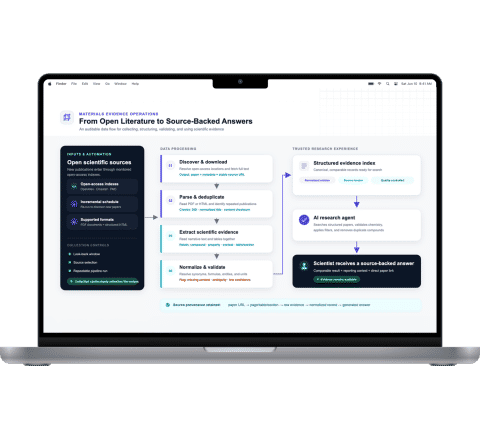
 Materials science
How Geniusee helped Planck Technologies process 10,000 scientific papers with an AI data pipeline
Planck Technologies develops AI-powered technology for materials discovery, helping researchers evaluate porous materials for industrial applications. They addressed Geniusee to build a scientific data pipeline that collects research publications, extracts and normalizes materials data, preserves source provenance, and supports AI-assisted scientific research.
Case details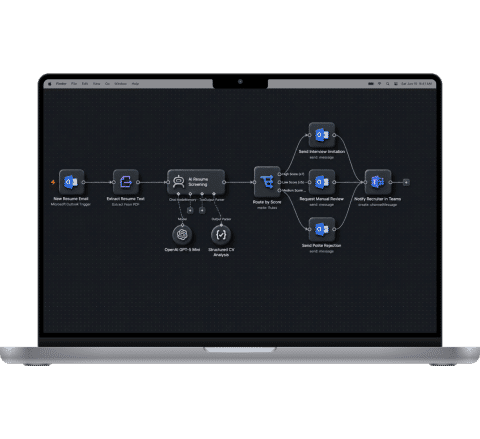
How Geniusee saved recruiters up to 25 hours in 2 weeks with AI agent
Geniusee partnered with an NDA-protected technology services company to automate one of the most time-consuming parts of its recruitment funnel: first-stage candidate screening. The resulting AI screening workflow evaluates inbound profiles against vacancy requirements, advances or disqualifies candidates, prepares personalized feedback, and gives recruiters a structured record of every decision. The resulting AI screening workflow evaluates inbound profiles against vacancy requirements, advances or disqualifies candidates, prepares personalized feedback, and gives recruiters a structured record of every decision.
Case details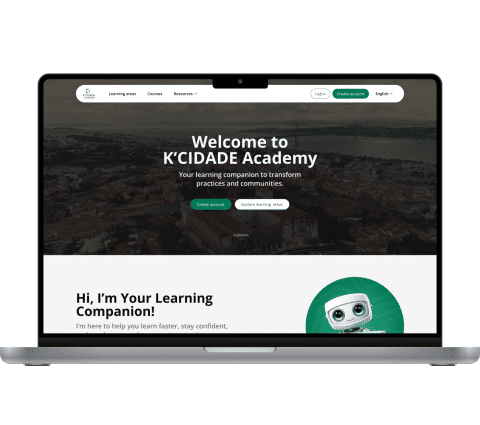
K’CIDADE Academy: How we built an AI-powered learning platform for AKF Portugal
K'CIDADE Academy is AKF Portugal's professional learning platform for civil society organizations, educators, and community leaders. Built on adaptive learning pathways, an AI virtual tutor, and a gamified progress system, it delivers personalized training to professionals working across social inclusion, education, and community development.
Case details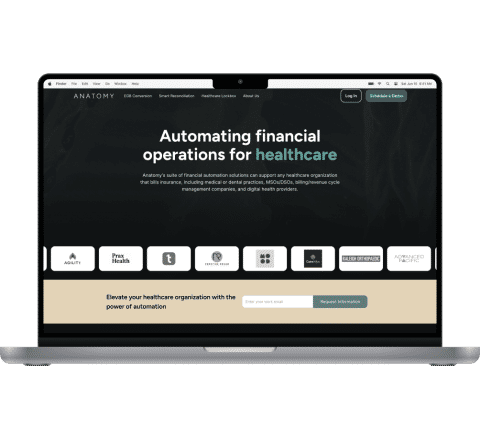
Anatomy Financial: Automated financial management software for healthcare
Anatomy introduces an innovative solution designed to automate document processing, compare various documents and banking transactions, and handle the intricacies of physical check processing. By conducting a thorough analysis, the system identifies discrepancies between the declared prices of medical procedures and the actual amounts received by the clinic.
Case details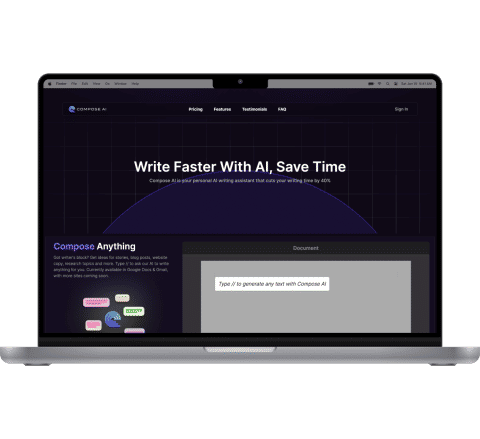
 Martech
Compose AI: Advanced content writing solution
We partnered with Compose AI to enhance their AI-powered writing platform through cloud migration, UX improvements, seamless integrations, and scalable feature development, upporting their growth from YC-backed startup to a widely adopted productivity tool.
Case details




















Discovery and process assessment
☑️ Map the processes you want to improve and measure volumes, cycle times, and error rates
☑️ Check what your source systems, APIs, and data quality can realistically support
☑️ Produce a shortlist of candidate processes with an estimate of effort and impact for each
☑️ Set out the constraints clearly before any development is committed
☑️ Draw on our business analysis and discovery phase practices
Solution design and architecture
☑️ Decide what each process needs: rule-based automation, an ML model, an AI agent, document processing, or a combination
☑️ Design the integration layer, exception paths, and approval points
☑️ Define the security and access model for every automated action
☑️ Agree on the success metrics before development begins
Development and integration
☑️ Build the automated process and connect it to your systems through APIs and message queues
☑️ Add UI-level automation where no interface exists
☑️ Keep everything in version-controlled code
☑️ Apply the same delivery standards we use for product work
Testing, validation, and controlled rollout
☑️ Validate accuracy against real historical cases
☑️ Run the automation in parallel with the manual process where risk requires it
☑️ Test security, performance, and failure behavior
☑️ Cover regression and edge cases with our QA and software testing team before production volume
Monitoring, support, and expansion
☑️ Monitor throughput, exceptions, and model performance after launch
☑️ Tune the rules and prompts as real data comes in
☑️ Extend the solution to adjacent processes
☑️ Provide documentation, dashboards, and a support arrangement matched to how critical the process is



- Know Your Customer (KYC) and Know Your Business (KYB) document checks, onboarding review, and application intake
- Transaction reconciliation, exception queues, and month-end reporting
- Fraud signal detection, payment risk scoring, and anomaly review
- Loan application processing, credit file assembly, and compliance reporting
- Enrollment, registration, and student record updates across connected systems
- Automated grading support, assignment feedback, and progress summaries
- LMS content operations, course setup, and catalog maintenance
- Learner support assistants for schedules, access issues, and standard questions
- Product catalog enrichment, attribute extraction, and listing cleanup
- Order, return, and refund processing with status updates sent without manual input
- Demand forecasting, inventory alerts, and replenishment triggers optimized against live sales data
- Supplier invoice matching, purchase order handling, and vendor onboarding
- Listing intake, data enrichment, and duplicate detection across sources
- Lease, contract, and disclosure document processing with field validation
- Maintenance request triage, routing, and tenant communication
- Rent reconciliation, payment tracking, and portfolio reporting







What is the difference between RPA and intelligent automation?
RPA follows fixed rules and works well when a process is stable and the inputs are structured. Intelligent automation adds machine learning, document understanding, and language models on top, so the system can handle unstructured inputs, variable formats, and decisions that rules alone cannot express. Some vendors call this cognitive automation. In practice, most production solutions combine both, using rules for deterministic steps and AI for interpreting variable or unstructured inputs, with human review for consequential decisions.
Do we need an intelligent automation platform, or can this run on our existing systems?
In most cases, you do not need to buy one. We build on your current stack and cloud environment, adding an orchestration and integration layer where it is missing. Licensed automation tools make sense when you plan a large internal program with citizen developers or when your digital transformation roadmap already commits you to a specific vendor, and we will say so if that is the better path for your situation.
What are the main benefits of intelligent automation for a mid-sized company?
The direct effect is lower manual effort in high-volume operations, faster cycle times in document-driven processes, fewer data errors, and better visibility into where work slows down. Companies that automate repetitive tasks in finance and service operations usually see a change in productivity within the first quarter after launch. The commercial effect is usually capacity growth without proportional hiring, plus a measurable improvement in customer experience in client-facing processes.
What are the most common intelligent automation use cases you deliver?
Document processing and validation, reconciliation and discrepancy detection, application and onboarding intake, ticket triage and routing, reporting and data preparation, and internal knowledge assistants. Finance and back-office functions are usually the strongest starting point because volume is high and the rules are already written down.
Implementing intelligent automation: How long does it take?
A single automated process typically reaches production in six to twelve weeks, depending on data quality and the number of systems it touches. Programs covering several processes, custom models, or agent-based sequences usually run three to six months. Discovery takes 2 to 4 weeks and provides scope and an estimate before the build starts.
Will intelligent automation tools replace our team?
The goal is to remove routine steps, not roles. In the projects we deliver, teams shift toward exception handling, analysis, and client work, and the automated share of the process absorbs volume growth. We design approval points and override controls so people keep authority over decisions that matter.
How do you handle security and compliance?
Every action runs under managed credentials with role-based access and audit logging. We apply data minimization, encryption in transit and at rest, and controls designed to support applicable privacy and sector-specific requirements. For high-risk AI use cases under the EU AI Act, we account for requirements such as risk management, data governance, technical documentation, logging, human oversight, accuracy, robustness, and cybersecurity.
Can you work with our legacy systems?
Yes. Where a system exposes an API, we integrate through it. Where it does not, RPA operates at the interface level, and we monitor those connections closely because they are the most fragile part of any automation. If a system creates a permanent constraint, we will flag it and discuss whether legacy modernization should come first.
How much does business process automation cost?
Scope drives the number. A single-document processing flow is a different investment from an intelligent business process automation program that connects ERP, CRM, and a data warehouse. We estimate after discovery, when we know your data readiness, system complexity, and security requirements.
Do you support the solution after launch?
Yes. Any automation drifts as systems, formats, and rules change, so we offer monitoring, model retraining, rule updates, and support arrangements scaled to the criticality of the process to your operations.