


Certified AWS Partner delivering secure, scalable cloud-native solutions.

ISO-compliant processes ensuring quality, security, and reliability.

Trusted integration partner for financial data connectivity and open banking.
Team of ISTQB-certified QA engineers for world-class software testing.

Consistently rated ★5.0 by clients for reliability and delivery excellence.

Accredited partnership supporting advanced testing and continuous QA automation.
The difference between a SaaS demo and a SaaS business lies in everything that happens beneath the surface. Multi-tenancy, security, and scale are where products quietly succeed or fail, and where AI-generated and no-code builds most often fall short. Here’s the engineering that earns enterprise trust.
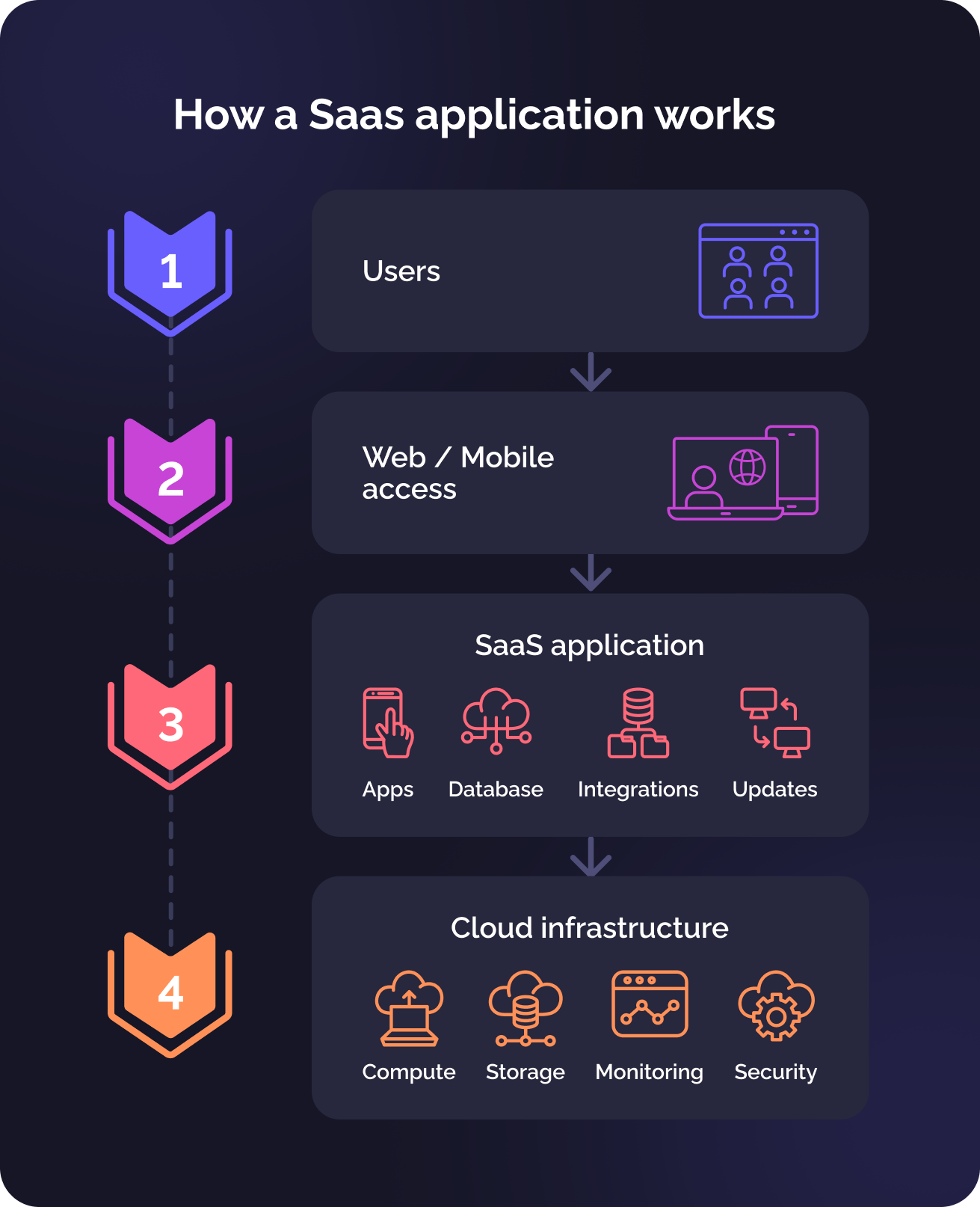

Off-the-shelf software has a ceiling. When the business faces growth, complexity, legacy constraints, or a product idea that needs its own platform, custom SaaS development becomes the more practical path. Here’s where that decision most often comes from:

You started in no-code and outgrew it
A no-code or AI-built tool proved the idea — now scale, security, or due diligence is exposing its limits.
No-code platforms prioritize speed over scale, often lacking data control and the ability to export code. Once you outgrow the prototype due to performance issues, security requirements, or investor scrutiny, it’s time for a professional foundation. We rebuild on your existing architecture while preserving your existing product logic.

IT experts are ready to start building SaaS solutions for you
What outcomes should a SaaS development company help you achieve?
“Great SaaS products pair simple user experiences with cloud control.
As user bases grow, performance, technical guardrails, security, AI usage, data storage, and cost management must scale in sync.
At Geniusee, we combine AWS expertise, cloud engineering, and QA to build an architecture that stays reliable, scales efficiently, and evolves with your business.
AI is now part of how we build, not just what we build — our teams apply AI-assisted engineering across the delivery cycle to move faster without sacrificing security or quality.”
Nazar Hazdun
CTO at Geniusee










SaaS products need coordinated expertise across architecture, security, UX, cloud infrastructure, AI integration, QA, and product strategy. Geniusee brings these specialists together to help your platform launch successfully, scale efficiently, and improve over time.
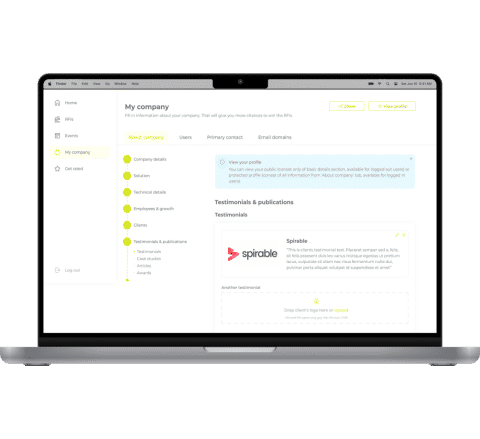

Validify – Retail vendor management platform
See how Geniusee built Validify’s scalable vendor management platform with advanced UX, data architecture, and automated RFI workflows.
Case details
From fragmented travel requests to an AI-powered concierge platform
Geniusee partnered with a small travel company to develop an AI-powered concierge platform that integrates travel assistance and service management into a single digital environment. The MVP combines an AI-powered chatbot for travelers with an administrative platform for managing its content, users, data, and operations.
Case details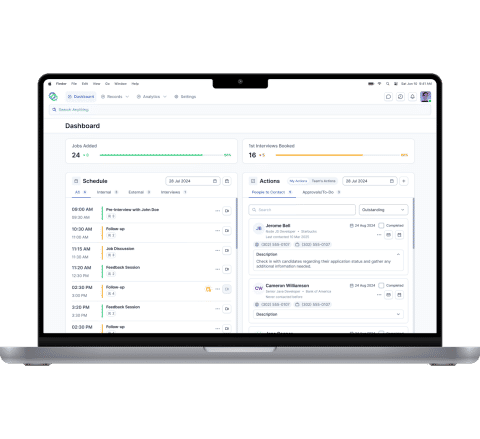
 Recruitment
How Geniusee helped Forsyth Barnes speed up hiring by up to 90% with Imagine AI
Geniusee developed Imagine AI, a scalable recruitment platform for Forsyth Barnes. The system centralizes workflows, embeds AI for candidate matching and CV tailoring, and integrates compliance and reporting tools. This solution facilitates recruiters' work and ensures full visibility across the hiring cycle.
Case details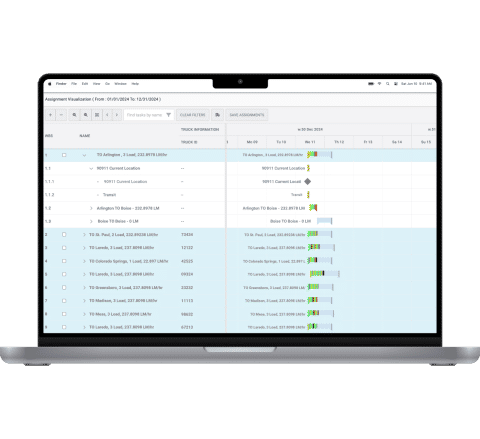
 Logistics
How we streamlined enterprise logistics for A&M with TigerGraph
Alvarez & Marsal (A&M) is a global enterprise-level consulting company specializing in turnaround management, performance improvement, and advisory services. Founded in 1983, the firm provides expertise in restructuring, operational excellence, and strategic consulting across various industries. A&M is known for working with clients during critical transitions, helping them address complex challenges and achieve sustainable growth. The client turned to Geniusee due to our proven expertise in working with niche technologies like TigerGraph and our ability to deliver custom data-intensive systems under tight technical constraints.
Case details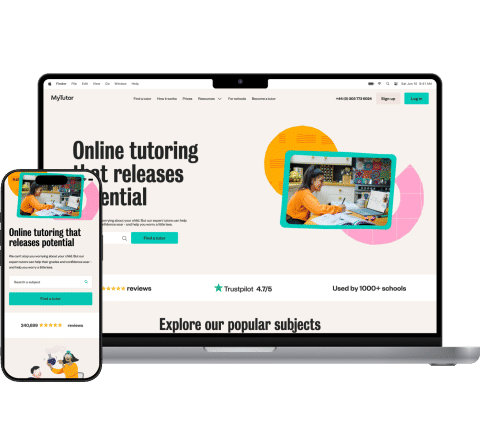

MyTutor: Online tutoring platform
MyTutor is an online tutoring platform that reshapes school-based learning by automatically grouping students with similar needs and learning styles. With built-in scheduling, class formation, and management tools, it helps tutors and schools deliver personalized support at scale.
Case details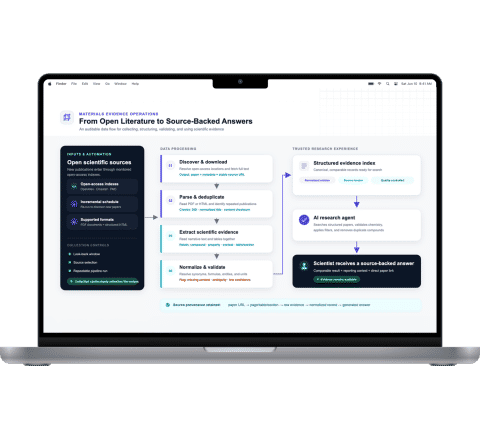
 Materials science
How Geniusee helped Planck Technologies process 10,000 scientific papers with an AI data pipeline
Planck Technologies develops AI-powered technology for materials discovery, helping researchers evaluate porous materials for industrial applications. They addressed Geniusee to build a scientific data pipeline that collects research publications, extracts and normalizes materials data, preserves source provenance, and supports AI-assisted scientific research.
Case details


Start with the product reality
Before development starts, we define what the platform must provide, who will use it, and what should be excluded from the first release.
✔️ User roles and access logic
✔️ Core workflows and business rules
✔️ Monetization and subscription logic
✔️ Integration requirements
✔️ Delivery priorities and release scope
✔️ Early view of the cost of SaaS development
Design the SaaS foundation
A new SaaS product needs a technical foundation that supports users, data, permissions, and growth without costly rework later.
✔️ Tenant model planning
✔️ Database structure design
✔️ API layer definition
✔️ Security and permission models
✔️ SaaS cloud architecture
✔️ Scalability and performance planning
Make the product usable
A user-friendly SaaS platform depends on clear flows, practical screens, and interfaces that match how people work every day.
✔️ User journey mapping
✔️ UX/UI design
✔️ Onboarding flow design
✔️ Dashboard and admin panel design
✔️ Role-specific interface logic
✔️ Design system creation
Build the full-stack product
Geniusee’s engineers create SaaS products by integrating frontend, backend, data, integrations, and business logic into a single, maintainable system.
✔️ Frontend development
✔️ Backend engineering
✔️ API development
✔️ Admin panels and dashboards
✔️ Subscription and billing features
✔️ Third-party integrations
Prepare the release environment
Before launch, we test whether the platform can run in real market conditions, not just in a development environment.
✔️ CI/CD pipeline setup
✔️ Monitoring and logging
✔️ Backup and recovery planning
✔️ Security checks
✔️ Performance and load testing
✔️ Access control validation
Improve after launch
End-to-end SaaS development continues after users log in. The goal is not only to create SaaS once, but to keep it useful as the business changes.
✔️ Bug fixing and support
✔️ Cloud cost optimization
✔️ Performance tuning
✔️ Security updates
✔️ Feature development
✔️ Product roadmap refinement


- Digital banking portals for account access, payments, cards, and user support
- Lending platforms for applications, scoring workflows, document collection, and repayment tracking
- Trading and investment dashboards with portfolio data, analytics, alerts, and reporting
- Insurance platforms for policy management, claims workflows, renewals, and customer service
- KYC and onboarding systems with document upload, verification flows, and compliance review
- Billing, transaction, and payment management systems for financial operations
- Learning management systems (LMS) for course delivery, enrollment, assignments, and certificates
- Online tutoring platforms with scheduling, payments, video lessons, and progress tracking
- Corporate learning platforms for employee training, skill development, and compliance education
- Course marketplaces with subscriptions, content access, instructor tools, and learner profiles
- Assessment and certification platforms with quizzes, grading logic, and performance analytics
- AI-powered learning assistants for course explanations, feedback, and learner support
- E-commerce operations platforms for orders, returns, delivery, payments, and support
- Product information management (PIM) systems for catalogs, attributes, categories, and descriptions
- Inventory and replenishment platforms for stock tracking, demand signals, and supplier coordination
- Customer loyalty and personalization platforms for rewards, offers, segments, and campaigns
- Marketplace management systems for vendors, listings, commissions, and order workflows
- Back-office platforms that connect CRMs, ERPs, online stores, warehouses, and support tools
- Property listing platforms for buyers, tenants, brokers, agents, and property managers
- CRM systems for lead qualification, follow-ups, sales pipelines, and broker communication
- Tenant and property management portals for payments, maintenance requests, documents, and updates
- Investor dashboards with project data, financials, timelines, and portfolio reporting
- Document management systems for leases, permits, inspections, contracts, and property records
- Listing enrichment tools for property content, media, portal distribution, and data updates







How long do SaaS application development services take?
A lean-first release may take a few months, while a complex enterprise platform with integrations, advanced permissions, AI features, and compliance requirements may require a longer roadmap. The timeline depends on scope, architecture, data complexity, team involvement, and the number of workflows that must be production-ready from the start.
How do you estimate the cost of SaaS product development?
We estimate cost after reviewing product goals, user roles, feature scope, integrations, cloud infrastructure, security requirements, and post-launch support needs. This helps avoid vague budget ranges and gives your team a clearer view of what should be built now, what can wait, and where hidden delivery risks may appear.
Can you work with our existing systems and workflows?
Yes. Geniusee’s SaaS consultants can assess your current tools, data flows, APIs, spreadsheets, internal systems, and third-party platforms before development starts. The goal is to preserve what works, remove operational friction, and create a product that fits your real business processes rather than forcing a new one.
How do you handle security and compliance for global SaaS products?
We design security and compliance controls around your target markets, user roles, data sensitivity, and industry requirements. This may include secure authentication, role-based access control, audit logs, encryption, data retention policies, infrastructure monitoring, and documentation to support future compliance reviews.
Do we keep ownership after SaaS app development?
Yes. The product, codebase, documentation, and related project assets belong to you according to the agreed contract terms. We also make handoff practical by keeping the architecture, repositories, environments, and deployment logic clean enough for your internal team or future vendors to work with.
Can a SaaS product development company support us after launch?
Post-launch support helps scalable SaaS solutions stay reliable as usage, data volume, and customer expectations grow. Geniusee’s SaaS product development services can include performance tuning, cloud optimization, bug fixing, new feature delivery, security updates, and post-release SaaS environment monitoring.