
Our DevOps managed services process combines cloud infrastructure assessment, AI-assisted monitoring, and hands-on engineering to keep your production environment stable, secure, and cost-efficient.

Book a preliminary cloud audit and support estimate
Let’s start with a complimentary preliminary audit of your current cloud stack. We assess your infrastructure, operational risks, and support needs to recommend the appropriate coverage, response times, and service scope.
Toolchain setup and support onboarding
We integrate monitoring, alerting, incident management, and DevOps workflows with your infrastructure, establishing clear escalation procedures, access controls, and support responsibilities.
AI agent integration and observability
We connect our AI incident investigation agent to relevant data sources, including AWS, Azure, GCP, Datadog, New Relic, Prometheus, Grafana, Kubernetes, GitHub, and ServiceNow, as applicable to your environment.
Continuous monitoring and incident response
Our DevOps engineers monitor production, investigate alerts, and resolve incidents under agreed SLAs, using AI-assisted diagnostics and automated checks to speed up troubleshooting while retaining engineering oversight.
Proactive maintenance and optimization
We conduct regular health checks, security updates, configuration audits, and cloud cost reviews to prevent recurring issues. Our engineers refine operational workflows, document improvements, and adjust your support model as your infrastructure evolves.
Choose a support plan that fits your infrastructure and operational needs. From essential maintenance to ongoing DevOps support, our engineers help keep your production environment running reliably.

Select your ideal support coverage, best-fit response time, and complexity level. You can customize your support package, from 8×5 business-hours coverage to full 24/7 support, with the response speed you require. Our incident response service adapts to the complexity of your current infrastructure, whether you have a basic setup or a large, distributed application architecture.
Configuration Details
Engagement Specifics
Setup Fee
$1,500
One-time • First invoice
Extra Hours
$60/hr
Fixed out-of-scope rate
Total / Per Month
—
Our AWS-certified professionals manage these DevOps support services through ISO 9001- and ISO 27001-compliant processes to keep your cloud stable and cost-efficient. The agent helps engineers correlate alerts, investigate infrastructure issues, and identify likely root causes faster.
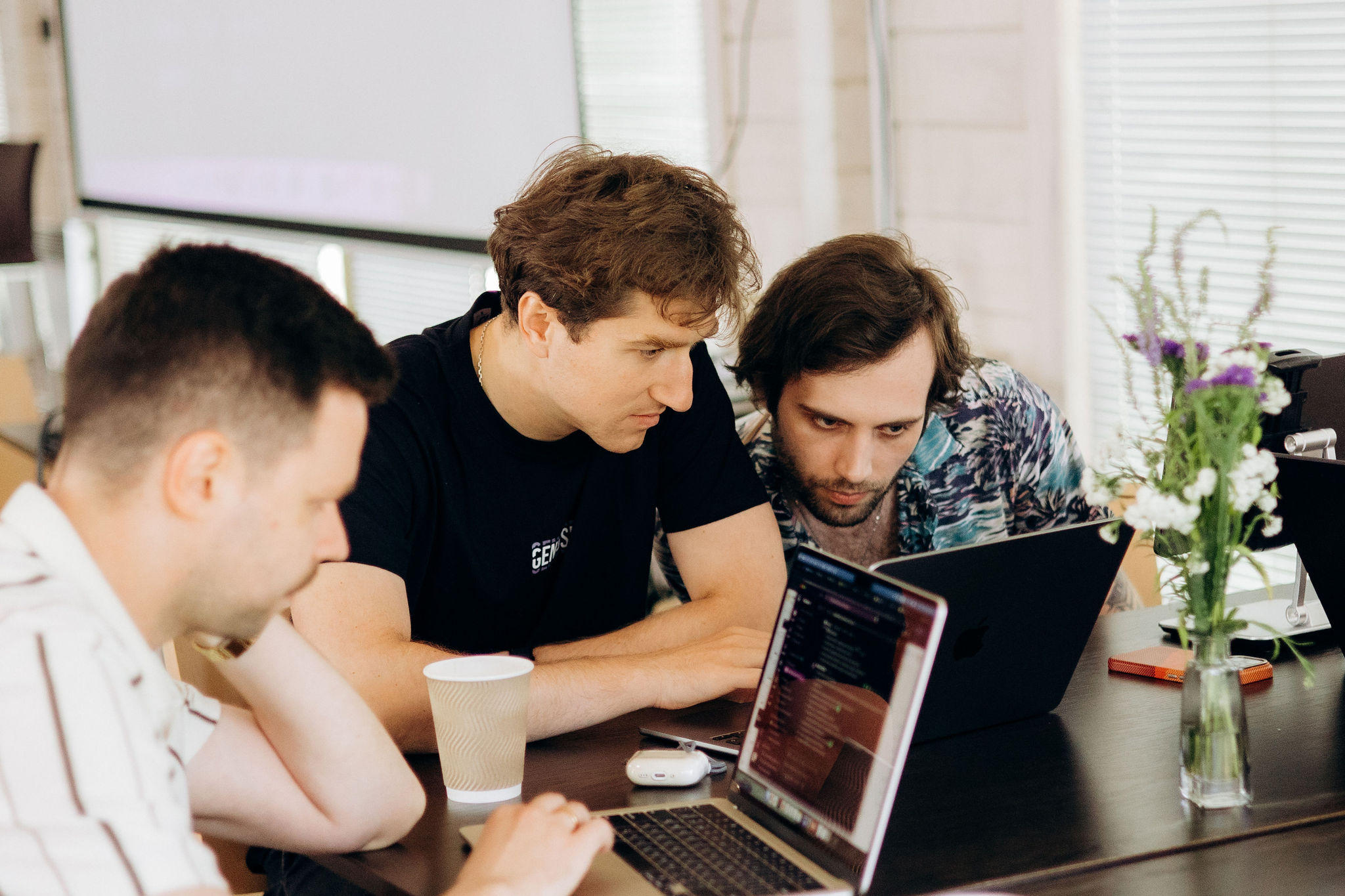

How our DevOps support model works

“Geniusee has good DevOps skills and knowledge of what’s available on AWS and Google Cloud Platform.
Geniusee’s team does a very good job with infrastructure management and takes 1–3 days to solve any issues, which the client finds reasonable. Geniusee is responsive, knowledgeable about DevOps, and communicative through Google Meet.
They have excellent English skills, which also stand out.”
Executive,
Blocksi






The tech stack used by our DevOps incident support engineers
| Cloud providers | AWS, Azure, Google Cloud (GCP) |
| Infrastructure automation | Terraform, Ansible |
| Container orchestration | Kubernetes (K8s), Docker, AKS, OpenShift, Helm, KubeVela, Argo CD, Crossplane |
| Monitoring and observability | Datadog, New Relic, Dynatrace, Prometheus, VictoriaMetrics, Zabbix, Grafana, Sentry |
| Logging and pipelines | Coralogix, Loki, VictoriaLogs, Elasticsearch, Kibana, OpenSearch, Splunk, Fluentd |
| Databases and caching | PostgreSQL, MySQL, MariaDB, MongoDB (Atlas), SQLite, Redis |
| Messaging and streaming | Kafka, RabbitMQ |
| Incident management | PagerDuty, Opsgenie, incident.io, ServiceNow, Jira, Confluence, Notion, Slab |
| CI/CD and version control | GitHub (Actions), GitLab (CI/CD), Jenkins, Prefect |
| Distributed tracing | Tempo |
Certified AWS Partner delivering secure, scalable cloud-native solutions.

ISO-compliant processes ensuring quality, security, and reliability.

Trusted integration partner for financial data connectivity and open banking.
Team of ISTQB-certified QA engineers for world-class software testing.

Consistently rated ★5.0 by clients for reliability and delivery excellence.

Accredited partnership supporting advanced testing and continuous QA automation.
Genuisee’s versatile experience, gained over more than 8 years, has enabled us to form a team with a proven track record.






Do you use AI agents in your DevOps support services?
Yes. Our incident response copilot helps DevOps engineers monitor cloud infrastructure, detect anomalies, investigate alerts, and identify potential root causes in real time. We can connect our agentic DevOps solution to a wide range of data sources, including AWS, Azure, GCP, Datadog, New Relic, Prometheus, Grafana, Dynatrace, Kubernetes, GitHub, GitLab, PostgreSQL, MongoDB, and ServiceNow, to provide engineers with the operational context they need to resolve incidents faster.
Do your AI SRE agents make DevOps incident support services more cost-efficient?
Yes. Our AIOps copilot automates routine investigation tasks, correlates monitoring data, and helps engineers identify root causes much faster. This reduces the engineering hours spent on troubleshooting and repetitive manual work. Thanks to this combined human-AI approach, your support costs are lowering while we maintain reliable incident response with direct access to experienced DevOps professionals.
Do your DevOps support services include FinOps, DevSecOps, and AIOps?
Yes. We combine FinOps practices for cloud cost optimization, DevSecOps for automated security checks and infrastructure protection, and AIOps for intelligent monitoring and incident investigation. Together, these practices help you control cloud spending, identify security and operational risks earlier, and maintain a more reliable production environment without adding unnecessary manual work.
When does a business usually need DevOps support services?
You need DevOps incident management services once your product is live and production issues start distracting your core team. Common signs include recurring incidents, slow recovery times, unstable deployments, limited monitoring, cloud cost creep, or growing infrastructure complexity that your developers should not have to manage day to day.
Is DevOps support relevant if our platform is already stable?
Yes. A stable platform still needs monitoring, maintenance, patching, incident readiness, and ongoing infrastructure tuning. Geniusee’s expert DevOps professionals help keep production stable after launch, so your team can stay focused on roadmap delivery instead of reacting to avoidable operational issues.
What kinds of products benefit most from Geniusee DevOps managed services?
Geniusee DevOps support is especially relevant for SaaS products, fintech platforms, edtech systems, real estate marketplaces, retail platforms, AI-enabled applications, and other customer-facing products that depend on uptime, predictable performance, and reliable production releases.
How does Geniusee help when we do not want to hire a full-time DevOps engineer?
Our DevOps consulting company provides you with broader support, rather than relying on a single in-house hire. That includes dedicated L2 coverage, incident response, monitoring, proactive maintenance, and cloud optimization. This model often gives growing teams better flexibility, stronger continuity, and more controlled support costs.
What if L2 DevOps support isn’t enough to resolve our issue?
If the problem goes beyond infrastructure, our DevOps services company can provide additional support through L3 backend engineering. That is useful when recurring incidents come from the codebase itself, such as performance bottlenecks, technical debt, broken integrations, or logic-level defects that need direct AWS DevOps engineering work rather than operational fixes.
How does Geniusee improve long-term production support?
We improve long-term production support by first applying cloud DevOps consulting to define the right infrastructure setup, support scope, and operational needs. We then use DevOps automation to reduce repetitive manual work across monitoring, deployment, and incident response. With strong DevOps practices in place, your team gets a more stable production environment, faster recovery when issues appear, and a clearer path to continuous improvement.