Agentic AI in recruitment is past the pilot stage at several large employers, as the public self-reported deployments below show. The same reports make clear that the gains come from bounded tasks with a recruiter in charge, which is how we build.
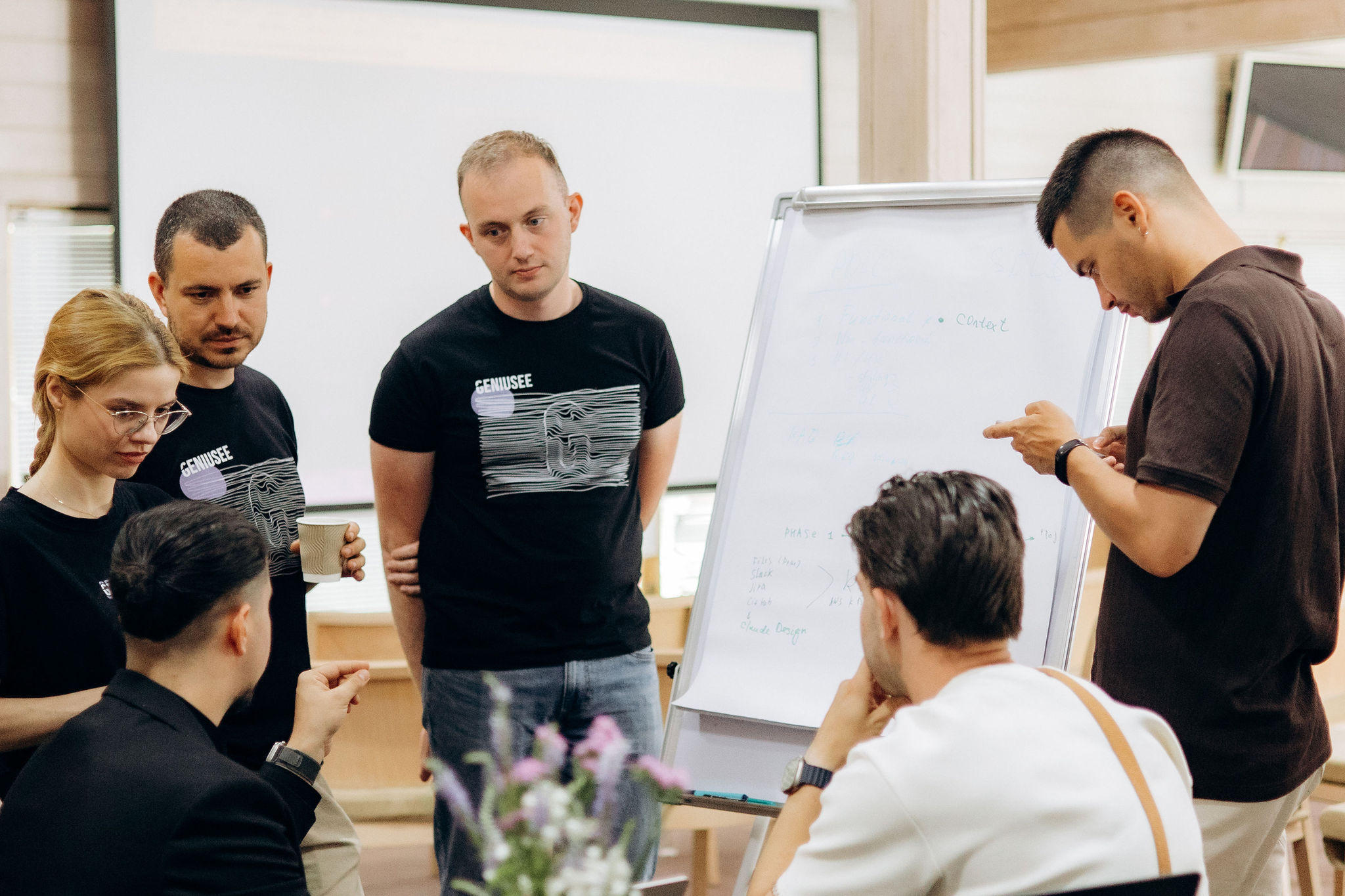
The examples of agentic AI in recruitment below come from two Geniusee recruitment projects for established companies: a multi-tenant hiring platform for a UK staffing firm, and a first-stage screening agent for a technology services company under NDA. Each feature runs on live candidate and vacancy data.
Why agentic AI transformation works in recruitment

“Every recruiting lead knows which work is ready for automation: the sourcing searches, the interview scheduling, the status emails, the first pass through inbound applications.
What they need is someone to map that work, assign an hourly cost to each piece, specify where to start, and build agents to run it within their ATS. That is what this process covers, from the first workshop to a live deployment.
Recruiters we work with get their search and scheduling time back, move candidates to interview faster, and take on more open roles without adding coordinators.”
Yevhen Kliukin
Agentic AI Transformation Lead

What changes with a structured approach
What we scope an agent to deliver, with figures from published deployments and our own projects:
| Workflow | Traditional order | After agentic AI transformation |
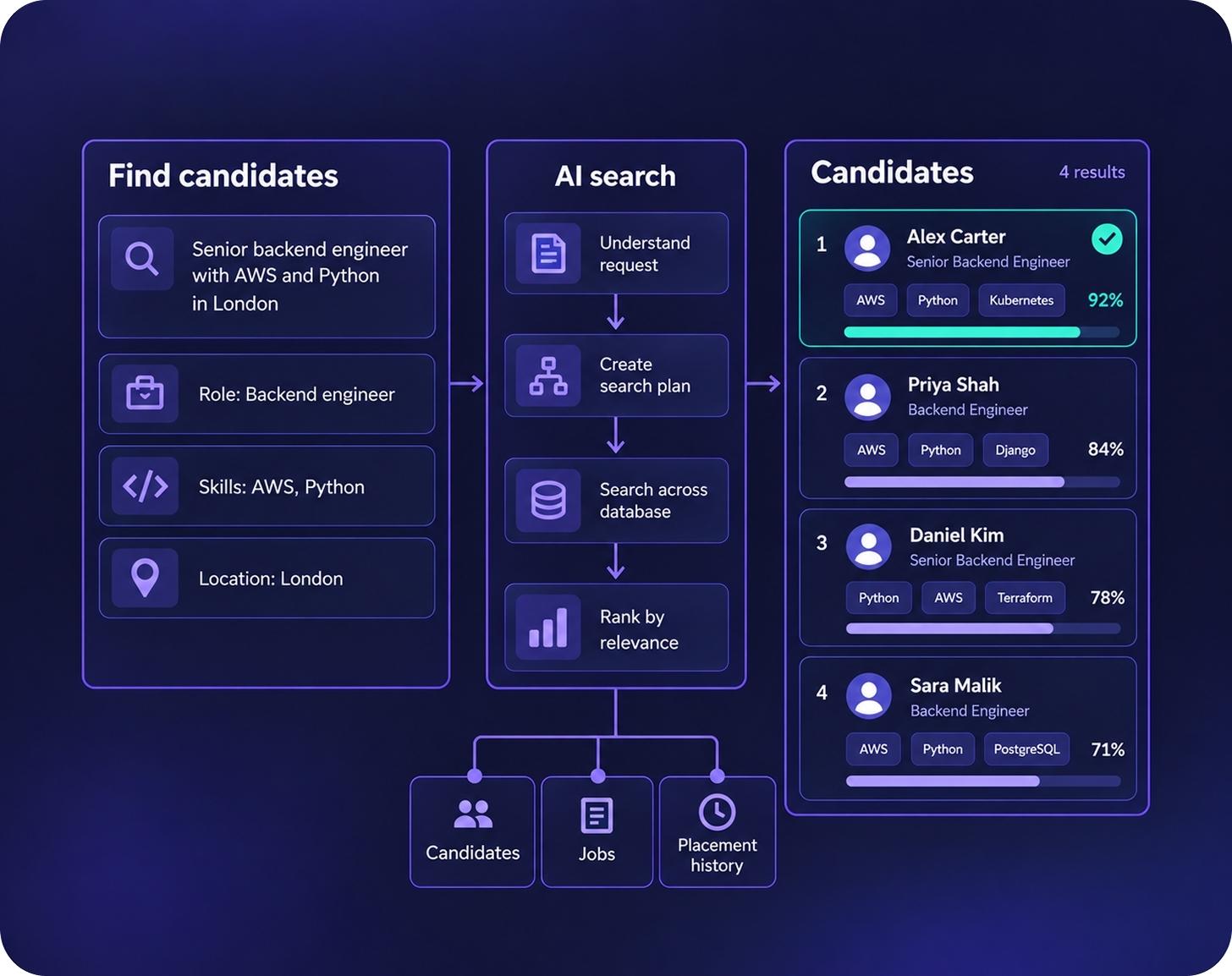
| Candidate sourcing | Recruiters build Boolean searches by hand, up to 3 hours per day | Agent runs searches from a plain-language brief, recruiter reviews the shortlist, 1+ hour per day saved |
| Interview scheduling | The coordinator emails back and forth, and confirmation takes 2 to 4 days | Agent books against live calendars, confirmation in 6 to 9 hours |
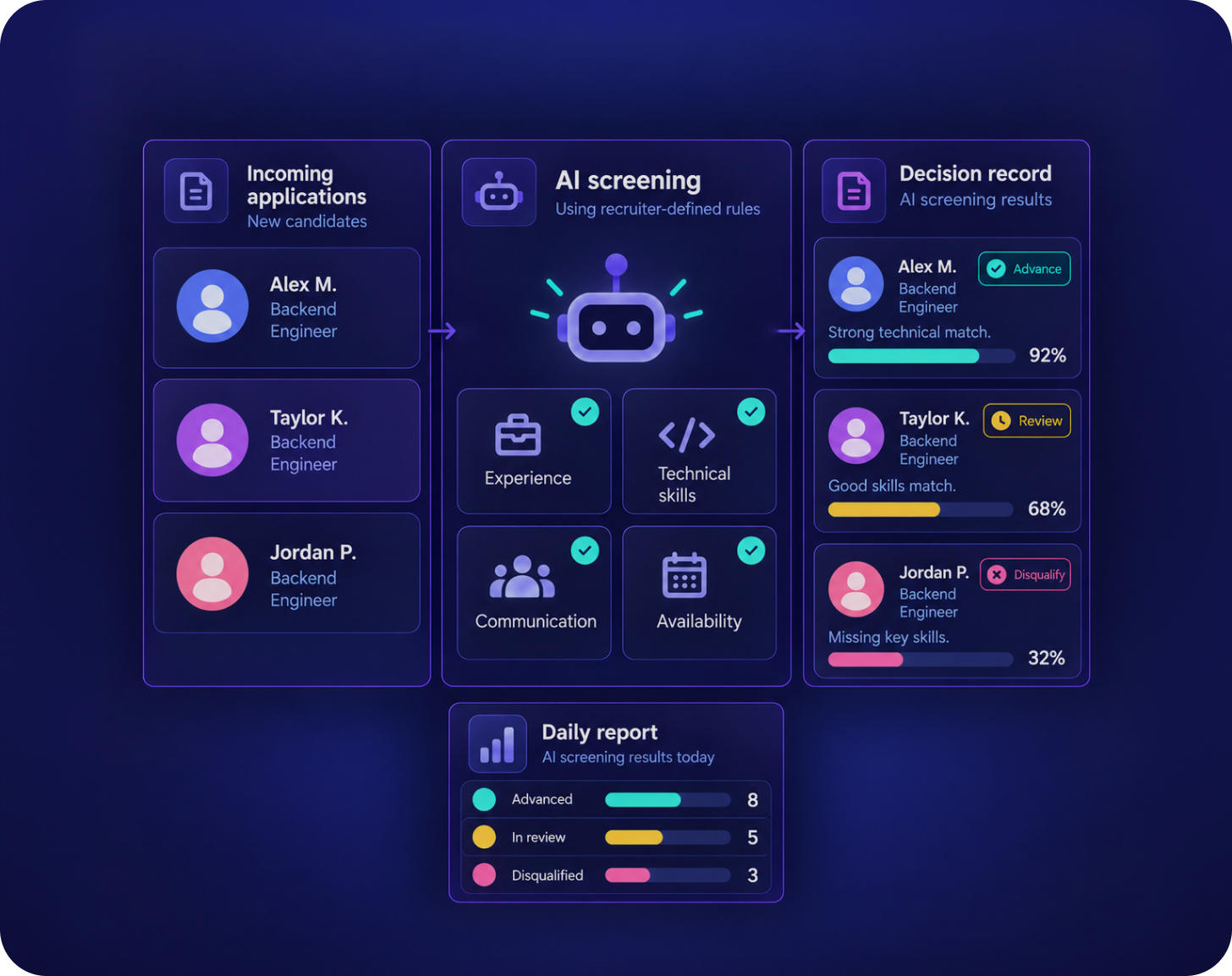
| First-stage screening | The recruiter reads every inbound profile against the vacancy | Agent screens against requirements and records each decision, up to 25 recruiter hours saved in two weeks |
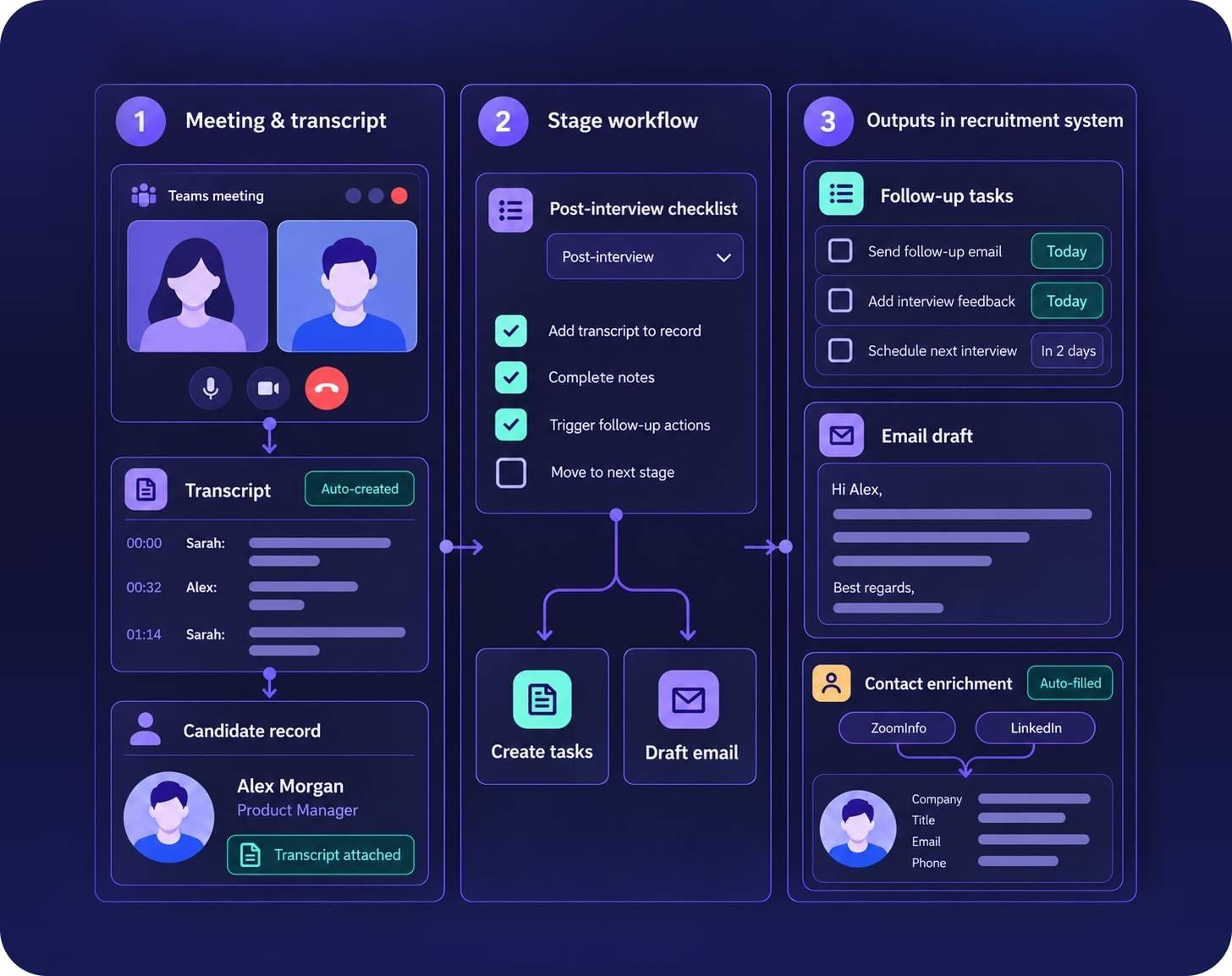
| Candidate questions | Status questions wait for a recruiter, replies take hours | Agent answers from approved information, replies in minutes, and exceptions are routed to a person |
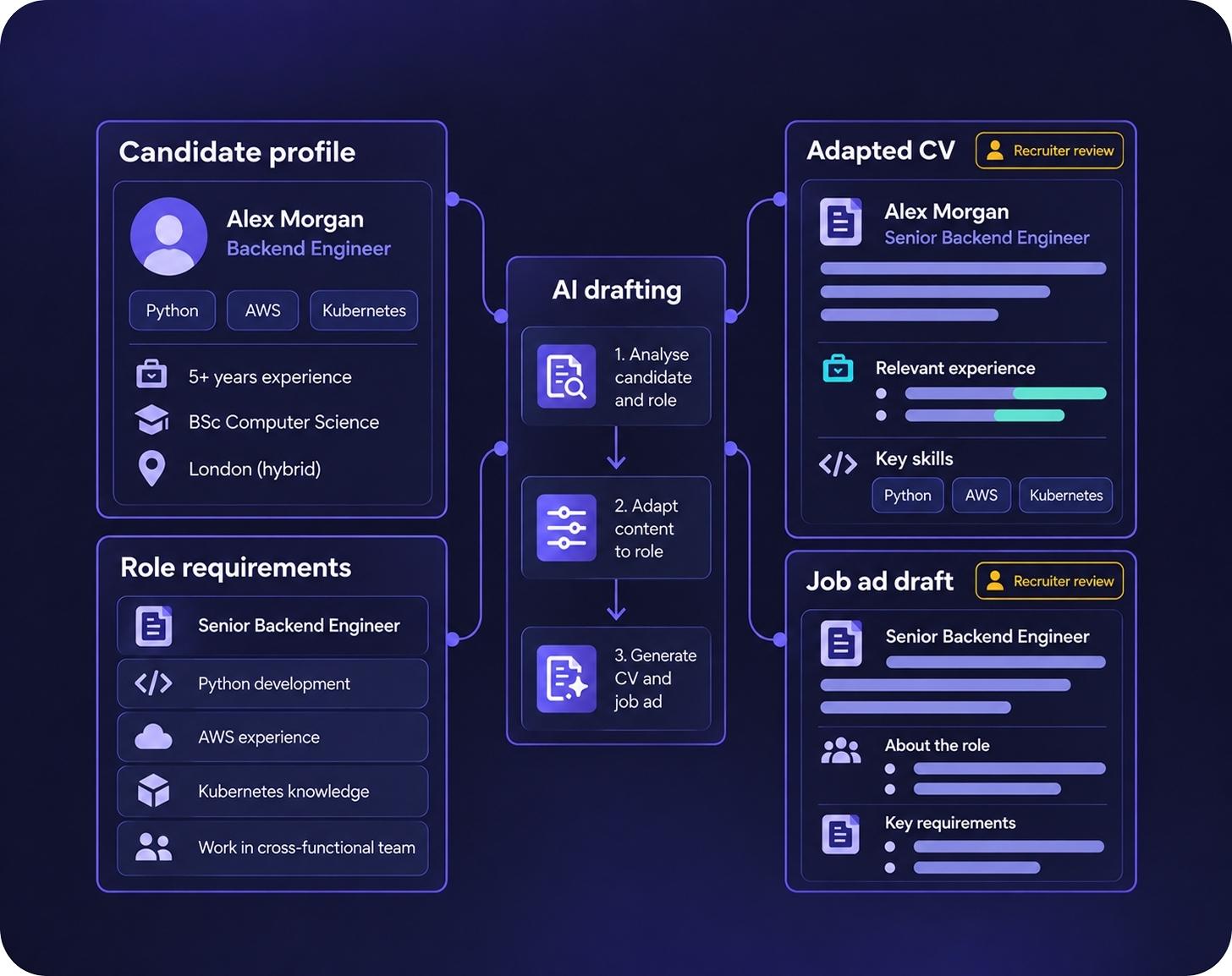
| CV adaptation | Recruiter rewrites the CV per role, about 15 minutes each | The agent drafts the adapted CV for review, about 2 minutes |
| Pipeline reporting | Recruiter compiles the weekly pipeline from ATS exports | The agent assembles the report from ATS data on schedule, the recruiter reviews and sends |








Our recruitment AI agents connect to your existing ATS, calendars, email, and careers site to take over recurring work across sourcing, screening, scheduling, and candidate communication. Each agent operates within rules you define and routes any decision about a candidate’s progress to a recruiter.





How Geniusee saved recruiters up to 25 hours in 2 weeks with AI agent
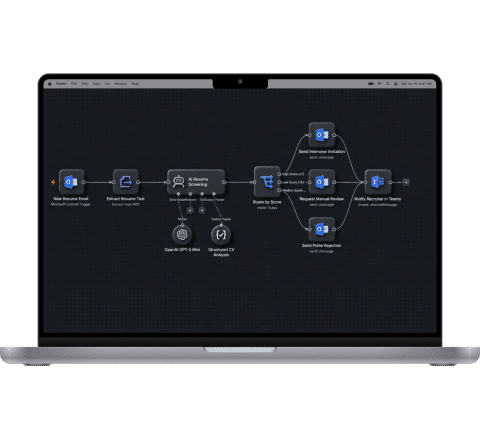
Geniusee partnered with an NDA-protected technology services company to automate one of the most time-consuming parts of its recruitment funnel: first-stage candidate screening. The resulting AI screening workflow evaluates inbound profiles against vacancy requirements, advances or disqualifies candidates, prepares personalized feedback, and gives recruiters a structured record of every decision. The resulting AI screening workflow evaluates inbound profiles against vacancy requirements, advances or disqualifies candidates, prepares personalized feedback, and gives recruiters a structured record of every decision.
Case details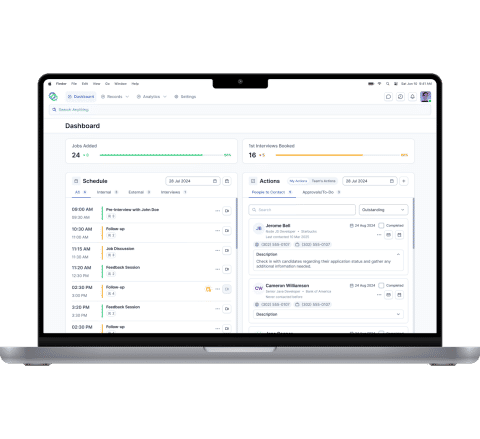
 Recruitment
How Geniusee helped Forsyth Barnes speed up hiring by up to 90% with Imagine AI
Geniusee developed Imagine AI, a scalable recruitment platform for Forsyth Barnes. The system centralizes workflows, embeds AI for candidate matching and CV tailoring, and integrates compliance and reporting tools. This solution facilitates recruiters' work and ensures full visibility across the hiring cycle.
Case details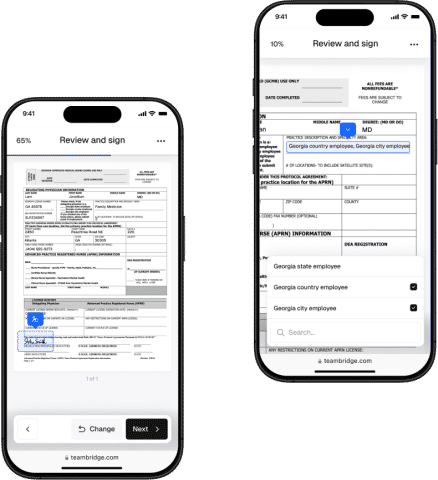
Building native document and e-signing workflows for TeamBridge
TeamBridge users managed scheduling, time tracking, onboarding, and workforce coordination in one platform. But when it came to compliance documents, employee onboarding forms, and contract signing, they still had to leave the system and rely on third-party document tools. Geniusee engineered a native Document Studio and integrated the E-Sign engine inside the TeamBridge ecosystem. Now, users can create, edit, distribute, automate, and sign documents directly in the platform while keeping workforce and compliance data connected.
Case details
Preparation
Before the workshop, we talk to the people who do the work: recruiters, coordinators, sourcers, and their hiring managers. Where candidates wait and what keeps getting pushed to next week sets the scope.
Discovery and prioritization
The discovery session examines 10 to 15 recurring activities common to most recruiting functions and scores each on:
☑️ Time per run and how often it runs
☑️ How much is routine, and how much needs a recruiter’s judgment
☑️ Hours, volume, and time-to-hire impact
☑️ The session ends with a shortlist of 1 to 3 with the strongest business case
Solution design
A detailed workflow map gives AI coding agents a build-ready specification:
☑️ Who is involved and which systems it touches (ATS, calendars, email, careers site, assessment tools)
☑️ What data it consumes and produces
☑️ Where a recruiter currently makes the call
☑️ Which actions the agent handles, which stay with the team, and which need approval
Implementation
Implementation follows our AI-native development workflow to keep engineering hours under control:
☑️ Configured coding agents implement the specification in parallel
☑️ An engineer signs off on each plan before code is written
☑️ Autonomous regression testing runs before go-live
☑️ Recruiters and coordinators use the agent on real requisitions, candidates, and calendars from the first day
Evaluation
Evaluation compares the agreed metrics with actual results, typically including:
☑️ Time-to-shortlist and interview confirmation time
☑️ Recruiter hours per role and candidate response time
☑️ For screening agents, a sample review of advanced and disqualified candidates
Follow-up
Once the first agent is live, the next candidate is already scored. The same approach carries to the next team, the next hiring type, or to refining what is already running.
Not every engagement should begin with a full build. An AI proof of concept is the lowest-commitment way to see that an AI-native software delivery model works on your actual use case

Engagement models that fit your hiring roadmap
The engagement format follows the work. A focused discovery session to score and shortlist your automation candidates, a dedicated team to build and deploy the agents, or long-term support for agentic AI in recruitment as the scope grows across teams and hiring types. Each is structured around your roadmap, budget, and hiring calendar.
Experts ready to start helping with your recruitment AI project
Certified AWS Partner delivering secure, scalable cloud-native solutions.

ISO-compliant processes ensuring quality, security, and reliability.

Trusted integration partner for financial data connectivity and open banking.
Team of ISTQB-certified QA engineers for world-class software testing.

Consistently rated ★5.0 by clients for reliability and delivery excellence.

Accredited partnership supporting advanced testing and continuous QA automation.
How long does the discovery phase take?
The workshop runs 1 to 2 working days per function, whether that is sourcing, coordination, high-volume hiring, or executive search, including preparation. The scored shortlist and written report follow within a week. If several teams are in scope, each gets its own session so the prioritization reflects that team’s workflows.
What do we need to prepare?
A lead from the recruiting function and a rough list of recurring activities: sourcing searches, screening volumes, scheduling load, candidate queries, and reporting cycles. Rough is fine. We design the session, run it, and produce the written output.
What kinds of companies does this work for?
Any organization with repeatable hiring volume: staffing and recruitment agencies, in-house talent acquisition teams, high-volume hourly employers, and professional services firms. Discovery is scoped to one team at a time, so business size affects the number of sessions, not the method.
Is the discovery free?
The first scoping session is free: one per client, covering one recruiting function. It runs 1 to 2 working days and ends with a scored shortlist and a written report. We scope additional functions as separate paid engagements.
Will the agents work with our existing ATS?
That is the design constraint from day one. Agents connect to your ATS, calendars, and email through their APIs, and what each ATS allows (Lever and SmartRecruiters, for example, expose applications, candidate status, and interview endpoints with permission limits) becomes a rule the agent follows rather than something it discovers at runtime. Replacing your ATS is out of scope.
Do the agents reject candidates on their own?
Not in the first deployment. Screening agents report what the evidence shows against your rubric and recommend a next step; a recruiter confirms adverse outcomes before they take effect. Where a client chooses to let an agent make stage decisions, as in our screening agent project, every decision is logged with a grade, reason category, and written rationale, and daily reports give hiring leads oversight of what was advanced and disqualified. Scheduling, status replies, and reminders run without approval because they do not decide anyone’s outcome.
How do you handle bias and hiring regulations?
By treating them as design requirements. Screening uses a versioned, job-related rubric with protected and proxy attributes excluded, selection rates are monitored by group where the law allows, and every model or prompt change is regression-tested. The build supports compliance with GDPR Article 22, the EU AI Act’s employment provisions (high-risk obligations currently scheduled for December 2027), NYC Local Law 144 bias-audit requirements, and EEOC guidance, but your legal team validates the criteria and the audit process.
What happens to candidate data?
Candidate records stay in your systems. Agents receive only the fields a task needs, personal data is redacted before unnecessary model calls, and model providers are configured not to train on your data. Retention follows your schedule, and deletion requests propagate to any search indexes the agent uses.
How fast can the first agent go live?
A first agent typically reaches production within 6 to 10 weeks after discovery ends, depending on ATS access and the workflow chosen. Scheduling and candidate-status agents are usually the fastest; sourcing and screening agents take longer due to rubric design and review setup.
What AI technologies do you use?
Most recruitment automation involves agentic AI: models that plan a task, call your ATS and calendar tools, read candidate and role data, and check their own output before acting. We work across OpenAI, Anthropic Claude, Google Gemini, and Amazon Bedrock, paired with orchestration layers, vector databases, and custom integrations. Where output consistency matters, such as candidate feedback or job ads, prompt engineering is part of the build.
How do you measure success?
Before the build, we agree on the numbers: recruiter hours per role, time-to-shortlist, interview confirmation time, candidate response time, and, for screening, the rate at which recruiters reverse agent recommendations. After deployment, we check them against the baseline and, where applicable, review the quality of hire with the team.
How is agentic AI in recruitment different from ATS automation or a chatbot?
ATS automation follows fixed rules on a trigger, such as sending a template when a stage changes. A chatbot answers questions but does not act. An agent takes a goal, works through the steps to reach it across several systems, and stops for a person at the points you define. Most recruiting roadmaps use all three, with agents handling the parts that need interpretation.