

An AI data privacy requirement often arrives as 1 sentence: “the data must stay private.” Each team reads it differently. Architecture, budget, and vendor choice all depend on that one definition.

A private endpoint protects the network route only
Private networking keeps traffic to Amazon Bedrock or Google Vertex AI off the public internet, and the managed service still processes the prompt. A design built on a private endpoint fails review when your rule prohibits provider processing.
Masking lowers exposure and leaves residual risk
Tokens replace names and account numbers, yet detection can miss identifiers and context can still point to a person or a deal. Masking fits cases where provider processing is already allowed.
Hardware gets ordered before demand is proven
“Dedicated infrastructure” can mean a rented GPU virtual machine (VM) in the provider’s data center, your existing cloud account, or your own servers. On-premise AI carries the highest hardware and operations cost of the 4 options (cloud vs. on-premise comparison). We size hardware from pilot data, so capital follows proven demand.


These projects demonstrate the practices this service relies on: short pilots, auditable AI decisions, and outputs tied to their sources.

85% less manual recruitment work
Imagine AI, built for Forsyth Barnes, also made candidate search up to 90% faster, with compliance and reporting tools built in.

Private LLM deployment options compared
Private AI infrastructure comes in 4 deployment patterns, from a governed managed service to private cloud AI and on-premise private AI. Each one sends your data to a different place and leaves a different responsibility with your team.
| Option | Where your data goes | Best fit | Main trade-off |
| Masking + managed model | Identifiers are masked before a reduced prompt goes to Amazon Bedrock or Google Vertex AI. The provider processes the remaining content. | The task does not need identifiers, and provider processing is allowed. | Missed identifiers and revealing context can remain. |
| Managed model (Amazon Bedrock, Google Vertex AI) | Records stay in your AWS or Google Cloud account. The managed service processes the selected prompt. A private endpoint protects the network route. | Your policy permits provider processing under approved contract, region, and retention settings. | The provider processes prompts. Each model’s data terms and settings need review. |
| Self-hosted LLM in your private cloud | An open-weight model runs on a GPU VM or Kubernetes in your virtual private cloud (VPC), with outbound traffic blocked. | No external model API is allowed, and cloud infrastructure remains acceptable. | The cloud provider still operates the hardware. Your team owns GPU capacity, updates, security, and model quality. |
| On-premise LLM | Model and data run on hardware you own or control. The environment can be disconnected from external networks. | A strict premises-only or air-gapped rule applies. | Highest hardware and operations cost. Requires specialist operations. |
What to know about the managed route
Managed models are the fastest to pilot. You get broad model choice and no GPU operations. AWS documents that Amazon Bedrock does not use prompts and completions to train AWS models and does not distribute them to third parties. The service still processes your data, so the decision rests on your policy.
Regulated institutions do use this route. Raiffeisen Bank International has publicly described an internal assistant built with Azure OpenAI Service and Azure AI Search. The public case study does not state which data classification the assistant handles, so check the route against your own rule.
 Materials science
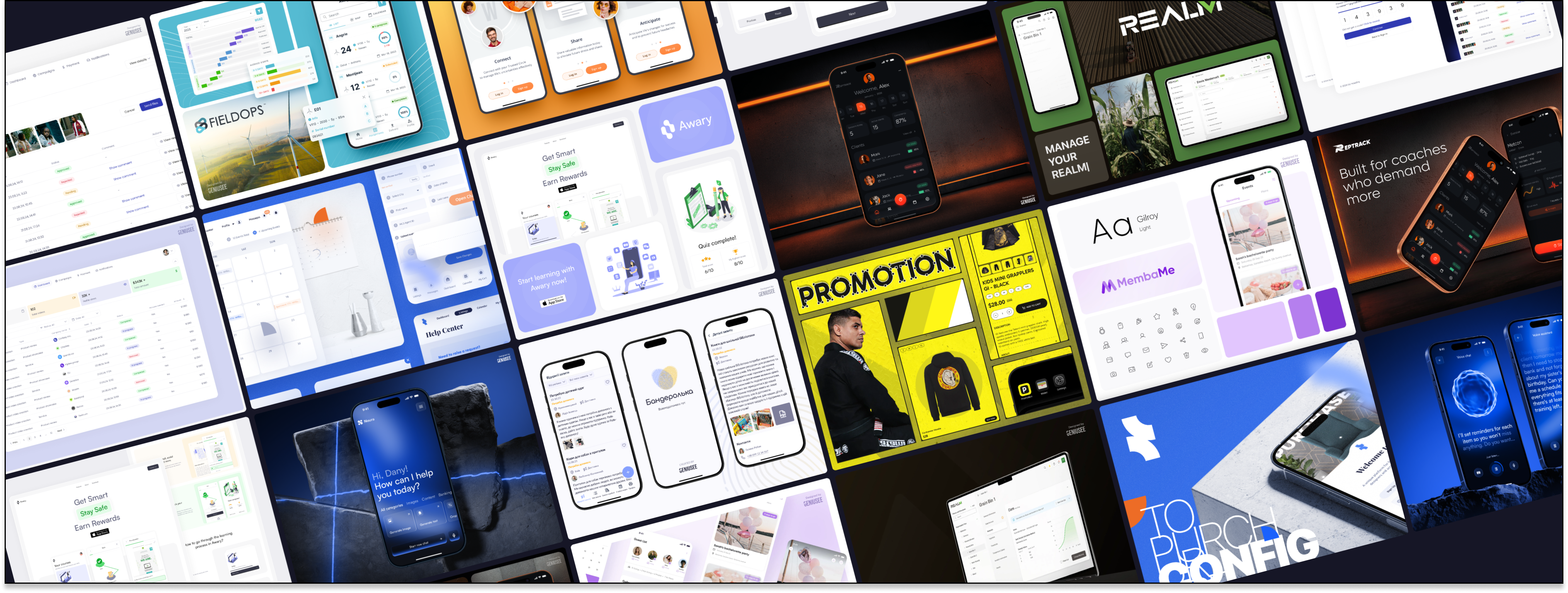
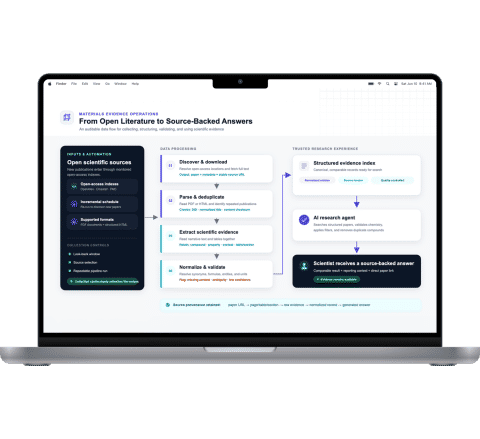
How Geniusee helped Planck Technologies process 10,000 scientific papers with an AI data pipeline
Planck Technologies develops AI-powered technology for materials discovery, helping researchers evaluate porous materials for industrial applications. They addressed Geniusee to build a scientific data pipeline that collects research publications, extracts and normalizes materials data, preserves source provenance, and supports AI-assisted scientific research.
Case details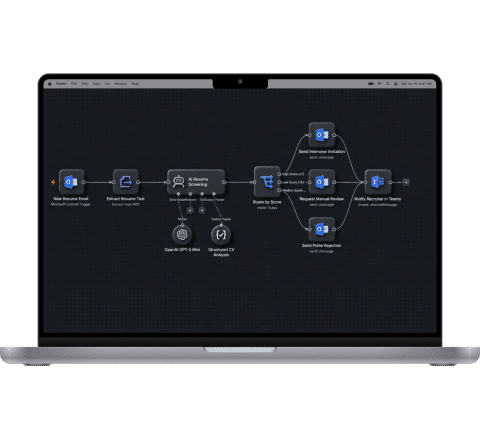
How Geniusee saved recruiters up to 25 hours in 2 weeks with AI agent
Geniusee partnered with an NDA-protected technology services company to automate one of the most time-consuming parts of its recruitment funnel: first-stage candidate screening. The resulting AI screening workflow evaluates inbound profiles against vacancy requirements, advances or disqualifies candidates, prepares personalized feedback, and gives recruiters a structured record of every decision. The resulting AI screening workflow evaluates inbound profiles against vacancy requirements, advances or disqualifies candidates, prepares personalized feedback, and gives recruiters a structured record of every decision.
Case details
From fragmented travel requests to an AI-powered concierge platform
Geniusee partnered with a small travel company to develop an AI-powered concierge platform that integrates travel assistance and service management into a single digital environment. The MVP combines an AI-powered chatbot for travelers with an administrative platform for managing its content, users, data, and operations.
Case details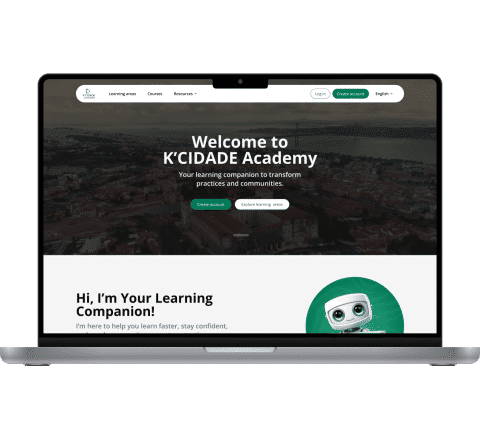
K’CIDADE Academy: How we built an AI-powered learning platform for AKF Portugal
K'CIDADE Academy is AKF Portugal's professional learning platform for civil society organizations, educators, and community leaders. Built on adaptive learning pathways, an AI virtual tutor, and a gamified progress system, it delivers personalized training to professionals working across social inclusion, education, and community development.
Case details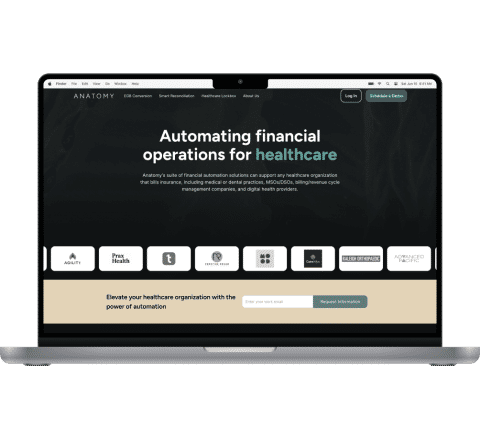
Anatomy Financial: Automated financial management software for healthcare
Anatomy introduces an innovative solution designed to automate document processing, compare various documents and banking transactions, and handle the intricacies of physical check processing. By conducting a thorough analysis, the system identifies discrepancies between the declared prices of medical procedures and the actual amounts received by the clinic.
Case details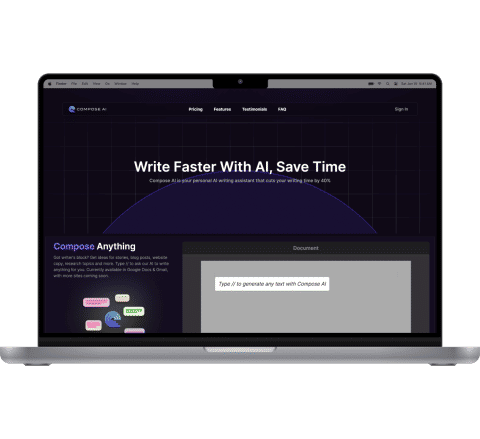
 Martech
Compose AI: Advanced content writing solution
We partnered with Compose AI to enhance their AI-powered writing platform through cloud migration, UX improvements, seamless integrations, and scalable feature development, upporting their growth from YC-backed startup to a widely adopted productivity tool.
Case detailsGeniusee’s private AI services cover the path from data rule to production. Each service works on its own or as part of a full engagement.
Geniusee tests the options your data rule allows and recommends the lightest private generative AI setup that passes. That includes telling you when a private LLM is unnecessary.

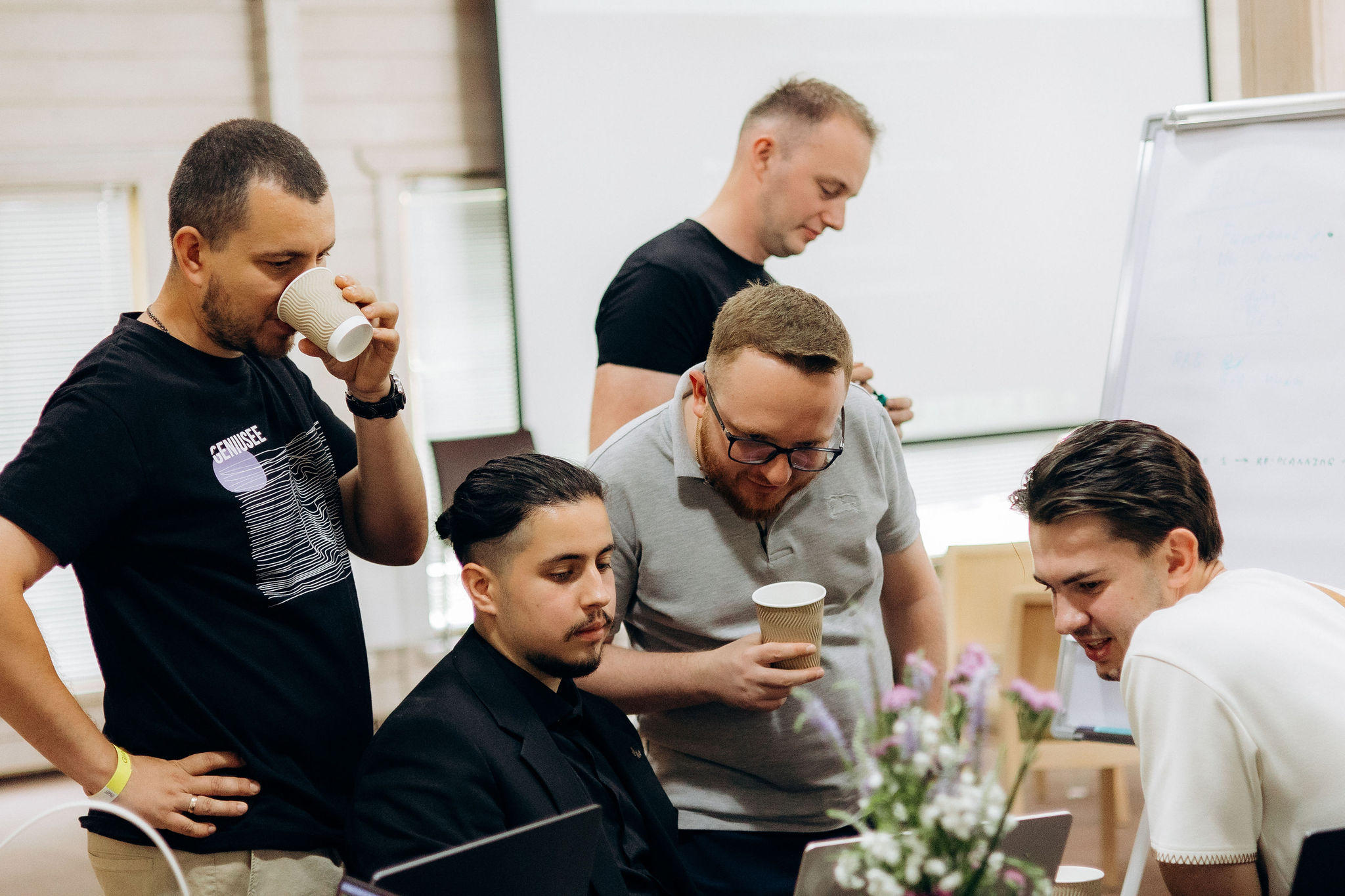


“A request for an on-premise LLM usually starts with hardware.
We start with the data rule, test the options that rule allows, and talk about servers once the pilot shows real demand.
That order protects the data and the budget.”
Nazar Hazdun
CTO at Geniusee


Technology stack for self-hosted and on-premise AI
| Layer | Tools |
| Open-weight models | Llama, Mistral, Gemma, Phi, Qwen |
| Model serving | vLLM, Ollama, NVIDIA Triton Inference Server |
| Managed model services | Amazon Bedrock, Google Vertex AI, Azure OpenAI Service |
| Infrastructure | Kubernetes, Terraform, GPU instances on AWS and Google Cloud, private network endpoints |
| Retrieval and orchestration | LangChain, LlamaIndex, pgvector, Weaviate, Chroma |
| Controls | Role-based access, tokenization, Amazon Bedrock Guardrails, audit logging |
The steps below follow 1 example workflow: summarizing support cases and flagging missing evidence. An indicative pilot takes 1–2 weeks, subject to access and review, and can run as part of a discovery phase.

Agree on the data rule and the success measure
We select 1 workflow, 1 owner, and 1 quality target with your team. Together we define which fields the task needs and who may access them. Work starts on synthetic cases.
Retrieve only permitted records
The system pulls from your database only the support cases the user is allowed to see. Nobody copies the full dataset.
Minimize and mask
We remove fields the summary does not need. Names and account numbers can be replaced with tokens that stay in your systems. Masking lowers exposure, and we report what residual risk remains in the text.
Test the permitted model routes
If managed-provider processing is approved, the prompt goes to Amazon Bedrock or Google Vertex AI. If it is not, an open-weight model, license permitting, runs on vLLM or Ollama on a GPU VM in your VPC with internet egress blocked. If all cloud processing is forbidden, the model runs on premises. We compare the allowed routes on access control, leakage, answer quality, latency, and cost.
Validate outputs and keep people in control
We check each summary against the source records. Your staff approve consequential actions, such as closing a case. The system saves results in your case platform and keeps raw prompts out of the logs.
Decide, harden, and operate
You receive a go or no-go recommendation with the test evidence. After a go decision, we plan production hardening: capacity, monitoring, update procedures, and support.


Certified AWS Partner delivering secure, scalable cloud-native solutions.

ISO-compliant processes ensuring quality, security, and reliability.

Trusted integration partner for financial data connectivity and open banking.

Team of ISTQB-certified QA engineers for world-class software testing.

Consistently rated ★5.0 by clients for reliability and delivery excellence.

Accredited partnership supporting advanced testing and continuous QA automation.
What is a private LLM?
A private LLM is a large language model that runs on infrastructure you control, such as your private cloud or on-premise servers, so no external model provider processes your prompts. Private AI is the wider category: any setup that keeps data inside a boundary you define, including governed managed models.
Is a self-hosted LLM more secure than a managed model such as Amazon Bedrock?
A self-hosted LLM keeps prompts inside your private network, so no managed model service processes them. Your team then owns patching, access control, and GPU operations. A managed model can be the more practical choice when your policy permits provider processing and you have no operations team.
When does on-premise LLM deployment make sense instead of private cloud AI?
Choose an on-premise LLM when policy, contract, or regulation requires data to stay on premises you control, or when the network must be disconnected. It carries the highest hardware and operations cost, so we confirm steady demand in a pilot before recommending a dedicated installation.
How long does a private LLM pilot take?
An indicative pilot takes 1–2 weeks, subject to data access and your internal review. It covers 1 workflow, a prototype on synthetic or approved de-identified data, and tests of access, leakage, quality, latency, and cost. Production rollout time depends on the deployment option you select.
How do you estimate the cost of private AI solutions?
Cost depends on the deployment option, model size, request volume, and who operates the stack. Managed models bill by usage. Self-hosted and on-premise AI add GPU capacity and operations effort. We measure these drivers during the pilot and provide an estimate before you commit to production.
How do you handle LLM data privacy and compliance requirements such as GDPR or HIPAA?
During the assessment, we map the regulations and contracts that apply to the workflow and translate them into a data rule: permitted locations, retention, access, and logging. The pilot tests the design against that rule. Your legal and compliance teams make the final determination with documented evidence.
What does a secure LLM deployment include?
Network isolation, role-based access, permission-aware retrieval, logging without raw prompts, and human approval for consequential actions. Self-hosted setups add blocked internet egress, patching, and model-update procedures. We document each control so your security team can test it before production.
What is the difference between private AI and confidential AI?
Private AI controls where data is processed: your cloud account, your servers, or an approved managed service. Confidential AI adds hardware-based protection for data while it is in use, with attestation that verifies the environment. During the assessment, we check whether your rule requires that extra layer.
Which open-source models can run in a self-hosted LLM or on-premise AI setup?
Open-weight families such as Llama, Mistral, Gemma, Phi, and Qwen run on your own GPUs with serving tools like vLLM or Ollama. We check each model’s license for commercial use and test quality on your task before recommending one.
What team do we need on our side?
For the pilot, you need a workflow owner, a security or compliance contact, and an engineer with access to the relevant systems. Self-hosted or on-premise production also needs an operations owner for GPU capacity and updates. Geniusee can cover that role through ongoing support.
Do we keep ownership of the code, models, and data?
Your data stays in your systems throughout the engagement. Code, configurations, and documentation belong to you under the agreed contract terms. Open-weight models remain subject to their own licenses, which we review before deployment. Any fine-tuned weights stay in your environment.