
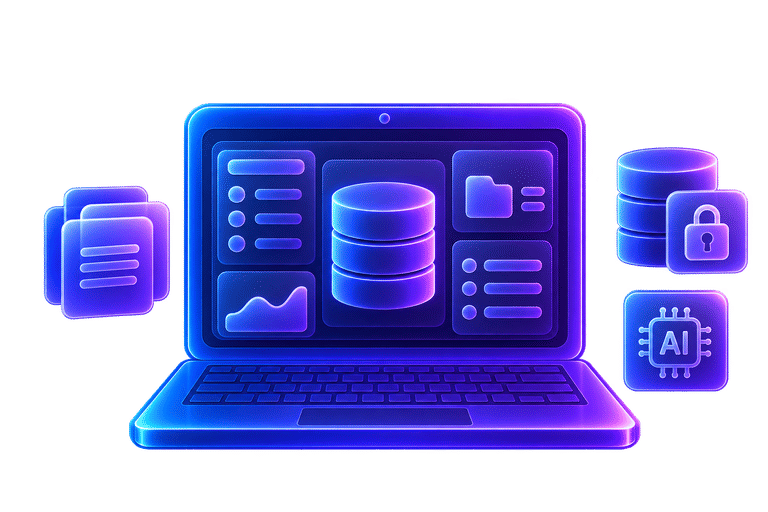
A data lake stores data from across your company in the first place and in its original format: database tables, logs, documents, images, and event streams. Companies choose it for low-cost storage for large volumes of data, one shared source for reports and machine learning, and the freedom to add new sources without redesigning the platform.
A lake delivers this only when it has owners, quality checks, and a clear structure. Geniusee’s expert data lake consulting services help in 1 of 4 situations.



Cloud costs grow with each query
Unpartitioned files and always-on clusters make large volumes of data expensive to analyze. We design partitioning, storage tiers, and compute scaling around your real query patterns.

These projects show the building blocks of a data lake solution: high-volume ingestion, automated quality checks, and raw content turned into structured data.

Pipeline architecture built for up to 10 GB/s
For a robotics and automation company, Geniusee designed a pipeline that ingests data from Internet of Things (IoT) devices, scanners, CRM systems, internal databases, and third-party services. Automated checks validate data at each processing stage, and the first operational version went live within 1 month.
Data processing time cut by 50% for Alvarez & Marsal
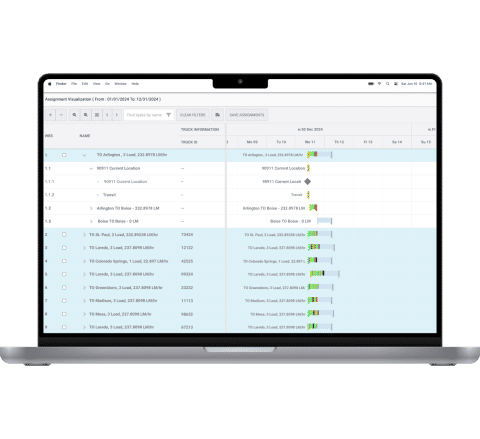
A TigerGraph-powered logistics platform unifies dispatch, routing, and oversight for the global consulting firm. Reworked extract, transform, load (ETL) pipelines run 2x faster.
10,000 scientific papers turned into structured data
For Planck Technologies, our pipeline collects research publications, extracts and normalizes materials data, and preserves source provenance for AI-assisted research.

Data lake vs data warehouse vs data lakehouse
Data lakes and data warehouses solve different problems, and many companies run both. The table shows where each one fits and where a data lakehouse, the core of many modern data platforms, replaces the pair.
| Data lake | Data warehouse | Data lakehouse | |
| Types of data | Structured and unstructured data in its native format | Structured data, modeled before loading | All data types, with table formats that add structure on top of files |
| Schema | Applied when someone reads the data | Defined before data is written | Enforced per table, flexible per file |
| Main users | Data scientists and data engineers | Business analysts and BI teams | Both groups on 1 copy of the data |
| Best fit | Machine learning, exploration, large volumes of raw data | Recurring reports with stable definitions | BI and machine learning without 2 platforms to maintain |
| Main risk | Turns into a data swamp without a catalog and owners | Costly to extend to new data types and sources | Depends on table-format maintenance and stronger engineering skills |
| Common technologies | Amazon S3, Azure Data Lake Storage, Google Cloud Storage | Amazon Redshift, Google BigQuery, Snowflake | Databricks with Delta Lake, Apache Iceberg |
How we choose between them
A data lake stores data in its original format, so it can accept sources that a warehouse cannot accommodate. A warehouse stays a faster route for finance and operations reporting. A data lakehouse keeps files in low-cost storage and adds warehouse-style tables on top. We recommend it when both analysts and data scientists need the same data, and your team can operate the platform.
 Logistics
How we streamlined enterprise logistics for A&M with TigerGraph
Alvarez & Marsal (A&M) is a global enterprise-level consulting company specializing in turnaround management, performance improvement, and advisory services. Founded in 1983, the firm provides expertise in restructuring, operational excellence, and strategic consulting across various industries. A&M is known for working with clients during critical transitions, helping them address complex challenges and achieve sustainable growth. The client turned to Geniusee due to our proven expertise in working with niche technologies like TigerGraph and our ability to deliver custom data-intensive systems under tight technical constraints.
Case details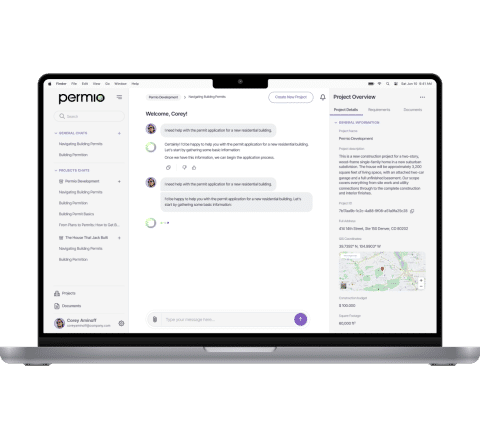
 Manufacturing
Permio: AI-powered permit workflows for Service First Permits
Permio is an AI-powered permitting platform built for Service First Permits to automate workflows and accelerate approvals across 240+ jurisdictions. Geniusee worked closely with SFP to design, engineer, and validate a system that modernizes the entire permitting lifecycle.
Case details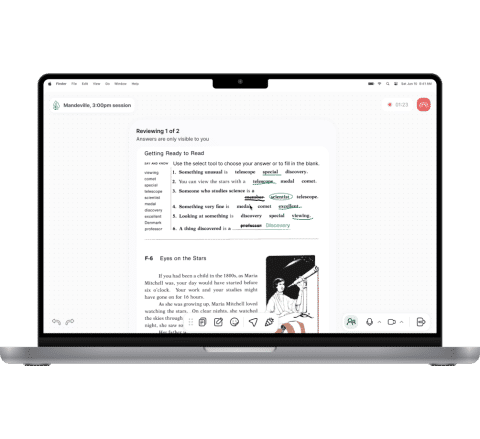
Custom virtual classroom solutions for a leading K-12 education provider
We partnered with a U.S.-based enterprise client to build a secure, educationsl, AI-enabled platform that streamlines operations, modernizes workflows, and enhances the user experience. Due to NDA restrictions, the client’s identity and certain details remain confidential.
Case details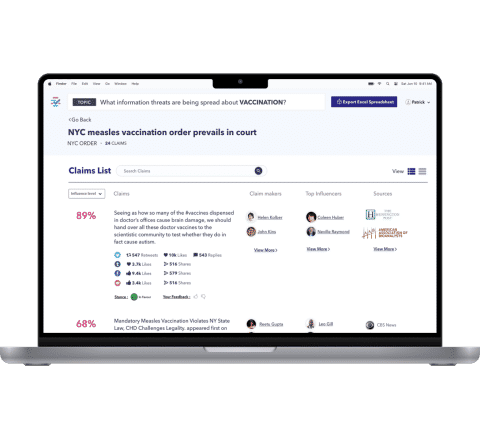

Enhancing FactMata’s AI to detect misleading content at scale
We partnered with Factmata to scale their AI platform for analyzing online content at volume, enhance data pipelines, and modernize their NLP models. Our team strengthened system performance, improved processing efficiency, and enabled Factmata to handle millions of records with higher accuracy and lower operational cost. By implementing our expertise in machine learning, natural language processing, and data analysis, we worked closely with FactMata to create web scrapers and optimize data pipelines and the project’s overall performance. The client addressed Geniusee to modernize their platform by combining real-time IoT data, AI analytics, and an intuitive user experience. The result: a scalable, secure, and analytics-driven ecosystem that helps enterprises make informed workspace decisions.
Case details
Celery: Open-source library for Fortune 500 company
Celery is an Open-Source distributed system that offers simplicity, flexibility, and reliability for efficiently processing enormous volumes of messages. It equips operations with the essential tools to effectively maintain such a system. Designed with a focus on real-time processing, Celery serves as a task queue while also providing support for task scheduling. Celery operates under the BSD License, ensuring open collaboration and widespread accessibility.
Case details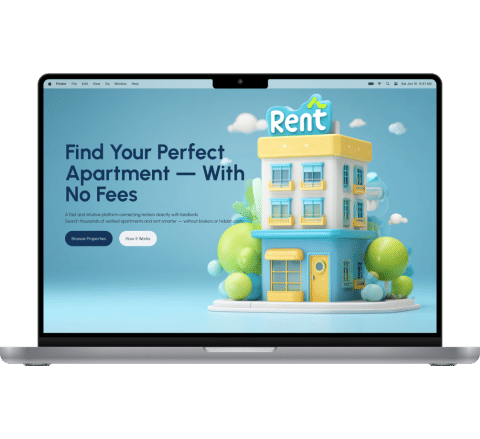
Apartment renting services
Our client is a revolutionary platform that simplifies finding no-fee apartments for rent in the US. The idea was created by renters who recognized the need for a better way to navigate the complex rental market. With a comprehensive database of verified no-fee apartments, the platform offers a hassle-free experience to both tenants and landlords. By connecting tenants directly with landlords, eliminating broker fees, and providing comprehensive district and building analysis based on municipal data, our client disrupts the traditional rental market, making it easier and more affordable for individuals to find their ideal apartment. Geniusee was honored to deliver a centralized and user-friendly solution to our client.
Case detailsOur enterprise data lake consulting services cover planning, engineering, and operations. Each of these data lake services works on its own or as part of a full engagement.
Geniusee designs the lake around the reports and models it has to serve, then builds and operates it with the same team.




“A data lake fails quietly. Storage keeps working while the catalog, the owners, and the quality checks fall behind.
We put those 3 into the first phase, because adding them later means reworking pipelines that people already depend on.”
Nazar Hazdun
CTO at Geniusee
Technology stack for data lake engineering
| Layer | Tools |
| Storage | Amazon S3, Azure Data Lake Storage, Google Cloud Storage |
| Processing | Apache Spark, Amazon EMR, Databricks |
| Query and warehousing | Amazon Athena, Google BigQuery, Amazon Redshift, Snowflake |
| Ingestion and orchestration | Apache Airflow, AWS Glue, Apache Kafka |
| Table formats | Delta Lake, Apache Iceberg |
| Databases | Apache Cassandra, TigerGraph |
| Governance and monitoring | AWS Lake Formation, data catalogs, quality dashboards and alerts |





Audit your data
We assess how you collect data, where you store it, and how you protect its integrity and security. The audit ends with a list of improvement areas and priorities.
Design the data lake and pipelines
Our data experts design the lake and the pipelines so data reaches storage at the speed and reliability your use cases need.
Build the first use case
We implement 1 use case end to end, from ingestion to a working report or model. In the robotics project above, the first operational version took 1 month.
Add governance and monitoring
The team sets up the catalog, access rules, and dashboards that track data quality, with response protocols based on issue severity.
Connect analytics and AI
We connect BI tools, machine learning pipelines, and generative AI interfaces, so your teams can analyze data without waiting for manual exports.
Support and optimize
After launch, we provide ongoing support, respond to incidents, and tune cost and performance as volumes grow.

Certified AWS Partner delivering secure, scalable cloud-native solutions.

ISO-compliant processes ensuring quality, security, and reliability.

Trusted integration partner for financial data connectivity and open banking.

Team of ISTQB-certified QA engineers for world-class software testing.

Consistently rated ★5.0 by clients for reliability and delivery excellence.

Accredited partnership supporting advanced testing and continuous QA automation.
What do data lake consulting services include?
Data lake consulting services help you plan, build, and run a central platform for structured and unstructured data. Professional data lake consulting covers assessment, architecture, cloud implementation, ingestion pipelines, governance, and support. You can order the full cycle or a single stage, such as an audit of an existing lake.
What are the benefits of data lake consulting for a company that already has a data warehouse?
A lake adds low-cost data storage for sources the warehouse cannot hold, such as logs, documents, and event streams. Data scientists get raw data for machine learning, and the warehouse keeps serving reports. A data lake consultant designs how the 2 platforms share data and definitions.
When should we move to a data lakehouse?
Consider a lakehouse when analysts and data scientists need the same data, and maintaining 2 platforms creates duplicate pipelines and conflicting numbers. The move makes less sense if your reporting is stable and your team is small. Our data lakehouse consulting starts with that assessment.
How long does it take to build a data lake?
Timelines depend on the number of sources, data volumes, and governance requirements. We deliver in phases, starting with 1 use case. In a robotics project, Geniusee delivered the first operational pipeline within 1 month. The assessment gives you a schedule for your own scope.
How do you estimate the cost of a cloud data lake?
The cost of cloud-based data lakes depends on stored volume, processing frequency, query patterns, and the team that operates the platform. Cloud data lake consulting begins with an estimate of implementation cost and monthly infrastructure spend. We also show where partitioning, storage tiers, and compute scaling reduce the bill.
How do you keep a data lake from turning into a data swamp?
Each dataset gets an owner, a catalog entry, and quality rules before it reaches the curated layer. Automated checks run at each pipeline stage, and dashboards flag missing or late data. This data management discipline starts in the first phase.
Which platforms do your cloud data lakes consulting services cover?
We build on AWS, Microsoft Azure, and Google Cloud. Geniusee is an AWS Advanced Tier Services Partner, and our stack includes Databricks, Apache Spark, Amazon EMR, Amazon Athena, and Google BigQuery. The choice follows your existing cloud data, contracts, and team skills.
How do you handle data protection and compliance?
We design role-based access, encryption, retention rules, and audit logging into the lake architecture to ensure your data stays within approved roles. During the assessment, we map the regulations that apply to your data, such as GDPR, to concrete controls. Your legal and compliance teams confirm the final design.
Can you work with our existing data warehouse and BI tools?
Yes. We connect the lake to your current warehouse, BI dashboards, and data science tools, and we keep existing reports running during the transition. Migration happens in phases, with data validated against the source at each step, so nothing switches off before its replacement works.