
Organizations that generate or consume large volumes of data and need structured control over how that data is managed, accessed, and used.

- Mid-size to enterprise companies with multiple business units, data sources, and reporting systems that have outgrown ad-hoc data management
- Organizations preparing for compliance audits in regulated industries such as finance, healthcare, and insurance that need demonstrable data lineage and access controls
- Data-intensive companies running AI, analytics, or business intelligence initiatives that require trusted, high-quality datasets
- Companies post-merger or post-acquisition integrating disparate data environments and needing a unified governance model
- Organizations with data silos where teams maintain separate datasets, definitions, and pipelines without centralized oversight
- CTOs, CDOs, and data leaders who need to reduce data management risk while enabling self-service access for analysts and data scientists
If these sound familiar, your data governance efforts are already behind the curve.



Lineage is a manual guess
When a number looks wrong, no one can trace the data in the report back to its source because data lineage was never documented.

Experts ready to start helping with your AI project
- Ensure data quality at the point of entry with automated validation, data quality rules, and monitoring that catches issues before they reach decision-makers.
- Break down data silos with a unified data catalog, consistent data definitions, and a strong data governance framework that connects teams to a single source of truth.
- Protect sensitive data through classification, role-based access control, masking, and audit-ready data policies to reduce exposure and satisfy regulators.
- Trace data across pipelines with full data lineage from source to destination, so errors and compliance questions can be resolved in minutes, not days.
- Make data easily available to authorized data users while maintaining control, so data scientists and analysts spend time on insights, not hunting for datasets.
- Scale confidently as new data sources are onboarded within a robust data governance framework that governs data by design, not by exception.

What data governance delivers
We measure governance by outcomes. Here is what changes when a data governance program is built properly.
| Outcome | What it means for your business |
| Trusted data across the organization | Every team works from the same definitions, metrics, and validated datasets. Data integrity is protected by design, so decisions are made with confidence in your data rather than instinct. |
| Compliance and audit readiness | A governance framework and classification for sensitive data are built into operations, so regulatory exams and internal audits become routine instead of fire drills. Data lineage and access logs provide evidence on demand. |
| Faster analytics and AI delivery | Data scientists and analysts find, understand, and use data without lengthy discovery cycles. Pre-governed datasets reduce preparation time and let AI and analytics initiatives launch on solid ground. |
| Reduced risk of data breaches | Sensitive data is identified, classified, and protected through access controls, masking, and monitoring. The security of your data is built into the system, not dependent on manual checks. |
| Lower data management cost | Duplicate datasets, orphaned pipelines, and redundant storage are eliminated through cataloging and lifecycle policies. You manage data efficiently instead of accumulating technical debt. |

“Most teams treat data governance as a documentation exercise: write some policies, assign a few data stewards, and hope people follow them. That is why governance efforts stall.
Effective data governance is not about creating more rules. It is about building a system where the right data is available to the right people, quality is enforced automatically, and every dataset can be traced back to its origin.
We design for that reality first, then build the processes and tooling to support it.”
Nazar Hazdun
CTO at Geniusee
We deliver end-to-end data governance services that cover strategy, implementation, and continuous improvement. Each service is designed to fit into a cohesive data governance program or stand alone where you need the most help.
We do not drop a template on your organization and call it governance. We build iteratively, starting with the highest-risk areas and expanding as the data governance program matures.

Assess the data landscape
We audit your existing data sources, data quality, governance maturity, and critical data assets. This discovery phase maps where poor data quality, compliance gaps, and data silos actually exist, so the program targets real risk.
Define the governance strategy
A governance strategy and roadmap aligned to your data strategy and business priorities sequences initiatives from quick wins to enterprise-wide rollout. Early results build credibility for the governance team before larger investments are made.
Design the framework
A governance framework specifying data policies, ownership models, definitions, and processes is created with input from business and technical stakeholders. Data stewards and the governance team receive training and clear accountability before any tooling is deployed.
Implement tooling & controls
We deploy data catalog, data quality, lineage, and access governance tools integrated with your data pipelines and storage. Automated checks ensure data quality standards are enforced, and sensitive data is classified and protected.
Operationalize & scale
Governance informs daily operations through workflows, monitoring, and continuous improvement processes. The framework scales without losing control as new data sources are added and business requirements evolve.
Measure & optimize
Governance metrics such as data quality scores, catalog coverage, and issue resolution time are tracked and reported regularly. Reviews with the governance team identify gaps and optimize the framework as the data strategy evolves.
We bring engineering discipline to governance. That means frameworks that actually get adopted, tooling that integrates with your stack, and outcomes you can measure.

Governance as engineering
checks, lineage tracking, and access controls that run in production, not documents that sit on a shelf.
Proven delivery at scale
As an AWS Advanced Tier Services Partner with 200+ projects since 2017, we have implemented data-intensive systems for fintech, logistics, IoT, and enterprise clients. Deep understanding of how to govern data across complex, high-volume environments.
Custom software development servicesTooling that fits your stack
No forced single data governance solution. Tools selected and integrated to work with your existing warehouses, lakes, and pipelines, whether you run on Snowflake, Databricks, BigQuery, or a hybrid architecture.
Custom financial index investment service
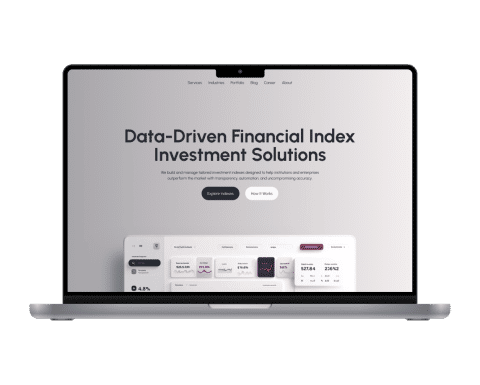
Our client provides custom investing indexes for the financial and insurance industries. We are honored to become one of the reasons for the client's success story. Geniusee helped to tailor one of the most important parts of their direct indexing service. We strengthened their team with our profound expertise in data engineering.
Case details

MyTutor: Online tutoring platform
MyTutor is an online tutoring platform that reshapes school-based learning by automatically grouping students with similar needs and learning styles. With built-in scheduling, class formation, and management tools, it helps tutors and schools deliver personalized support at scale.
Case details
Swyft – Grocery delivery platform
Swyft partnered with Geniusee to build the platform from scratch, including Android and iOS apps, an admin panel, order management systems, and integrations with Polish payment and geolocation services. Together, we delivered a high-performance solution for the competitive instant-delivery market.
Case details
Happy House: 24/7 digital rental platform for properties
Geniusee empowered the Happy House team with deep technical expertise to develop a rental property management app. Together, we built a system that allows users to “Find great tenants with zero risk from the comfort of your sofa.” In addition, this property management software digitizes the managing properties process, bringing online traditionally offline procedures such as tenant screening, maintenance requests, rent payments, and more.
Case details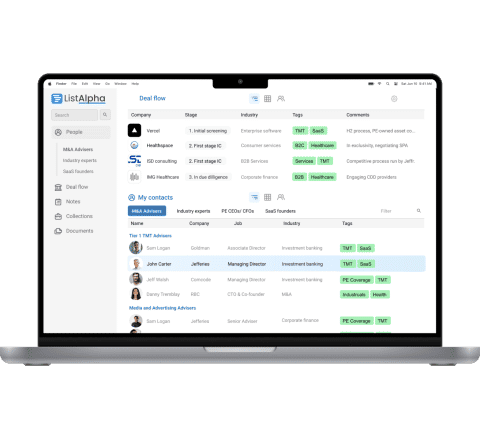
ListAlpha: Investor CRM software system
Managing numerous deals, calls, and transactions can be challenging for investors without a unified system. That's why Geniusee developed an effective and reliable investor CRM software for our UK client. This solution allows investors to seamlessly manage their notes, contacts, plans, and deals through an iOS mobile application or web-based software, all with robust security built on AWS cloud infrastructure.
Case details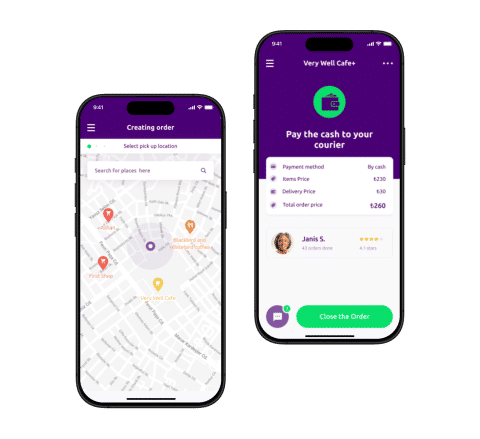
Tamam – Scalable on-demand delivery app for the Turkish market
Tamam partnered with Geniusee to build a full-cycle digital product – from discovery to UX/UI, mobile app development, admin dashboard, and microservice infrastructure. Together, we created a robust MVP that evolved into a scalable platform with over 50,000 downloads and a 4.5-star rating.
Case details
Certified AWS Partner delivering secure, scalable cloud-native solutions.

ISO-compliant processes ensuring quality, security, and reliability.

Trusted integration partner for financial data connectivity and open banking.
Team of ISTQB-certified QA engineers for world-class software testing.

Consistently rated ★5.0 by clients for reliability and delivery excellence.

Accredited partnership supporting advanced testing and continuous QA automation.



















What is data governance?
Data governance is the set of processes, policies, standards, and roles that ensure data is accurate, available, secure, and used correctly across an organization. It covers data quality, data lineage, data access, data security, and compliance, turning raw data assets into trusted information.
How is data governance different from data management?
Data management is the operational practice of storing, processing, and maintaining data. Data governance is the decision-making framework that defines who owns data, how it should be handled, and what standards it must meet. You need both: management executes, and governance decides and enforces.
How long does it take to implement a data governance program?
A focused initiative, such as deploying a data catalog for one domain or establishing data quality rules for critical pipelines, can take a few months. A full enterprise data governance program covering multiple domains, tools, and teams typically takes longer. We provide a realistic timeline after the assessment phase.
Do we need to replace our existing data platform to implement governance?
No. We design data governance solutions that work with your current warehouses, lakes, and pipelines. In many cases, governance is implemented incrementally alongside existing systems, reducing disruption and cost.
How do you handle sensitive data and compliance?
We build data classification, access controls, masking, and audit logging into the governance framework from the beginning. Sensitive data is identified automatically where possible, protected through policy-driven controls, and monitored for compliance. Governance becomes a structural safeguard, not an afterthought.
Can you help if we are starting a data governance program from scratch?
Yes. We regularly help organizations build a data governance program from scratch, starting with assessment, strategy, and a pilot domain before expanding across the enterprise. This approach delivers early wins and builds organizational buy-in.